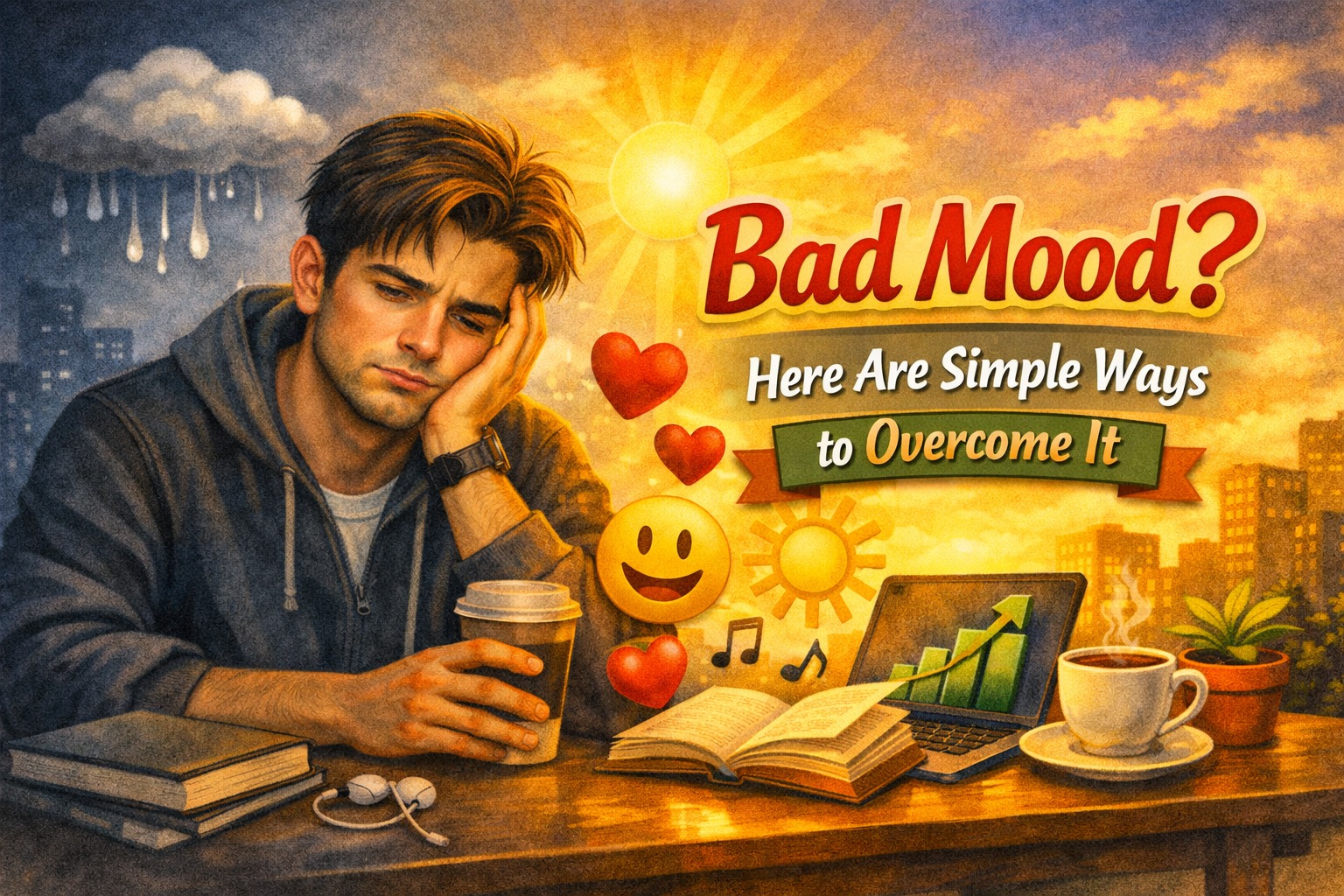
Everyone experiences a bad mood from time to time. Stress at work, lack of sleep, personal problems, or even small daily inconveniences can affect how you feel. While a bad mood is a normal part of life, staying in it for too long may reduce your motivation, productivity, and overall well-being.
The good news is that there are many simple ways to improve your mood naturally. Small changes in your daily routine can help you feel calmer, happier, and more focused. This article explains practical strategies that are easy to apply and suitable for people of all ages.
UNDERSTAND THE CAUSE OF YOUR BAD MOOD
The first step to overcoming a bad mood is identifying what caused it. Sometimes the reason is obvious, such as an argument with someone or a stressful deadline. In other cases, your mood may be influenced by lack of sleep, hunger, or physical exhaustion without you realizing it.
Take a few minutes to reflect on your feelings before reacting. Writing your thoughts in a notebook or simply asking yourself what happened today can help you understand your emotions better. Once you know the cause, it becomes much easier to choose the right solution instead of letting negative emotions control your day.
MOVE YOUR BODY TO BOOST YOUR MOOD
Regular physical activity is one of the easiest ways to improve emotional health. Exercise encourages your body to release endorphins, often called the feel-good hormones, which naturally reduce stress and increase happiness.
You do not need an intense workout to experience the benefits. A 20-minute walk, gentle stretching, cycling, or dancing to your favorite music can quickly lift your spirits. Consistent movement also improves energy levels, supports better sleep, and helps you manage daily stress more effectively.
PRACTICE HEALTHY SELF-CARE HABITS
Taking care of yourself is essential when you feel emotionally drained. Drinking enough water, eating nutritious foods, and getting sufficient sleep all contribute to a more stable mood. Ignoring your body's basic needs often makes negative emotions feel stronger.
You can also practice relaxation techniques such as deep breathing, meditation, or reading a favorite book. Even spending a few quiet minutes away from your phone and other distractions can refresh your mind. Building healthy daily habits creates a stronger foundation for long-term emotional balance.
CONNECT WITH POSITIVE PEOPLE
Human connection plays an important role in emotional well-being. Talking with a trusted friend, family member, or colleague can help you feel supported and understood. Sometimes sharing your thoughts is enough to reduce emotional pressure.
Try to spend more time with people who encourage and inspire you. Positive conversations, laughter, and meaningful relationships can improve your outlook and remind you that difficult moments are temporary. At the same time, reducing exposure to unnecessary negativity can help protect your mental health.
FOCUS ON THINGS YOU CAN CONTROL
Many bad moods come from worrying about situations beyond your control. Instead of focusing on what cannot be changed, direct your attention toward actions you can take today. This simple mindset shift often reduces stress and increases confidence.
Create a small to-do list, organize your workspace, or complete one simple task that has been delayed. Achieving even a small goal gives you a sense of progress and accomplishment. Over time, this habit helps build emotional resilience and makes it easier to recover from challenging situations.
CONCLUSION
A bad mood does not have to ruin your entire day. By understanding the cause, staying physically active, practicing healthy self-care, connecting with supportive people, and focusing on what you can control, you can improve your emotional well-being naturally.
Remember that everyone experiences emotional ups and downs. The key is developing healthy habits that help you recover more quickly and maintain a positive mindset. With consistent practice, these simple strategies can make a meaningful difference in your daily life.
Tentang Penulis
Gusti Ayu Tita P
Penulis — Universitas STEKOM
Penulis aktif yang berfokus pada isu-isu akademik, teknologi pendidikan, dan pengembangan sumber daya manusia di lingkungan kampus.