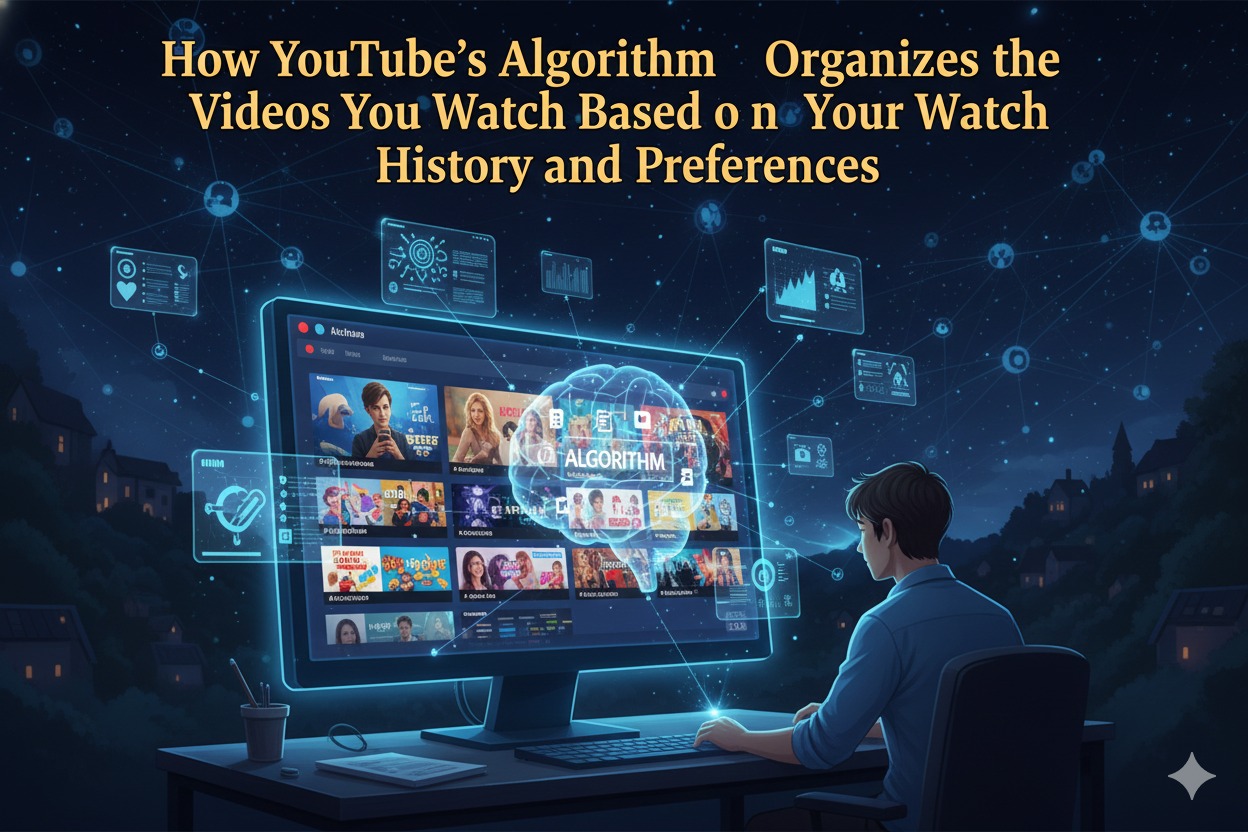
How YouTube's Algorithm Organizes the Videos You Watch Based on Your Watch History and Preferences
Gusti Ayu Tita P
22 November 2025
How the YouTube Algorithm Works and Why It Feels So Personal
YouTube is the largest video platform in the world, and one of the main reasons users spend so much time on it is its ability to show videos that perfectly match their interests. From educational content, music, vlogs, and gaming to unexpected recommendations that suddenly appear on the homepage—everything is powered by a sophisticated algorithm that continuously learns from user behavior.
The YouTube algorithm does more than simply display popular videos. It works through a complex system that analyzes watch history, behavior patterns, favorite topics, and watch duration to deliver the most relevant content for each individual.
This article reveals how the YouTube algorithm works and how you can “train” it to better match your personal preferences.
1. WHAT IS THE YOUTUBE ALGORITHM?
The YouTube algorithm is an artificial intelligence–based system responsible for organizing the order and types of videos that appear on:
* Home
* Recommended videos
* Up Next
* Search results
* Shorts
* Trending
Its main goal is to predict which videos you are most likely to watch and enjoy based on your behavior and preferences.
What YouTube aims to achieve:
Helping users continuously discover interesting, relevant content and stay longer on the platform.
2. MAIN FACTORS USED BY THE YOUTUBE ALGORITHM
YouTube uses many signals to decide which videos deserve to be recommended. The three strongest signals are:
1. Watch History
This is the most powerful signal in YouTube’s system.
YouTube analyzes:
* Videos you watch most often
* Your favorite channels
* Video genres (music, education, films, vlogs, horror, comedy, etc.)
* Topics you follow
* Videos you rewatch
* Watching frequency
If you frequently watch fitness content, YouTube will recommend:
* Workout videos
* Gym or sports channels
* Health guides
* Workout-themed Shorts
Your watch history shapes your content profile in YouTube’s eyes.
2. Watch Time
Watch time is the core of the YouTube algorithm.
YouTube highly values videos that:
* You watch until the end
* You rewatch
* You watch for a long time without skipping
* Lead you to watch additional videos
The longer you watch, the more similar content will appear.
3. User Feedback (Interactions)
Interactions signal that you truly like the content:
* Likes
* Comments
* Subscribing after watching
* Sharing videos
* Adding videos to playlists
* Clicking “Not Interested”
Even small actions like hovering over a thumbnail are counted.
3. HOW THE YOUTUBE ALGORITHM WORKS ACROSS DIFFERENT FEATURES
YouTube does not rely on a single algorithm. Each feature uses a different evaluation system.
a. Home Page
Here, YouTube predicts what you want to watch before you search for it.
Factors include:
* Watch history
* Favorite channels
* Trending but relevant videos
* Activity from users with similar interests
YouTube aims to offer a mix of:
New relevant videos + older videos that still match your interests.
b. Recommended / Up Next
This section often keeps users watching continuously.
YouTube considers:
* Videos similar to the one you just watched
* Popular videos among users with similar interests
* Videos from channels you frequently watch
* Videos often watched together in one session
The goal is to make the next video feel natural and hard to resist.
c. Search
When you search, the algorithm evaluates:
* Keyword relevance
* High-retention videos
* Videos frequently clicked from similar searches
* Channel credibility
* Your personal search history
As a result, search results can differ from one user to another.
d. Shorts
Shorts have a separate algorithm that focuses on:
* Watch time per clip
* Rewatch behavior
* Fast swipes (a sign of disinterest)
* Quick interactions (likes, shares, follows)
Shorts can learn your interests extremely fast—even within the first 5–10 videos.
e. Trending
Trending is different from personalized recommendations. It shows:
* Widely popular videos
* Location-based trends
* Viral or hyped content
Trending is less personalized than Home or Up Next.
4. WHY YOUTUBE FEELS LIKE IT “READS YOUR MIND”
Because the algorithm learns small patterns you may not even notice.
YouTube knows:
* Which videos you watch at least 80% of
* Which videos you watch silently without liking
* Topics you view even if you rarely subscribe
* The times you are most active
* Your mood based on viewing categories
For example:
* Watching motivational videos → more self-improvement content appears
* Listening to sad music → YouTube assumes a mellow mood
* Watching gadget reviews → your feed fills with tech content
All of this is processed into highly personalized recommendations.
5. HOW TO CONTROL THE YOUTUBE ALGORITHM TO MATCH YOUR PREFERENCES
If your homepage feels messy, you can retrain the algorithm:
1. Clear your watch history
2. Delete your search history
3. Watch videos you like until the end
4. Use the “Not Interested” button
5. Interact with content you enjoy (like, comment, subscribe)
6. Create playlists for specific topics
These actions send strong preference signals to YouTube.
6. THE IMPACT OF THE YOUTUBE ALGORITHM ON USERS
a. Positive Effects
* Highly personalized experience
* Easy access to educational content
* Helps creators grow
* Introduces relevant new topics
* Encourages natural, extended watch time
b. Negative Effects
* Echo chambers (limited viewpoints)
* Potential addiction
* Extreme recommendations if not managed
* Privacy concerns related to watch history
* Biased information exposure
7. THE FUTURE OF THE YOUTUBE ALGORITHM
YouTube is currently focusing on:
* Smarter AI that understands video context better
* Safer recommendations for younger audiences
* Integration of YouTube Music, Shorts, and Live
* Generative AI to predict user interests
* Faster content moderation
Future algorithms will be even more precise and personal.
CONCLUSION
The YouTube algorithm is designed to understand each user’s viewing habits and present videos that are most relevant, engaging, and aligned with their interests. It does not rely solely on content popularity, but also analyzes watch history, watch duration, and user interactions such as likes, comments, and subscriptions to determine which videos appear on the homepage, recommendations, and search results.
Tentang Penulis
Gusti Ayu Tita P
Penulis — Universitas STEKOM
Penulis aktif yang berfokus pada isu-isu akademik, teknologi pendidikan, dan pengembangan sumber daya manusia di lingkungan kampus.