Building a Continuous Learning Culture Through Effective Employee Training Programs
Gusti Ayu Tita P
13 Oktober 2026
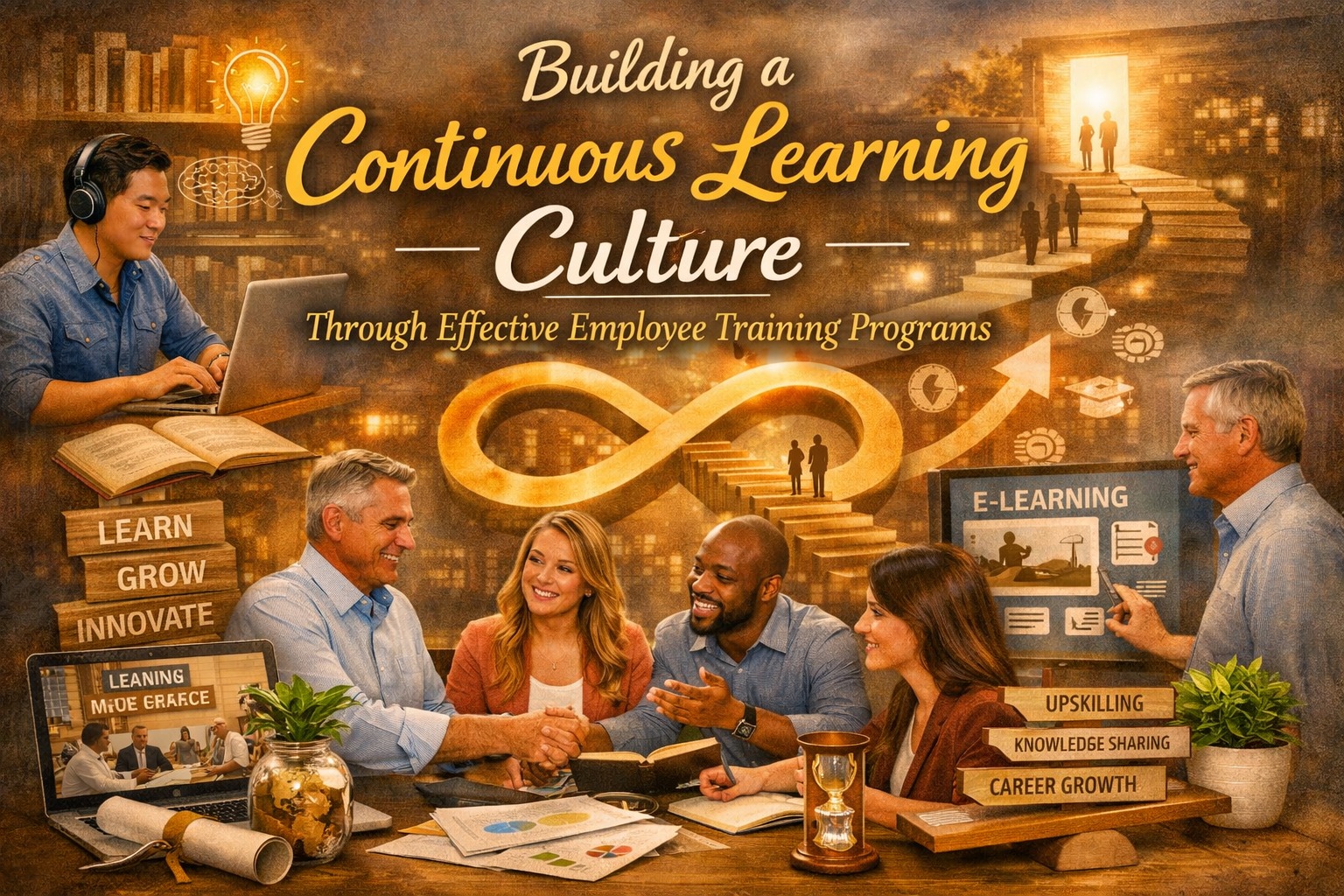
In today’s fast-changing business environment, organizations must adapt quickly to remain competitive. One of the most effective ways to achieve this is by building a continuous learning culture that encourages growth at every level. Companies that invest in employee training programs often experience stronger performance, better innovation, and improved adaptability. A strong learning culture also supports long-term professional development and helps employees stay relevant in their roles. Without continuous improvement, businesses risk falling behind in an increasingly dynamic market.
Creating a culture of learning is not just about occasional workshops or seminars. It requires a structured approach that integrates workplace learning into daily operations. When employees are consistently exposed to new knowledge and skills, they become more confident and productive. This foundation is essential for sustainable success and organizational growth.
IMPORTANCE OF BUILDING CONTINUOUS LEARNING CULTURE
A continuous learning culture is essential because it ensures that employees are always improving their capabilities. In modern industries, skills can become outdated quickly, making ongoing learning a necessity rather than a choice. Organizations that prioritize skill development are better prepared to handle change and innovation. This type of culture also increases employee satisfaction because workers feel valued and supported in their growth journey. As a result, turnover rates tend to decrease significantly.
Another important aspect is that continuous learning strengthens employee engagement. When employees feel that their company invests in their growth, they are more motivated to perform well. This creates a positive work environment where knowledge sharing becomes a natural part of daily activities. Over time, this leads to higher efficiency and better team collaboration. Ultimately, a strong learning culture becomes a competitive advantage for any organization.
ROLE OF EFFECTIVE EMPLOYEE TRAINING PROGRAMS
Employee training programs play a central role in building a strong learning culture within organizations. These programs provide structured opportunities for employees to gain new knowledge, improve technical skills, and develop leadership abilities. Well-designed training ensures that employees are aligned with company goals and industry standards. This alignment helps organizations maintain consistency and quality in their operations. Without effective training, even the most talented workforce may struggle to reach its full potential.
Moreover, corporate training initiatives help bridge the gap between current skills and future job requirements. By focusing on both technical and soft skills, companies can prepare employees for long-term success. Training programs also encourage adaptability, which is crucial in today’s rapidly evolving workplace. When implemented effectively, these programs become the backbone of professional development strategies. This ensures that employees are continuously growing alongside the organization.
STRATEGIES TO IMPLEMENT CONTINUOUS LEARNING CULTURE
To build a successful continuous learning culture, organizations must integrate learning into everyday work processes. One effective strategy is offering regular workplace learning opportunities such as workshops, online courses, and mentoring sessions. These initiatives should be accessible and flexible to accommodate different learning styles. Encouraging self-directed learning also helps employees take responsibility for their own development. This approach creates a more engaged and proactive workforce.
Another strategy is leveraging technology to support employee training programs. Digital platforms, e-learning systems, and virtual training sessions make learning more efficient and scalable. Companies should also create reward systems that recognize learning achievements. This motivates employees to actively participate in development programs. Over time, these strategies help establish a strong and sustainable learning environment.
BENEFITS FOR ORGANIZATIONS AND EMPLOYEES
A strong continuous learning culture brings significant benefits to both organizations and employees. For companies, it leads to improved productivity, innovation, and overall performance. Employees who undergo consistent skill development are more capable of handling complex tasks and solving problems effectively. This results in higher quality output and better customer satisfaction. Additionally, organizations become more resilient in facing industry challenges.
For employees, the benefits include enhanced career growth and increased job satisfaction. Professional development opportunities help individuals build confidence and expand their career paths. Employees also feel more valued when companies invest in their growth through structured employee training programs. This sense of value strengthens loyalty and reduces turnover. Ultimately, both parties benefit from a shared commitment to continuous improvement.
CHALLENGES AND HOW TO OVERCOME THEM
Despite its benefits, building a continuous learning culture comes with challenges. One common issue is resistance to change, where employees may be hesitant to adopt new learning methods. Limited time and workload pressures can also reduce participation in corporate training programs. Additionally, some organizations struggle with insufficient resources to implement effective training systems. These challenges can slow down the development of a learning-oriented environment.
To overcome these obstacles, companies must create a supportive leadership structure that prioritizes learning. Providing flexible employee training programs helps employees balance work and development. Organizations should also invest in affordable digital learning tools to reduce costs. Encouraging a positive mindset toward workplace learning is equally important. With consistent effort, these challenges can be transformed into opportunities for growth.
CONCLUSION
Building a continuous learning culture is essential for long-term business success in today’s competitive world. Through effective employee training programs, organizations can enhance skill development, improve performance, and support professional development at all levels. A strong commitment to workplace learning ensures that employees remain adaptable and future-ready. Although challenges may arise, they can be overcome with the right strategies and leadership support. Ultimately, companies that invest in learning will continue to grow and thrive in the modern economy.
Tentang Penulis
Gusti Ayu Tita P
Penulis — Universitas STEKOM
Penulis aktif yang berfokus pada isu-isu akademik, teknologi pendidikan, dan pengembangan sumber daya manusia di lingkungan kampus.