Building Responsibility Through Organizational Experience in Student Council
Gusti Ayu Tita P
3 Oktober 2026
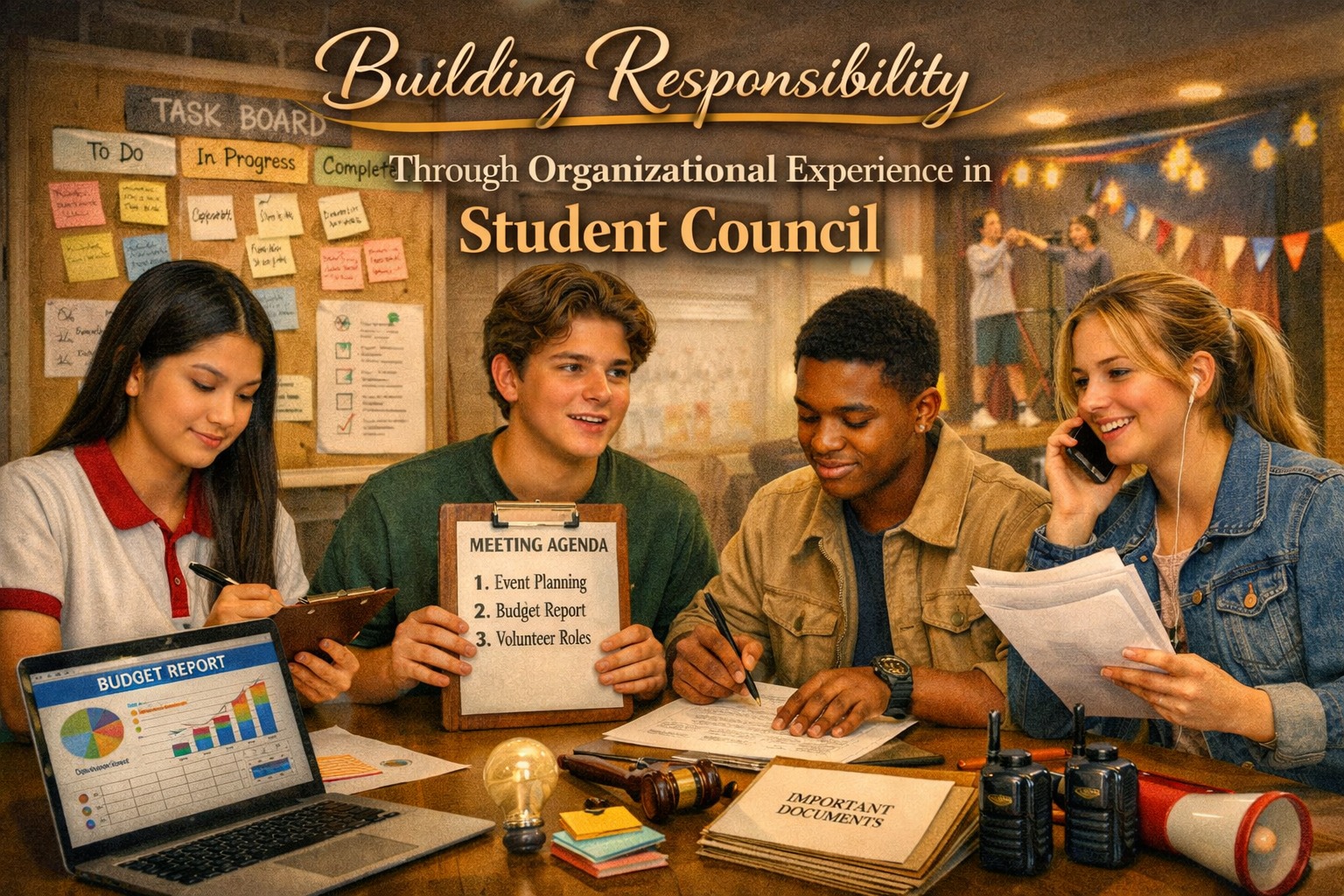
The student council is an important organization that provides students with opportunities to develop valuable life skills through real experiences. One of the most significant qualities developed through student council participation is responsibility. By managing activities, working with teams, and completing assigned duties, students learn how to become more disciplined and accountable individuals. Organizational experiences allow students to understand the importance of commitment, cooperation, and effective decision-making. Through continuous involvement, student council members develop strong character that supports their academic, personal, and future professional growth.
UNDERSTANDING THE ROLE OF STUDENT COUNCIL AS AN ORGANIZATION
The student council is a student-led organization that represents student voices and supports various school programs. Members are responsible for planning events, coordinating activities, communicating ideas, and helping create a positive school environment. These responsibilities provide practical learning experiences that cannot always be gained through classroom lessons. Students learn how organizations operate while developing important personal skills.
Being part of a student council requires dedication and active participation. Members must understand their roles, respect organizational rules, and contribute to achieving common goals. Every task, whether small or large, teaches students the value of reliability and commitment. These experiences become the foundation for developing responsible attitudes.
DEVELOPING RESPONSIBILITY THROUGH ORGANIZATIONAL TASKS
Organizational tasks in the student council help students understand the meaning of responsibility in real situations. Members must complete assignments, manage schedules, and ensure that planned activities run successfully. These responsibilities encourage students to become more organized and dependable. Completing tasks on time demonstrates commitment and respect for the team.
Students also learn that their actions can influence the success of an entire program. If one member does not complete their role properly, it may affect other team members and the overall outcome. This understanding encourages accountability and careful decision-making. Over time, students develop a stronger sense of ownership toward their responsibilities.
IMPROVING TIME MANAGEMENT AND DISCIPLINE
Balancing student council duties with academic responsibilities teaches students the importance of time management. Members often need to attend meetings, prepare events, and complete school assignments at the same time. Managing these different responsibilities requires planning, prioritization, and discipline. These habits help students become more productive and organized.
Discipline is also strengthened through consistent participation in organizational activities. Students learn to follow schedules, respect deadlines, and maintain commitment even when facing challenges. These experiences prepare them to handle greater responsibilities in the future. Strong time management and discipline become valuable skills in education and professional environments.
BUILDING TEAMWORK AND LEADERSHIP CHARACTER
Student council experiences encourage students to develop teamwork and leadership abilities. Every program requires cooperation between members with different skills, ideas, and responsibilities. Working together teaches students how to respect opinions, communicate effectively, and support shared goals. Collaboration creates a stronger and more successful organization.
Leadership character also grows when students take initiative and guide others during activities. They learn how to make decisions, solve problems, and motivate their teammates. These experiences build confidence while strengthening their ability to handle challenges. Through teamwork and leadership practice, students become more prepared for future roles.
LEARNING PROBLEM SOLVING THROUGH REAL EXPERIENCES
Organizational experiences provide opportunities for students to practice problem solving in realistic situations. Student council activities often involve unexpected challenges such as schedule changes, limited resources, or communication issues. Facing these situations encourages students to think critically and find effective solutions. These experiences improve adaptability and decision-making abilities.
Students also learn that problems can be solved more effectively through cooperation. Discussing challenges with teammates allows them to explore different perspectives and choose the best solution. This process develops patience, creativity, and analytical thinking. Problem-solving skills gained through student council activities remain useful throughout life.
THE LONG TERM BENEFITS OF STUDENT COUNCIL EXPERIENCE
The lessons gained from student council participation provide long-term benefits for students. Organizational experiences help build important qualities such as responsibility, leadership, communication, and confidence. These skills are valuable when students continue their education or enter professional environments. Universities and workplaces often appreciate individuals who demonstrate strong organizational abilities.
Beyond practical skills, student council involvement also shapes students' character. They become more aware of the importance of cooperation, commitment, and contributing to others. These values encourage students to become responsible members of society. The experience gained during school years becomes a strong foundation for future success.
CONCLUSION
Building responsibility through organizational experience in the student council helps students grow into disciplined, confident, and capable individuals. Through various tasks and activities, students learn accountability, teamwork, leadership, time management, and problem-solving skills. These experiences provide valuable lessons that support both personal development and future career preparation. A student council is not only a place for organizing events but also a training ground for developing responsible young leaders. By actively participating in organizational activities, students can build strong character and prepare themselves for future challenges.
Tentang Penulis
Gusti Ayu Tita P
Penulis — Universitas STEKOM
Penulis aktif yang berfokus pada isu-isu akademik, teknologi pendidikan, dan pengembangan sumber daya manusia di lingkungan kampus.