
Can Job Hoppers Gain New Skills More Easily?
Gusti Ayu Tita P
23 September 2026
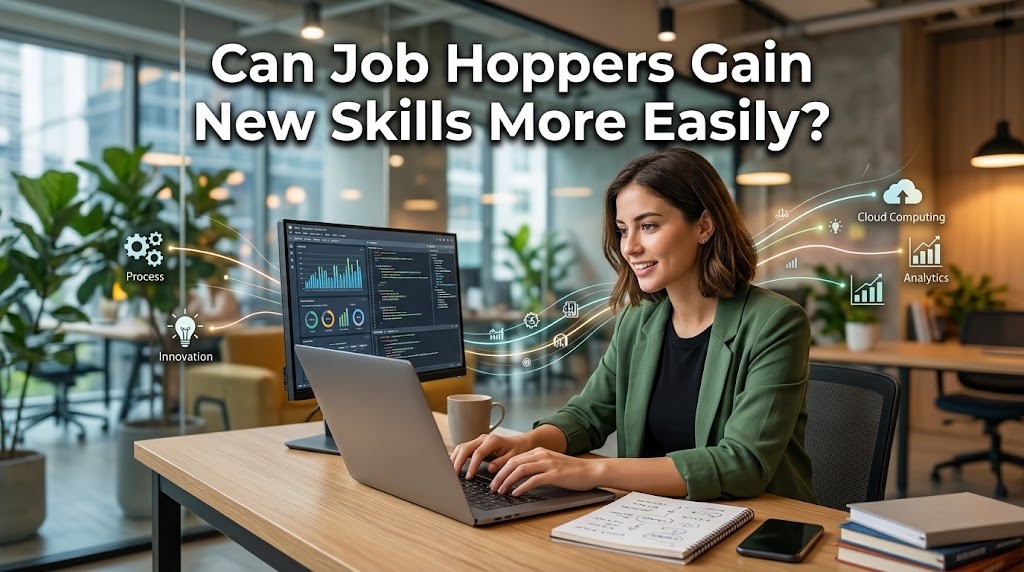
Changing jobs can expose workers to different responsibilities, technologies, work environments, and professional challenges. Because of this, job hoppers may have more opportunities to learn skills from different workplaces. However, changing jobs frequently does not automatically mean someone will develop skills faster. The results depend on the type of work, learning opportunities, responsibilities, and effort made by the employee.
Workers who move between companies can gain valuable experience when each position offers something new to learn. They may encounter different systems, customers, teams, and business strategies. These experiences can help them become more adaptable in changing work environments. However, job changes need to be carefully planned so that professional development remains consistent.
EXPOSURE TO DIFFERENT WORK ENVIRONMENTS
One potential advantage of job hopping is exposure to different work environments. Every company may have its own systems, procedures, communication styles, and workplace culture. Working in different environments can help employees understand how various organizations operate. This experience can improve their ability to adapt to new situations.
Different workplaces can also introduce workers to new professional expectations. An employee may learn how to communicate with different types of managers, customers, or team members. These experiences can strengthen adaptability and communication skills. However, workers should actively reflect on what they learn instead of simply moving from one workplace to another.
OPPORTUNITIES TO LEARN NEW SKILLS
Job hoppers may encounter more opportunities to develop new skills when each position has different responsibilities. For example, a marketing employee may learn content creation in one company, digital advertising in another, and customer research in a different role. This can create a broader professional skill set. The combination of different experiences may help workers understand several areas of their field.
However, employees should choose positions that complement their existing abilities and future goals. If every new job provides exactly the same responsibilities, changing companies may not lead to significant skill development. Workers can ask about training, projects, and responsibilities before accepting a new position. This helps ensure that a career move provides genuine learning opportunities.
LEARNING FROM DIFFERENT TEAMS AND MANAGERS
Working with different teams can also improve communication and teamwork skills. Employees may encounter different leadership styles, personalities, and methods of collaboration. Learning how to work effectively with different people can be useful in almost any profession. It can also help workers become more comfortable with adapting their communication style.
Different managers can provide different forms of feedback and guidance. Some may focus heavily on performance, while others may emphasize creativity, independence, or teamwork. Experiencing these different approaches can help employees understand their own strengths and areas for improvement. Over time, these lessons can contribute to broader professional development.
BUILDING A BROADER PROFESSIONAL SKILL SET
Frequent job changes can contribute to a broader skill set when workers intentionally choose roles that add new knowledge. A person may develop technical skills in one company and communication or leadership skills in another. Combining these abilities can make a worker more versatile. This can be particularly useful in industries where employees are expected to handle multiple responsibilities.
A broad skill set can also help workers understand connections between different areas of a business. For example, someone with experience in marketing, sales, and customer service may better understand how these functions influence each other. However, breadth should still be supported by enough depth in important skills. Workers should avoid collecting many basic skills without developing expertise in areas relevant to their career goals.
THE RISK OF LEARNING WITHOUT DEPTH
Although job hopping can provide many learning opportunities, it can also create a risk of limited skill depth. Employees who leave positions too quickly may not have enough time to master complex responsibilities. Some skills require repeated practice and experience with increasingly difficult projects. Moving before reaching that stage can limit the benefits of exposure to different workplaces.
For this reason, job hoppers should consider the learning curve of each position. They can stay long enough to complete meaningful projects and demonstrate measurable results when possible. Developing deeper expertise can make their experience more valuable to future employers. A balance between skill variety and skill depth can create a stronger professional profile.
HOW TO MAKE JOB HOPPING SUPPORT SKILL DEVELOPMENT
Job hoppers can make their career changes more useful by setting specific skill development goals. Before moving to another company, they can identify which abilities they want to improve and look for positions that provide opportunities to practice them. Keeping a record of completed projects and achievements can also show how their skills have developed. This makes each career transition easier to connect to a larger professional plan.
Workers should also continue learning outside their regular responsibilities. Online courses, professional training, certifications, and practical projects can complement workplace experience. Combining different learning methods can help workers strengthen both technical and soft skills. With a clear plan, changing jobs can become one part of a broader strategy for continuous professional development.
CONCLUSION
Job hoppers can gain new skills through exposure to different workplaces, teams, responsibilities, and professional challenges. However, frequent job changes do not automatically make someone a faster learner. The value of each move depends on whether the new position provides meaningful opportunities for skill development and whether the worker actively learns from the experience.
A strong career strategy should combine skill variety with skill depth. Job hoppers can benefit from choosing positions that support their career goals, completing meaningful projects, developing expertise, and continuing to learn outside the workplace. When planned carefully, different jobs can become valuable experiences that contribute to long-term professional growth.
Tentang Penulis
Gusti Ayu Tita P
Penulis — Universitas STEKOM
Penulis aktif yang berfokus pada isu-isu akademik, teknologi pendidikan, dan pengembangan sumber daya manusia di lingkungan kampus.



