Can Virtual Friends Help People Express Their Feelings?
Gusti Ayu Tita P
25 September 2026
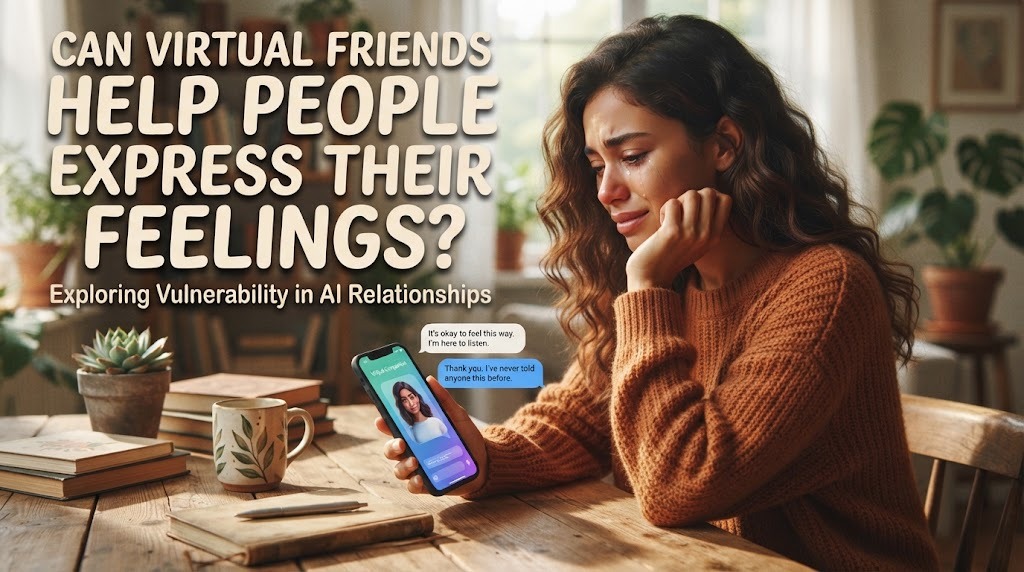
Expressing feelings is an important part of communication and emotional well-being. However, some people find it difficult to talk openly with family members, friends, or other people around them. Virtual friends can provide a private and convenient space for conversation, allowing users to describe their thoughts and emotions through digital interaction. They may be used for casual conversations, reflection, or emotional support. Although virtual friends have limitations, they can sometimes make it easier for people to begin expressing what they feel.
WHY DO PEOPLE SOMETIMES FIND IT HARD TO EXPRESS FEELINGS?
Many people have difficulty expressing feelings because they are afraid of being judged, misunderstood, or rejected. Some may also struggle to find the right words to describe complicated emotions. Previous experiences can influence how comfortable someone feels when talking about personal matters. Fear, embarrassment, uncertainty, and lack of confidence can all make emotional communication more difficult.
Social expectations can also affect the way people communicate their emotions. Someone may feel pressure to appear strong or avoid discussing personal problems. When these barriers exist, a person may prefer starting with a less intimidating form of communication. Virtual friends can sometimes provide that starting point, although they should not become the only place where someone discusses important emotional concerns.
HOW CAN VIRTUAL FRIENDS MAKE EMOTIONAL EXPRESSION EASIER?
Virtual friends can provide a conversational environment where users can write or speak without facing another person directly. This can give people more time to think about what they want to say. A user can describe an emotion gradually instead of explaining everything at once. Having time and space to choose words carefully may make emotional expression feel easier.
Digital conversations can also allow users to discuss everyday frustrations or concerns without immediately worrying about another person's reaction. For some people, this may reduce the pressure associated with face-to-face conversations. However, the experience is different for everyone, and virtual interaction does not guarantee that a person will feel better. Virtual friends can support expression, but they cannot replace genuine human understanding.
CAN WRITING TO A VIRTUAL FRIEND HELP PEOPLE UNDERSTAND THEIR EMOTIONS?
Writing about emotions can encourage people to organize their thoughts. When someone explains why they feel sad, angry, nervous, or excited, they may notice connections between their emotions and specific situations. A virtual friend can respond with questions that encourage further reflection. This type of conversation can help users put unclear feelings into words.
For example, a person who feels stressed may discover that several small problems have contributed to the emotion. Identifying these factors can make the situation easier to understand. However, a virtual friend's response should not be treated as a professional psychological assessment. Self-reflection can be useful, but serious or persistent emotional difficulties may require support from a qualified professional.
CAN VIRTUAL FRIENDS HELP PEOPLE TALK ABOUT EMBARRASSING FEELINGS?
Some feelings can be difficult to discuss because people worry about embarrassment. Users may feel more comfortable describing personal concerns through a digital conversation before discussing them with someone they trust. This can be particularly helpful when a person needs time to understand what they want to communicate. A virtual conversation may serve as a first step toward more open communication.
However, privacy should always be considered. Users should avoid sharing sensitive personal information simply because a virtual friend feels private or familiar. They should understand the platform's privacy practices and use available security settings. Feeling comfortable does not mean that every personal detail should be shared online.
CAN VIRTUAL FRIENDS HELP PEOPLE PRACTICE COMMUNICATION?
Virtual conversations can give people an opportunity to practice expressing thoughts and emotions. Users can try different ways of explaining how they feel and observe how the conversation develops. This may help some people become more comfortable with using emotional vocabulary and communicating personal experiences. The practice can be especially useful when someone is unsure how to begin a difficult conversation.
However, communicating with a virtual friend is not exactly the same as talking with a human. Real people respond through facial expressions, tone, body language, and personal experiences. These elements are important when learning how to communicate effectively in real situations. Therefore, virtual conversations can be practice rather than a complete replacement for real social interaction.
HOW CAN VIRTUAL FRIENDS PROVIDE A SENSE OF BEING HEARD?
People often want to feel that someone is listening when they share their feelings. A virtual friend can respond to messages and continue a conversation, which may give users a sense of interaction. This can be useful during moments when someone wants to express thoughts but does not have another person available. The feeling of being able to communicate immediately can make virtual companionship appealing.
Still, users should understand the difference between a responsive digital system and a human relationship. AI does not experience emotions or personal relationships in the same way people do. Its responses are generated by technology rather than personal emotional experience. Human relationships remain important for deeper emotional connection and mutual support.
CAN VIRTUAL FRIENDS HELP WITH DAILY EMOTIONAL REFLECTION?
Virtual friends can be used to reflect on emotions that appear during everyday activities. A person might discuss how their day went, what made them happy, or what caused frustration. Regular reflection can help users notice emotional patterns, common stressors, and situations that affect their mood. This can make it easier to recognize what they may want to change or discuss.
However, reflection should not become excessive overthinking. If conversations repeatedly focus on distress without leading to useful action or connection with real people, the user may need another form of support. Talking to trusted people can provide perspectives that a virtual system cannot offer. Emotional reflection is most useful when it supports healthy decisions and real-world relationships.
CAN VIRTUAL FRIENDS HELP PEOPLE ASK FOR SUPPORT?
Sometimes expressing feelings is the first step toward asking for help. A virtual conversation may help someone identify what they want to tell a trusted friend, family member, teacher, counselor, or professional. The user can organize their thoughts before starting a more important conversation. Virtual interaction can therefore act as a bridge toward human support.
However, virtual friends should not be treated as a substitute for professional help when someone is experiencing serious or persistent emotional difficulties. Important concerns should be discussed with an appropriate trusted person or qualified professional. If someone is in immediate danger or at risk of harming themselves, they should seek urgent help from local emergency services or a trusted person nearby. Knowing when to move from digital conversation to human support is essential.
WHAT ARE THE LIMITATIONS OF USING VIRTUAL FRIENDS FOR EMOTIONAL EXPRESSION?
Virtual friends have several limitations when it comes to understanding emotions. An AI system can misunderstand a user's words, miss important context, or provide an unsuitable response. It also cannot directly observe everything happening in a person's environment. A digital response should not automatically be considered accurate or appropriate for every emotional situation.
There is also a risk of becoming too dependent on virtual interaction. If someone only expresses their feelings through a virtual friend, they may have fewer opportunities to develop meaningful human connections. Real relationships involve mutual care, shared experiences, and the ability to respond to complex situations. Virtual friends are better viewed as an additional communication tool rather than a complete emotional support system.
HOW CAN PEOPLE USE VIRTUAL FRIENDS RESPONSIBLY?
People can use virtual friends responsibly by maintaining realistic expectations. They can use digital conversations for self-reflection, casual emotional expression, communication practice, or organizing their thoughts. At the same time, they should maintain relationships with trusted people in the real world. This creates a healthier balance between technology and human connection.
Privacy should also remain a priority. Users should avoid sharing passwords, financial details, precise locations, identification information, or other highly sensitive data. They should verify important advice and seek qualified support when a situation requires professional knowledge. Responsible use means combining digital convenience with privacy awareness, healthy boundaries, and real human support.
CONCLUSION
Virtual friends can sometimes help people express their feelings by providing a convenient space for conversation and reflection. They may make it easier to find words for emotions, practice communication, and organize personal thoughts. However, virtual friends have limitations and cannot fully replace human relationships or professional support. Users should protect their privacy and avoid becoming overly dependent on digital companionship. When used responsibly, virtual friends can be one helpful tool for emotional expression while real human connections remain essential.
Tentang Penulis
Gusti Ayu Tita P
Penulis — Universitas STEKOM
Penulis aktif yang berfokus pada isu-isu akademik, teknologi pendidikan, dan pengembangan sumber daya manusia di lingkungan kampus.