Challenges of Implementing Decentralization in the Digital Transformation Era
Gusti Ayu Tita P
4 Oktober 2026
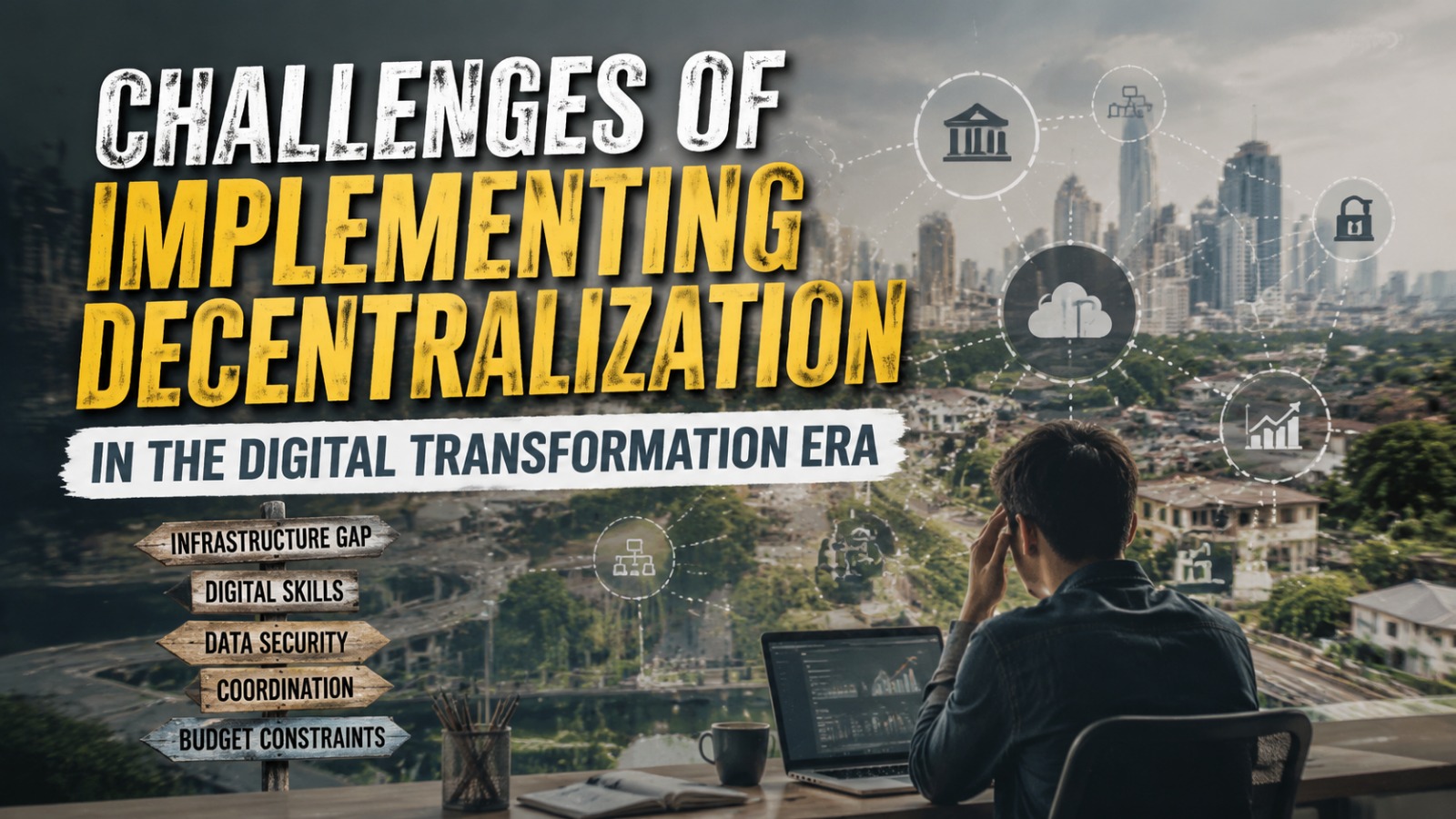
Decentralization is a governance approach that gives greater authority and responsibility to regional governments, organizations, or smaller units to make decisions independently. In the digital transformation era, decentralization has become increasingly important because technology allows information, services, and decision-making processes to be managed more efficiently. Digital systems help local governments and institutions provide faster and more transparent services to the community.
However, implementing decentralization in the modern digital era is not always easy. Many regions still face difficulties in adopting technology, managing data, and developing digital capabilities. The combination of decentralization and digital transformation requires strong planning, adequate infrastructure, and skilled human resources to achieve optimal results.
DIGITAL INFRASTRUCTURE AND TECHNOLOGY LIMITATIONS
One of the biggest challenges in implementing decentralization during the digital transformation era is the difference in digital infrastructure between regions. Some areas have advanced internet access and modern technology systems, while others still experience limited connectivity. This inequality can create gaps in public services and prevent certain regions from benefiting from digital innovation.
The lack of proper infrastructure also affects the implementation of digital governance. Regional governments need reliable networks, secure databases, and effective digital platforms to manage administrative processes. Without sufficient technology support, decentralization may not achieve its main goal of improving service quality and decision-making efficiency.
LIMITED DIGITAL SKILLS AND HUMAN RESOURCES
The success of decentralization depends heavily on the ability of human resources to manage new technologies. Many government employees and local organizations still need improvement in digital skills to operate modern systems effectively. Limited technological knowledge can slow down the adoption of digital services and reduce productivity.
In addition, digital transformation requires continuous training and adaptation. Local governments must invest in employee development so they can understand data management, cybersecurity, and digital communication. Strong human resources are essential to ensure that decentralization works effectively in a technology-based environment.
DATA MANAGEMENT AND CYBERSECURITY RISKS
The use of digital systems in decentralization creates new challenges related to data management and security. Local governments collect and process large amounts of public information, making data protection an important priority. Weak security systems can increase the risk of data leaks, cyberattacks, and misuse of information.
Effective decentralization requires clear policies for managing digital data. Governments must implement cybersecurity strategies and maintain public trust by protecting sensitive information. Strong regulations, secure technology systems, and responsible data management are necessary to support sustainable digital transformation.
COORDINATION BETWEEN CENTRAL AND REGIONAL GOVERNMENTS
Another challenge in implementing decentralization is maintaining effective coordination between central and regional governments. Although decentralization provides greater authority to local governments, cooperation with national institutions remains necessary. Differences in policies, technological readiness, and management systems can create communication problems.
The digital transformation era requires better integration between government levels. Shared digital platforms and standardized systems can help improve coordination and information exchange. Strong collaboration allows decentralization to become more effective while maintaining consistency in public services.
BUDGET LIMITATIONS AND DIGITAL INVESTMENT CHALLENGES
Implementing decentralization through digital transformation requires significant financial support. Many regions face difficulties in providing budgets for technology development, digital platforms, and employee training. Limited funding can slow down the process of creating modern and efficient public services.
Investment in technology should be viewed as a long-term strategy rather than only an expense. Governments need to prioritize digital projects that provide real benefits to society. Proper financial planning and resource allocation are important factors in overcoming digital transformation challenges.
STRATEGIES TO OVERCOME DECENTRALIZATION CHALLENGES
To overcome these challenges, governments need to develop comprehensive strategies that combine technology, human resources, and effective policies. Improving digital infrastructure, expanding training programs, and strengthening cybersecurity systems are important steps toward successful decentralization.
Furthermore, collaboration between governments, private sectors, and communities can accelerate digital transformation. The use of innovative technology, transparent management, and continuous evaluation can help create a more effective decentralized system. With proper strategies, decentralization can improve public services and support sustainable development in the digital era.
Tentang Penulis
Gusti Ayu Tita P
Penulis — Universitas STEKOM
Penulis aktif yang berfokus pada isu-isu akademik, teknologi pendidikan, dan pengembangan sumber daya manusia di lingkungan kampus.