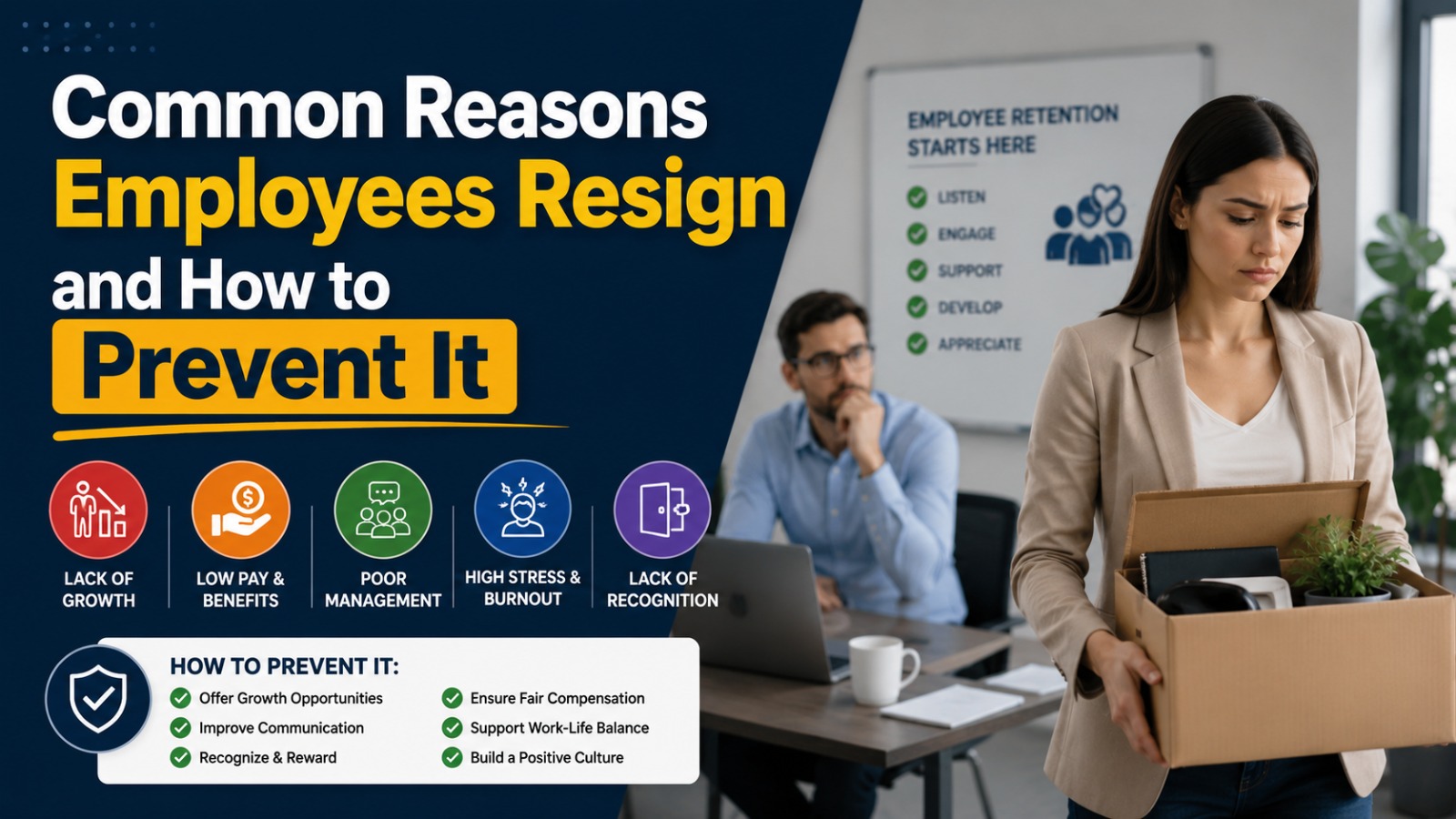
Employee resignation is a common challenge faced by businesses across various industries. High employee turnover can reduce productivity, increase recruitment costs, and negatively impact workplace morale. Understanding why employees leave and learning how to prevent resignation can help companies build a more stable and motivated workforce.
Organizations that focus on employee satisfaction and professional growth are more likely to retain talented workers and maintain long-term success.
LACK OF CAREER DEVELOPMENT OPPORTUNITIES
One of the most common reasons employees resign is the absence of career growth. Workers want opportunities to improve their skills, gain promotions, and achieve professional goals. When employees feel stuck in the same position without advancement opportunities, they may start searching for better careers elsewhere.
HOW TO PREVENT IT
Companies should provide training programs, mentorship opportunities, and clear career paths. Managers can also conduct regular discussions about employee goals and future development plans. Supporting professional growth increases employee motivation and loyalty.
POOR MANAGEMENT AND LEADERSHIP
Employees often leave managers rather than companies. Poor communication, lack of support, unfair treatment, and ineffective leadership can create a stressful work environment.
When managers fail to recognize employee contributions or provide proper guidance, employees may lose trust and engagement.
HOW TO PREVENT IT
Organizations should invest in leadership training to help managers improve communication, conflict resolution, and team management skills. Encouraging open communication and respectful leadership can strengthen employee relationships and workplace culture.
LOW SALARY AND INADEQUATE BENEFITS
Compensation remains a major factor in employee retention. Workers who believe they are underpaid compared to industry standards may look for better-paying opportunities.
Benefits such as health insurance, bonuses, flexible schedules, and retirement plans also influence employee satisfaction.
HOW TO PREVENT IT
Businesses should regularly review salary structures and ensure compensation remains competitive. Offering attractive benefits and performance-based rewards can improve employee retention and job satisfaction.
WORK-LIFE BALANCE ISSUES
Employees who experience excessive workloads, long working hours, or constant stress may eventually resign to protect their mental and physical health.
A poor work-life balance can lead to burnout, reduced productivity, and lower job satisfaction.
HOW TO PREVENT IT
Companies can support work-life balance by offering flexible schedules, remote work options, and reasonable workloads. Encouraging employees to take breaks and vacations also helps reduce stress and improve overall well-being.
LACK OF RECOGNITION AND APPRECIATION
Employees want to feel valued for their hard work and contributions. When organizations fail to recognize achievements, employees may feel unimportant and unmotivated.
Even highly skilled employees can lose enthusiasm if their efforts go unnoticed.
HOW TO PREVENT IT
Managers should regularly acknowledge employee achievements through praise, rewards, or recognition programs. Simple appreciation can significantly improve morale and employee engagement.
TOXIC WORKPLACE CULTURE
A negative work environment filled with conflict, discrimination, favoritism, or poor teamwork can push employees to resign quickly.
Employees prefer workplaces where they feel respected, safe, and supported.
HOW TO PREVENT IT
Organizations should build a positive company culture based on respect, inclusion, and teamwork. Clear workplace policies and effective conflict management can help create a healthier environment.
LIMITED COMMUNICATION AND FEEDBACK
Employees who rarely receive feedback or updates from management may feel disconnected from the organization. Poor communication can create confusion, frustration, and low trust within teams.
HOW TO PREVENT IT
Regular meetings, performance reviews, and open communication channels help employees feel informed and involved. Constructive feedback also helps employees improve and stay engaged with their work.
JOB STRESS AND BURNOUT
High-pressure environments without proper support often cause employee burnout. Continuous stress can affect both mental health and job performance, leading employees to seek less demanding positions.
HOW TO PREVENT IT
Employers should monitor workloads, provide mental health support, and encourage healthy workplace habits. Promoting employee wellness programs can also reduce stress and improve productivity.
BETTER OPPORTUNITIES ELSEWHERE
Sometimes employees resign because they receive better offers from competitors. This may include higher salaries, stronger benefits, or more attractive career opportunities.
HOW TO PREVENT IT
To retain talented employees, companies should focus on competitive compensation, career development, positive culture, and employee engagement. Organizations that create a supportive work environment are more likely to keep top talent.
CONCLUSION
Employee resignation can happen for many reasons, including poor management, low salaries, lack of career growth, workplace stress, and toxic company culture. However, businesses can reduce turnover by understanding employee needs and creating a supportive work environment.
Companies that invest in communication, employee development, recognition, and work-life balance are more likely to build loyal and productive teams. Preventing employee resignation not only saves costs but also strengthens long-term organizational success.
Tentang Penulis
Gusti Ayu Tita P
Penulis — Universitas STEKOM
Penulis aktif yang berfokus pada isu-isu akademik, teknologi pendidikan, dan pengembangan sumber daya manusia di lingkungan kampus.