Digital Innovation in Modern Tracer Study Implementation
Gusti Ayu Tita P
28 September 2026
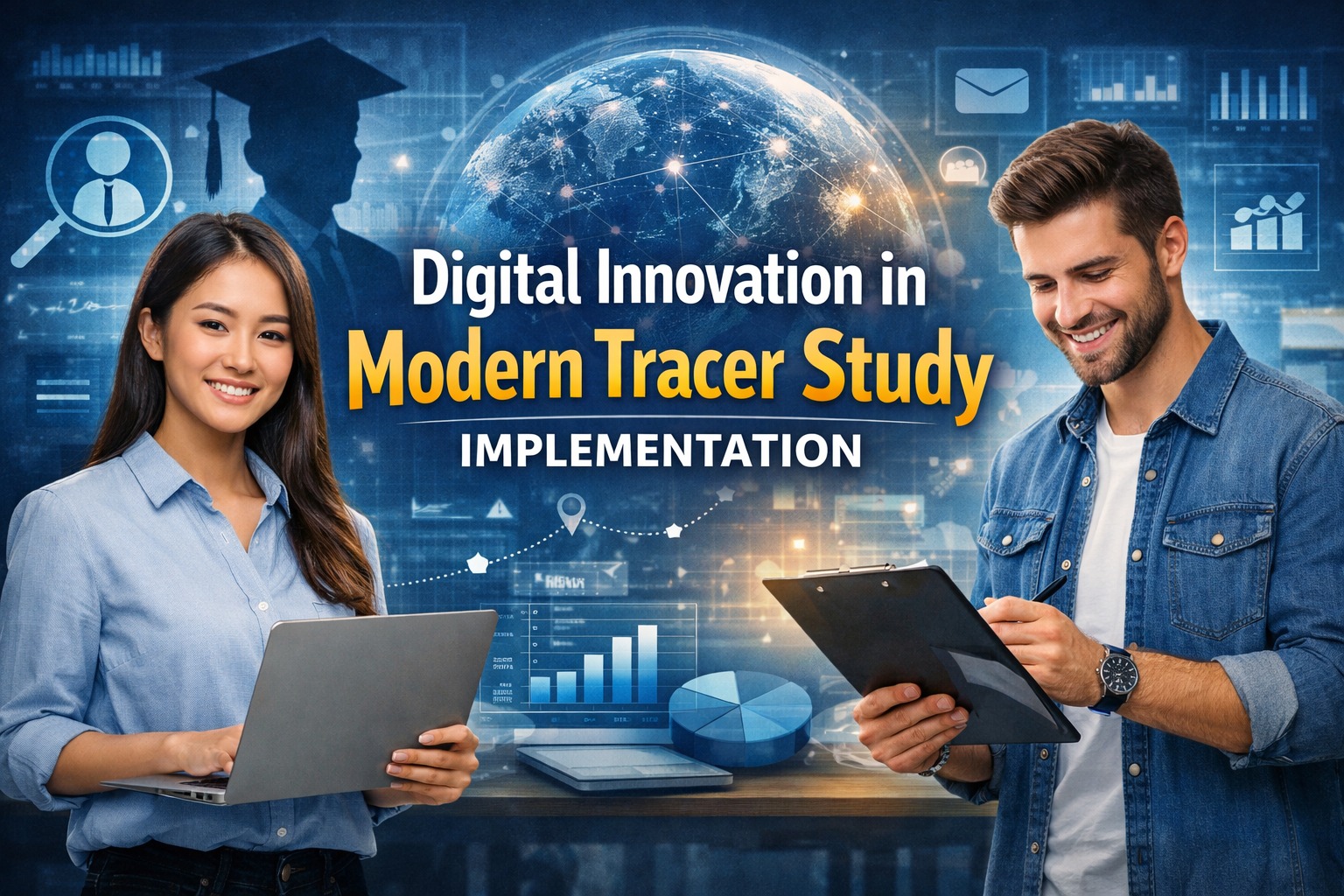
In the era of rapid technological development, digital innovation has transformed the way educational institutions conduct Tracer Studies. Universities and colleges are no longer dependent on paper-based surveys or manual data collection methods that often require significant time and resources. Modern digital solutions enable institutions to gather alumni information more efficiently, accurately, and in real time.
A modern Tracer Study not only tracks graduates' employment status but also provides valuable insights into career development, industry needs, and the relevance of academic programs. By utilizing digital technologies, higher education institutions can strengthen relationships with alumni while improving educational quality and competitiveness in the job market.
THE ROLE OF DIGITAL TECHNOLOGY IN TRACER STUDY
The implementation of digital technology has significantly improved the effectiveness of Tracer Study management. Universities can now distribute surveys through websites, mobile applications, emails, and social media platforms, allowing alumni to participate anytime and anywhere. This flexibility increases response rates and improves the quality of collected information.
In addition, digital systems enable institutions to automate data processing and reporting. Instead of manually entering and analyzing responses, administrators can instantly generate statistical reports and visual dashboards. This not only saves time but also minimizes the risk of human error in data handling.
BENEFITS OF DIGITAL INNOVATION FOR UNIVERSITIES
One of the major advantages of digital innovation is the ability to provide faster and more accurate data collection. Institutions can monitor alumni employment trends, salary levels, and career progression more efficiently. Such information becomes an essential reference for curriculum evaluation and academic development.
Digital platforms also support better communication between universities and graduates. Through integrated systems, institutions can share career opportunities, professional development programs, and campus updates. As a result, alumni engagement continues to grow even after graduation.
Another important benefit is the reduction of operational costs. Printing forms, postal distribution, and manual administration can be replaced by online systems that require fewer resources. This makes digital Tracer Studies more sustainable and cost-effective in the long term.
THE USE OF DATA ANALYTICS IN MODERN TRACER STUDY
Modern data analytics technologies allow universities to transform raw alumni information into meaningful insights. Institutions can identify which study programs produce graduates with high employability and which areas require improvement. This supports evidence-based decision making in academic management.
Advanced analytical tools can also predict future labor market trends and emerging industry demands. Universities can then adjust learning materials and training programs to better prepare students for professional challenges. Such strategies improve graduate competitiveness and institutional reputation.
Furthermore, visualization tools make complex information easier to understand. Interactive charts and dashboards help university leaders quickly interpret results and develop strategic plans based on accurate data.
ARTIFICIAL INTELLIGENCE AND AUTOMATION IN TRACER STUDY
The integration of Artificial Intelligence (AI) has become one of the most significant innovations in modern Tracer Study implementation. AI-powered systems can automatically categorize responses, identify patterns, and generate recommendations for educational improvement. This reduces administrative workloads while increasing analytical accuracy.
Chatbots and automated communication systems can remind alumni to complete surveys and answer frequently asked questions. This feature helps improve participation rates and creates a smoother user experience for graduates.
Automation also enables institutions to update alumni databases continuously. Changes in employment status, contact information, or professional achievements can be recorded more efficiently, ensuring that university databases remain relevant and up to date.
CHALLENGES IN DIGITAL TRACER STUDY IMPLEMENTATION
Despite its many advantages, digital implementation also presents several challenges. Data security and privacy protection are among the most important concerns for educational institutions. Universities must ensure that alumni information is stored and managed according to applicable regulations and ethical standards.
Another challenge is maintaining alumni participation over time. Some graduates may change contact information or become less responsive after entering the workforce. Therefore, institutions need attractive communication strategies and user-friendly digital platforms to maintain engagement.
Technical infrastructure also plays an important role in successful implementation. Reliable internet access, system maintenance, and staff training are necessary to ensure smooth and effective operations.
THE FUTURE OF DIGITAL TRACER STUDY
The future of Tracer Study implementation will be increasingly driven by smart technologies, cloud computing, and integrated information systems. Educational institutions are expected to adopt more sophisticated digital ecosystems that connect students, alumni, employers, and universities in a single platform.
The integration of big data and predictive analytics will provide deeper insights into graduate outcomes and labor market demands. This information will support continuous educational improvement and help universities remain competitive in the global education sector.
As digital transformation continues to evolve, modern Tracer Studies will become more than just alumni surveys. They will serve as strategic tools for improving educational quality, strengthening alumni relationships, and supporting institutional development.
CONCLUSION
The adoption of digital innovation in modern Tracer Study implementation offers substantial benefits for universities and alumni alike. Technologies such as data analytics, automation, and Artificial Intelligence enable faster data collection, more accurate analysis, and stronger alumni engagement.
By overcoming challenges related to security, participation, and infrastructure, educational institutions can maximize the value of digital Tracer Studies. Ultimately, these innovations contribute to better educational quality, stronger graduate outcomes, and improved institutional competitiveness in the digital era.
Tentang Penulis
Gusti Ayu Tita P
Penulis — Universitas STEKOM
Penulis aktif yang berfokus pada isu-isu akademik, teknologi pendidikan, dan pengembangan sumber daya manusia di lingkungan kampus.