Does Parenting Affect the Character of the Strawberry Generation?
Gusti Ayu Tita P
26 September 2026
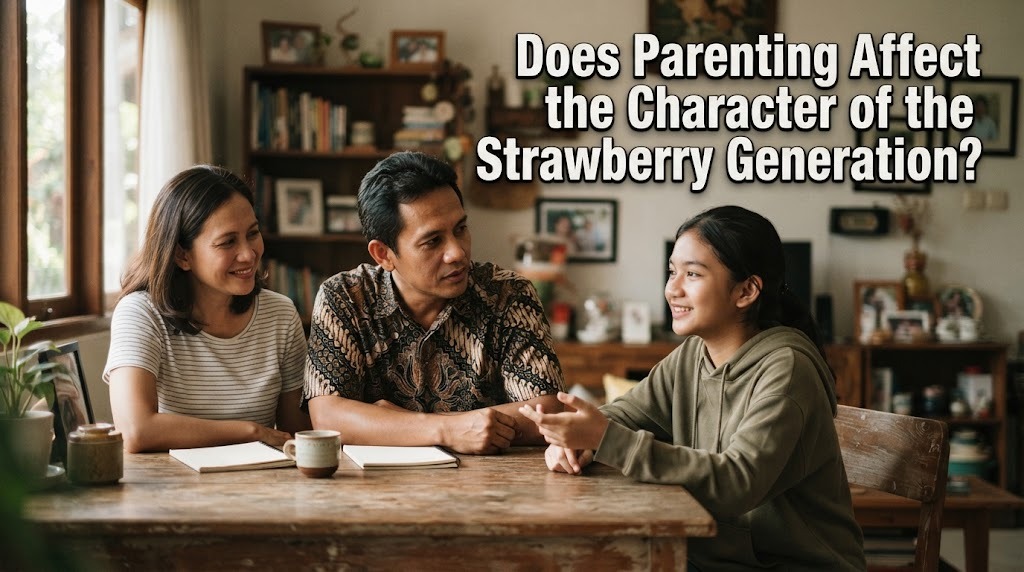
The Strawberry Generation is often discussed in relation to emotional sensitivity, digital habits, social pressure, and changing expectations about education and careers. However, the character of young people is not shaped by one factor alone. Family environment, education, friendships, technology, personal experiences, and social conditions can all contribute to personality and behavior. Among these factors, parenting can play an important role in how young people develop independence, resilience, confidence, and responsibility.
Parenting styles can influence how children respond to problems, communicate their feelings, make decisions, and deal with failure. Supportive parenting can provide a strong foundation for emotional development, while excessive protection may sometimes reduce opportunities for children to practice independence. Understanding this relationship can help families support the younger generation without relying on stereotypes about the Strawberry Generation.
PARENTING CAN SHAPE EMOTIONAL DEVELOPMENT
Parents are among the earliest people who teach children how to understand and respond to emotions. When parents encourage children to express their feelings appropriately, children can gradually learn how to recognize emotions and communicate their needs. Healthy emotional communication can help young people develop greater self-awareness and emotional confidence.
However, emotional support does not mean protecting children from every uncomfortable experience. Children also need opportunities to experience disappointment, disagreement, and manageable challenges. When parents provide support while allowing children to experience normal difficulties, they can help young people develop healthier ways of handling emotional pressure.
OVERPROTECTION MAY LIMIT INDEPENDENCE
Parents naturally want to protect their children from failure, disappointment, or difficult situations. However, excessive protection can sometimes prevent children from learning how to solve problems independently. If parents consistently make decisions or solve problems for their children, young people may have fewer opportunities to develop decision-making skills. Independence grows when children are trusted to handle responsibilities that are appropriate for their age and abilities.
For the Strawberry Generation, opportunities to make choices can be especially important as they prepare for education, employment, and adult responsibilities. Parents can provide guidance without controlling every decision. Allowing children to make reasonable mistakes can also teach them that failure is a normal part of learning.
PARENTING CAN INFLUENCE HOW CHILDREN HANDLE FAILURE
Failure is an important part of personal development because it provides opportunities to learn, adjust strategies, and try again. Parenting can influence whether children see failure as something shameful or as an experience that can provide useful lessons. Parents who focus only on results may unintentionally increase fear of failure, while parents who recognize effort and learning can encourage a healthier attitude toward setbacks.
This does not mean parents should ignore achievement or avoid setting expectations. Instead, expectations can be balanced with constructive feedback and realistic encouragement. Young people who are allowed to learn from mistakes may gradually become more comfortable facing challenges in education, relationships, and future careers.
FAMILY EXPECTATIONS CAN CREATE PRESSURE
Parents often have hopes for their children's academic performance, career choices, relationships, and future lifestyle. Reasonable expectations can motivate children to work toward meaningful goals. However, very high or inflexible expectations can create pressure when young people feel that their value depends entirely on achievement.
The Strawberry Generation may already face pressure from social media, academic competition, career uncertainty, and changing economic conditions. Strong family pressure can add another layer of stress. Open conversations about goals and expectations can help parents understand what their children actually want while allowing young people to develop their own direction.
SUPPORTIVE PARENTING CAN BUILD CONFIDENCE
Confidence develops through experience, encouragement, responsibility, and the opportunity to solve problems. Parents can support confidence by recognizing progress, listening to their children's concerns, and providing constructive guidance. Supportive parenting can help young people believe that they are capable of learning and improving, even when they encounter difficulties.
At the same time, constant praise without meaningful responsibility may not necessarily build lasting confidence. Young people also need realistic feedback and opportunities to demonstrate their abilities. A balanced approach allows parents to encourage children while helping them understand both their strengths and areas that still need improvement.
PARENTING CAN AFFECT ATTITUDES TOWARD RESPONSIBILITY
Responsibility is usually developed through repeated practice rather than simply through advice. Parents can teach responsibility by giving children appropriate household tasks, managing simple personal decisions, and encouraging them to take ownership of their commitments. Small responsibilities can prepare young people for larger responsibilities in education, work, finances, and adult life.
If parents always handle practical matters for their children, young people may become less accustomed to managing everyday challenges. On the other hand, gradually increasing responsibility can strengthen independence. This approach can help the Strawberry Generation become more prepared to manage real-world demands without removing the support of their families.
HEALTHY PARENTING REQUIRES BALANCE
There is no single parenting style that determines the character of every young person. Children respond differently to family environments because personality, experiences, education, friendships, and other social influences also matter. Parenting should therefore focus on balancing protection with independence, guidance with freedom, and emotional support with responsibility.
For parents of the Strawberry Generation, the goal does not have to be eliminating every difficulty from their children's lives. Instead, parents can create a safe environment where young people are encouraged to face manageable challenges, communicate openly, make decisions, and learn from consequences. This balance can support resilience while maintaining a strong family relationship.
CONCLUSION
Parenting can affect the character of the Strawberry Generation, particularly in areas such as emotional development, independence, resilience, confidence, responsibility, and attitudes toward failure. Supportive parenting can provide young people with a strong foundation, while excessive protection or unrealistic expectations may create challenges in developing independence and coping skills.
However, parenting is only one influence on a person's character. Technology, education, friendships, culture, personal experiences, and social conditions also contribute to how young people develop. Rather than labeling the Strawberry Generation as fragile or overly sensitive, parents can focus on helping young people become responsible, adaptable, emotionally aware, and capable of handling challenges independently.
Tentang Penulis
Gusti Ayu Tita P
Penulis — Universitas STEKOM
Penulis aktif yang berfokus pada isu-isu akademik, teknologi pendidikan, dan pengembangan sumber daya manusia di lingkungan kampus.