Essential Skills to Compete in the Global Job Market
Gusti Ayu Tita P
14 Oktober 2026
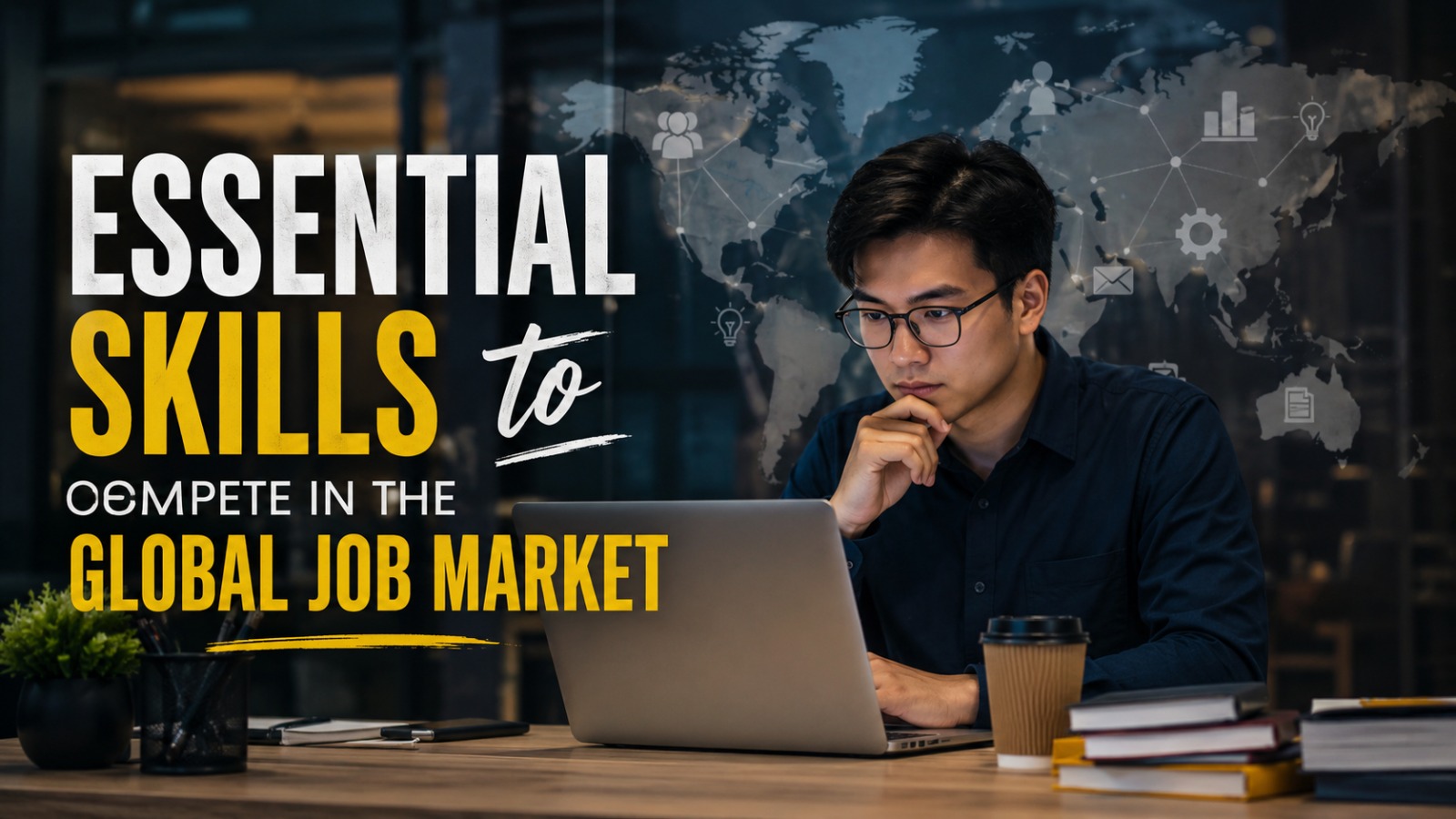
The global job market is becoming more competitive as businesses expand across borders and technology continues to transform the workplace. Employers are no longer looking only for candidates with technical expertise but also individuals who can adapt, collaborate, and solve problems effectively. Whether you are a student, a fresh graduate, or an experienced professional, developing the right skills can significantly improve your career opportunities. Understanding what employers value most allows you to prepare yourself for long-term success. By mastering a combination of technical and interpersonal abilities, you can confidently compete for opportunities in today's international workforce.
WHY GLOBAL JOB MARKET SKILLS MATTER
The modern workplace connects companies, clients, and employees from different countries and cultures. As a result, organizations seek professionals who can communicate effectively, work with diverse teams, and quickly adapt to changing business environments. These abilities make employees more valuable regardless of their industry or job title.
Having the right skills also increases career flexibility. Professionals with strong competencies can pursue opportunities in multinational companies, remote positions, and international projects. As globalization continues to grow, investing in your professional development becomes one of the smartest career decisions you can make.
COMMUNICATION SKILLS
Communication skills remain one of the most valuable assets in any profession. Employers expect candidates to express ideas clearly through speaking, writing, and active listening. Strong communication helps reduce misunderstandings, improves teamwork, and increases productivity.
In the global workforce, communication also includes interacting with people from different cultural backgrounds. Being respectful, understanding different perspectives, and adjusting your communication style help build stronger professional relationships. Clear communication often leads to better collaboration and greater career advancement.
DIGITAL LITERACY
Modern workplaces rely heavily on digital tools, making digital literacy an essential skill for every professional. Employees should understand how to use productivity software, video conferencing platforms, cloud storage, and digital collaboration tools efficiently. Basic knowledge of cybersecurity and online safety is also increasingly important.
Technology continues to evolve rapidly, so continuous learning is necessary. Staying updated with emerging technologies, including artificial intelligence, automation, and data management, allows professionals to remain competitive. Digital confidence helps employees adapt to new systems and improve workplace efficiency.
PROBLEM-SOLVING AND CRITICAL THINKING
Companies highly value employees who can analyze situations and develop effective solutions. Problem-solving skills enable professionals to identify challenges, evaluate possible options, and make informed decisions. Instead of focusing only on problems, successful employees actively seek practical improvements.
Critical thinking also helps professionals evaluate information objectively before making decisions. This skill reduces costly mistakes and encourages innovation within organizations. Employers appreciate individuals who remain calm under pressure and can solve complex challenges efficiently.
ADAPTABILITY AND CONTINUOUS LEARNING
The business world changes quickly because of technological innovation, economic shifts, and evolving customer expectations. Adaptability allows professionals to adjust to new responsibilities, workplace technologies, and changing business strategies without losing productivity. Flexible employees are often viewed as valuable long-term assets.
Continuous learning supports adaptability by keeping your knowledge current. Taking online courses, attending professional workshops, and earning industry certifications demonstrate your commitment to career growth. Lifelong learning helps professionals remain relevant in an increasingly competitive employment market.
TEAMWORK AND COLLABORATION
Modern organizations rely on teamwork to complete projects efficiently. Collaboration skills allow employees to share ideas, solve problems together, and achieve common goals. Respecting colleagues' opinions and contributing positively to group discussions strengthen workplace relationships.
International companies often operate with remote and multicultural teams. Working successfully with people from different backgrounds requires open-mindedness, empathy, and mutual respect. Strong teamwork improves project outcomes while creating a healthier and more productive work environment.
LEADERSHIP AND EMOTIONAL INTELLIGENCE
Leadership is not limited to managers or executives. Every employee can demonstrate leadership skills by taking initiative, supporting colleagues, and accepting responsibility for results. Employers value professionals who motivate others and contribute positively to organizational success.
Equally important is emotional intelligence, which involves understanding and managing your emotions while recognizing the feelings of others. Professionals with high emotional intelligence communicate more effectively, resolve conflicts professionally, and build stronger workplace relationships. These qualities contribute significantly to long-term career success.
FOREIGN LANGUAGE PROFICIENCY
Speaking more than one language provides a significant advantage in the international job market. English remains the most widely used business language, making strong English communication skills highly valuable across industries. Additional languages can further expand career opportunities in global organizations.
Language proficiency also improves cross-cultural communication. Employees who understand different languages often develop stronger relationships with international clients, partners, and colleagues. This ability enhances collaboration and increases professional credibility in multinational environments.
TIME MANAGEMENT AND PRODUCTIVITY
Effective time management enables professionals to complete tasks efficiently while maintaining high-quality work. Prioritizing responsibilities, setting realistic deadlines, and avoiding unnecessary distractions improve daily productivity. Organized employees are generally more reliable and better prepared for increasing workloads.
Productivity also involves maintaining a healthy balance between efficiency and quality. Using planning tools, scheduling techniques, and productivity methods helps professionals achieve consistent performance. Employers appreciate individuals who manage their time wisely and consistently meet project deadlines.
CONCLUSION
Success in the global job market requires more than technical knowledge alone. Professionals who combine communication skills, digital literacy, problem-solving abilities, adaptability, teamwork, leadership, foreign language proficiency, and time management are better prepared for international career opportunities. Developing these competencies through continuous learning and practical experience increases employability and long-term career growth. By investing in these essential skills today, you can confidently compete in an evolving global workforce and build a successful professional future.
Tentang Penulis
Gusti Ayu Tita P
Penulis — Universitas STEKOM
Penulis aktif yang berfokus pada isu-isu akademik, teknologi pendidikan, dan pengembangan sumber daya manusia di lingkungan kampus.