How Are College Students Using AI for Academic Activities?
Gusti Ayu Tita P
28 September 2026
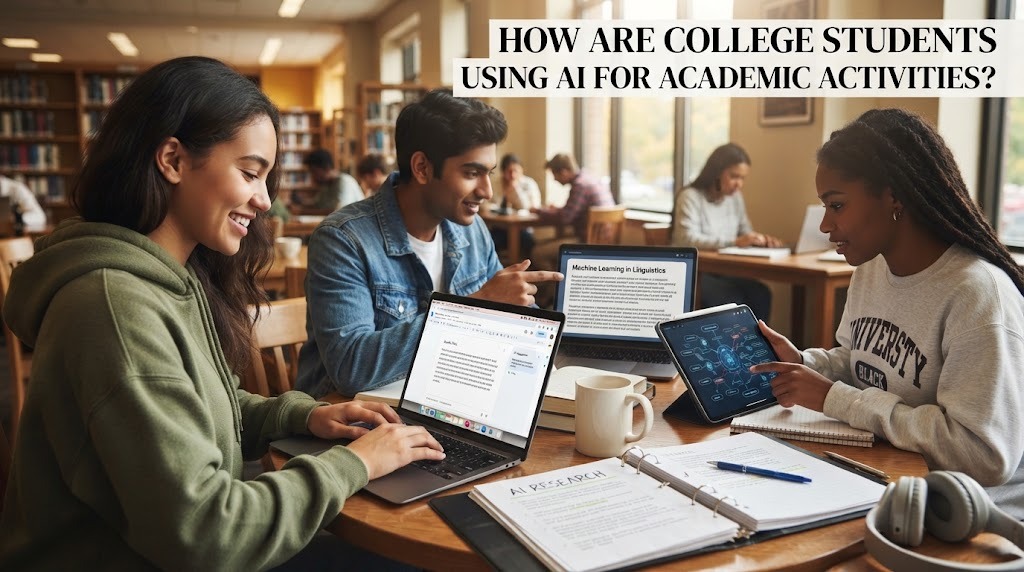
Artificial Intelligence has become increasingly visible in modern education. College students can use AI tools to support various academic activities, from understanding difficult topics to organizing ideas and improving written work. AI can become a useful learning assistant when students use it responsibly and critically.
The use of AI in education also creates new opportunities and challenges. Students need to understand how AI works, recognize its limitations, and follow academic rules established by their institutions. Using AI effectively means using technology to support learning rather than replacing the student's own effort and understanding.
AI HELPS STUDENTS UNDERSTAND DIFFICULT TOPICS
One common use of AI is helping students understand academic concepts that may be difficult to learn independently. Students can ask AI to explain a topic using simpler language or provide examples related to a particular subject. AI can provide additional explanations that complement information from lecturers and textbooks.
Students can also use AI to ask follow-up questions when they need clarification. This can support independent learning because students can explore a topic based on their own learning needs. However, important information should still be checked against reliable academic sources. AI explanations should be treated as learning support rather than the only source of knowledge.
AI SUPPORTS BRAINSTORMING AND IDEA DEVELOPMENT
Students often need to develop ideas before writing essays, reports, presentations, or research projects. AI can help generate possible topics, questions, outlines, or perspectives related to an assignment. Brainstorming with AI can help students overcome difficulty when starting an academic project.
The ideas provided by AI should not automatically be accepted as final answers. Students need to evaluate the suggestions and select ideas that are relevant to their assignments. The student's own reasoning remains important when developing academic ideas.
AI CAN HELP WITH WRITING AND LANGUAGE
Students can also use AI tools to improve the clarity and organization of their writing. AI may help identify grammar problems, suggest clearer sentences, or explain unfamiliar vocabulary. Language assistance can be especially useful for students who are writing academic work in a second language.
However, students should maintain their own voice and understanding when using AI for writing. Simply submitting AI-generated text without reviewing or understanding it may conflict with academic integrity policies. AI is more useful as an editing and learning tool than as a replacement for genuine student writing.
AI SUPPORTS RESEARCH AND INFORMATION ORGANIZATION
Academic projects often require students to organize large amounts of information. AI tools can help students summarize provided materials, create basic outlines, identify key points, or organize notes. These functions can make the early stages of academic work more efficient.
Students should still verify information using credible sources such as academic journals, books, and official publications. AI can sometimes provide inaccurate or incomplete information. Critical evaluation is essential whenever students use AI during research activities.
AI HELPS STUDENTS PRACTICE AND PREPARE FOR EXAMS
AI can also be used as a study partner. Students can ask AI to create practice questions, explain answers, provide examples, or review specific concepts. Personalized practice can help students identify areas that need more attention.
Students can adjust their questions based on their level of understanding. For example, they may ask for easier explanations first and then request more advanced questions. This can encourage active learning when students use the answers to test their own understanding. AI-supported practice can complement traditional study methods such as reviewing notes and completing exercises.
AI SUPPORTS PRESENTATIONS AND ACADEMIC PROJECTS
Students often need to prepare presentations, group projects, and other academic materials. AI can help them organize presentation structures, develop discussion points, or suggest ways to explain complex information. AI can support students during the planning stage of academic projects.
Students can then adapt the suggestions to match their assignment requirements and personal ideas. They should also check facts and make sure that the final presentation reflects their own understanding. Human judgment remains important when turning AI suggestions into academic work.
STUDENTS NEED TO USE AI RESPONSIBLY
Although AI provides many academic benefits, students should be aware of its limitations. AI-generated information can contain errors, outdated information, or unsupported claims. Students need to verify important information before using it in academic assignments.
Academic integrity is another important consideration. Different universities and lecturers may have different rules regarding AI use in assignments, examinations, and research. Students should follow the applicable academic policies and clearly understand when AI assistance is allowed. Responsible AI use requires honesty, critical thinking, and awareness of academic rules.
CONCLUSION
College students are using AI for many academic activities, including understanding difficult topics, brainstorming ideas, improving writing, organizing information, practicing for exams, and preparing academic projects. These applications can help students study more efficiently and explore subjects in different ways.
However, AI should not replace independent thinking and genuine learning. Students should verify information, follow academic integrity policies, and understand the work they submit. When used responsibly, AI can serve as a valuable academic tool while students remain active participants in their own education.
Tentang Penulis
Gusti Ayu Tita P
Penulis — Universitas STEKOM
Penulis aktif yang berfokus pada isu-isu akademik, teknologi pendidikan, dan pengembangan sumber daya manusia di lingkungan kampus.