How Can Beginners Write a Digital Novel?
Gusti Ayu Tita P
29 September 2026
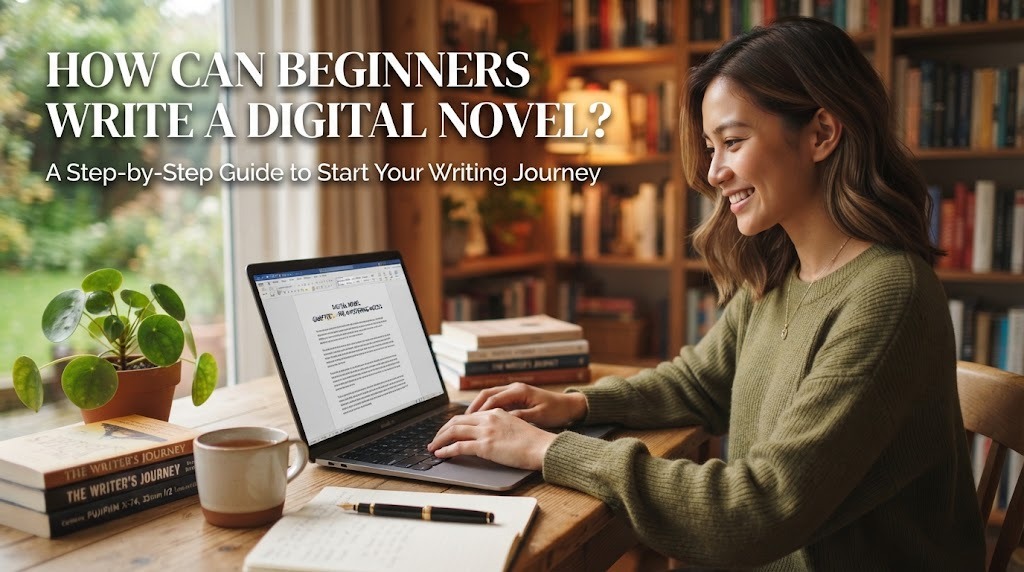
Writing a digital novel can be an exciting way for beginners to turn ideas into stories that can be shared with readers online. Unlike traditional publishing, digital publishing gives writers different ways to create, edit, and distribute their work. However, writing a good novel still requires planning, creativity, consistency, and revision. Beginners do not need to create a perfect story from the beginning. By following clear steps, they can gradually develop an idea into a complete digital novel.
CHOOSE AN IDEA AND STORY THEME
The first step in writing a digital novel is choosing a story idea and theme. Beginners can start with an idea that interests them, such as friendship, family, romance, adventure, mystery, fantasy, or personal growth. The idea does not need to be complicated because even a simple concept can become an interesting story when it is developed well. Writers should think about what they want readers to experience or understand from the story.
After choosing an idea, the writer can determine the main theme and direction of the novel. A clear theme helps keep the story focused and prevents unnecessary events from taking over the plot. Beginners can write a short summary of the main conflict and the expected direction of the story. This simple preparation can make the writing process easier to manage.
CREATE INTERESTING CHARACTERS
Characters are an important part of every novel because they help readers connect with the story. Beginners should create main characters with clear goals, personalities, strengths, weaknesses, and motivations. A character becomes more interesting when readers can understand why they make certain decisions. Characters should also have room to develop as the story progresses.
The main character should usually face a challenge or conflict that pushes the story forward. Supporting characters can help, challenge, or influence the main character depending on their roles. Writers can create short character profiles before starting the novel to keep important details consistent. This can also prevent confusion when the story becomes longer.
PLAN THE STORY PLOT
After creating the characters, beginners can organize the plot and major events of the novel. A simple structure can include a beginning that introduces the characters and situation, a middle that develops the main conflict, and an ending that provides a resolution. Writers can make a basic outline before writing each chapter. An outline does not have to contain every detail because it can be changed during the writing process.
A strong plot should have events that are connected rather than appearing randomly. Each important event should contribute to the development of the characters or the main conflict. Writers can also create smaller problems or challenges to maintain the reader's interest. Planning the plot helps beginners understand where the story is going before they start writing large sections.
WRITE WITH A CLEAR AND NATURAL STYLE
Beginners should use clear and natural language that matches the type of story they are writing. The writing style can be simple while still creating atmosphere, emotion, and strong descriptions. Writers do not need to use difficult vocabulary to make a novel interesting. Clear sentences can help readers understand the story and focus on the characters and events.
Dialogue should also sound natural and fit the personality of each character. Writers can avoid unnecessary repetition and choose descriptions that support the scene instead of explaining every small detail. Reading other novels can help beginners understand different writing styles, but they should develop their own voice rather than copying another writer. Original writing makes a digital novel more distinctive.
WRITE CONSISTENTLY
Writing a novel requires consistency and patience because completing a long story can take time. Beginners can create a realistic writing schedule based on their available time. For example, they can set a daily or weekly target instead of trying to write the entire novel in one sitting. A small amount of progress can eventually become a complete manuscript when it is done consistently.
Writers should also avoid becoming too focused on perfection during the first draft. The main goal of an initial draft is to complete the story and develop the main ideas. Sentences, descriptions, and scenes can be improved during the editing stage. Separating writing from editing can help beginners maintain their progress and avoid getting stuck on small details.
EDIT AND PREPARE THE DIGITAL MANUSCRIPT
Finishing the first draft does not mean the novel is ready to publish. Beginners should edit and revise the manuscript to improve the story, language, structure, and consistency. They can check spelling, grammar, dialogue, character details, plot connections, and unnecessary scenes. Reading the manuscript again after taking a short break can also help writers notice problems that were missed during the first draft.
It can also be useful to ask trusted readers for feedback. Other people may notice unclear scenes, inconsistent characters, or parts of the story that need more explanation. After revisions are complete, the manuscript can be prepared according to the requirements of the chosen digital publishing platform. Writers should also make sure that the cover, title, description, and content follow applicable copyright and platform rules.
CONCLUSION
Beginners can write a digital novel by starting with a clear story idea, developing interesting characters, planning the plot, and writing consistently. Using simple and natural language can make the story easier for readers to understand, while regular revision can improve the quality of the final manuscript. Writers should not expect the first draft to be perfect because editing is an important part of the creative process. Before publishing, the manuscript should be carefully reviewed and prepared for the chosen digital platform. With patience, practice, and consistent effort, beginners can turn their ideas into a complete digital novel.
Tentang Penulis
Gusti Ayu Tita P
Penulis — Universitas STEKOM
Penulis aktif yang berfokus pada isu-isu akademik, teknologi pendidikan, dan pengembangan sumber daya manusia di lingkungan kampus.