How Can Hobby Communities Help Develop New Skills?
Gusti Ayu Tita P
28 September 2026
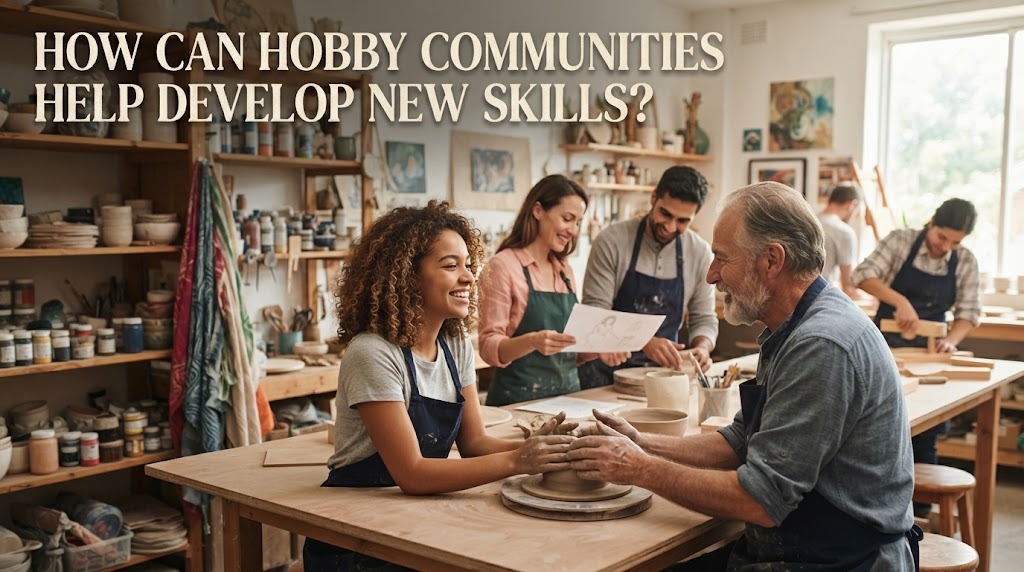
Hobby communities bring together people who share similar interests, such as photography, writing, gaming, cooking, music, sports, crafts, or technology. Besides providing a place to enjoy a favorite activity, these communities can also help members develop practical and social skills. Regular interaction allows people to learn from others, exchange ideas, and practice new abilities in a supportive environment. Members can also gain experience by joining group activities, projects, workshops, and discussions. For this reason, hobby communities can become useful spaces for personal and skill development.
LEARNING THROUGH SHARED EXPERIENCES
One of the main benefits of hobby communities is the opportunity to learn from people with different levels of experience. Beginners can observe how more experienced members solve problems, use tools, or complete certain activities. Members can ask questions and receive practical explanations that may be easier to understand than learning alone. This process allows knowledge to be exchanged naturally through conversations and activities. Over time, repeated practice can help members improve their abilities and become more confident.
Shared experiences can also introduce members to new approaches. For example, someone interested in photography may learn about lighting, composition, or photo editing from other members. A writing community may help members understand storytelling, editing, and content development. These interactions encourage continuous learning because members are exposed to ideas they may not discover independently.
DEVELOPING COMMUNICATION AND TEAMWORK SKILLS
Hobby communities can improve communication skills because members regularly interact with people who have different opinions, experiences, and personalities. Members learn how to explain ideas clearly, listen to others, ask relevant questions, and respond respectfully. These abilities are useful not only within the community but also in education and the workplace. Group discussions can also teach members how to express disagreements without creating unnecessary conflict. Regular communication gradually helps people become more comfortable when working with others.
Teamwork can develop when a community organizes events, competitions, exhibitions, workshops, or collaborative projects. Members may need to divide responsibilities, coordinate schedules, solve problems, and complete tasks together. Through these activities, they can understand the importance of reliability, cooperation, and responsibility. These experiences provide practical opportunities to apply teamwork skills in real situations.
IMPROVING PROBLEM SOLVING AND CREATIVE THINKING
Hobby activities often involve challenges that require members to find solutions. A gaming community, for example, may discuss strategies for overcoming difficult challenges. A crafting community may help members find alternative materials or techniques when a project does not work as planned. These situations encourage people to analyze problems and consider different solutions. Repeated practice can gradually strengthen problem solving skills.
Creative thinking can also grow through exposure to different ideas. Members can share projects, provide feedback, and inspire one another to experiment with new methods. Seeing how other people approach the same hobby can encourage members to think beyond familiar techniques. This environment can make experimentation feel more comfortable because mistakes can become part of the learning process.
BUILDING LEADERSHIP AND ORGANIZATIONAL SKILLS
Active participation in a hobby community can provide opportunities to develop leadership skills. Members may volunteer to coordinate activities, lead a project, manage an event, or help new members. These responsibilities require planning, communication, decision making, and the ability to work with different people. Leadership experience in a hobby community can therefore provide practical lessons without requiring a formal management position. Members can gradually learn how to take initiative and accept responsibility.
Organizational skills can also improve through community activities. Organizing an event may require creating schedules, preparing materials, assigning tasks, and communicating with participants. Members learn to manage time and prioritize important responsibilities. These skills can later be applied to academic projects, professional tasks, and personal activities.
GAINING FEEDBACK AND BUILDING CONFIDENCE
Constructive feedback is another important way hobby communities support skill development. Members can share their work and receive suggestions from people who understand the same interest. Useful feedback helps individuals recognize strengths and identify areas that need improvement. When feedback is delivered respectfully, it can encourage members to keep practicing instead of giving up after making mistakes. This creates a learning environment where improvement becomes more important than immediate perfection.
Successful experiences can also increase confidence. Completing a project, participating in a competition, teaching another member, or receiving positive feedback can make people more confident in their abilities. Increased confidence may encourage members to attempt more challenging activities. As a result, hobby communities can support both technical development and personal growth.
EXPANDING DIGITAL AND PRACTICAL SKILLS
Many modern hobbies involve digital tools and platforms, making communities useful places to learn practical technology skills. Members may teach one another how to use editing software, design applications, online publishing platforms, communication tools, or specialized equipment. Beginners can receive guidance on basic functions while more experienced members can share advanced techniques. Learning directly from other hobbyists can make unfamiliar tools easier to understand. These skills can also become useful outside the hobby.
Practical skills can develop in many other ways depending on the community. Cooking communities can teach food preparation and kitchen techniques, while gardening groups can share knowledge about planting and maintenance. Photography groups can develop camera operation and editing abilities, while sports communities can improve physical techniques and strategic thinking. The type of skill gained depends largely on the activities and level of participation within the community.
CREATING OPPORTUNITIES FOR CONTINUOUS LEARNING
Hobby communities can encourage continuous learning because members are regularly exposed to new topics and activities. Communities may organize workshops, training sessions, group challenges, discussions, or collaborative projects. These activities give members reasons to practice and expand their knowledge. Regular participation can also prevent learning from becoming a one-time experience. Instead, members can continue improving as their interests and goals develop.
Communities can also introduce members to opportunities outside the group. Members may discover competitions, courses, exhibitions, volunteer activities, or professional networks through community connections. Some people may even turn skills developed through hobbies into freelance work, creative projects, or career opportunities. However, this depends on the individual's abilities, commitment, and the opportunities available in the community.
HOW TO MAXIMIZE SKILL DEVELOPMENT IN A HOBBY COMMUNITY
To gain more skills from a hobby community, members should participate actively rather than only observe discussions. Asking questions, joining projects, requesting feedback, and helping other members can create more learning opportunities. It is also useful to set specific goals, such as learning a new technique or completing a particular project within a certain period. Members should choose activities that match their current ability while still providing an appropriate challenge. Consistent participation is generally more useful than occasional involvement.
It is also important to maintain a positive and respectful learning environment. Members should be willing to accept constructive criticism and recognize that everyone develops skills at a different pace. Sharing knowledge with others can strengthen personal understanding because teaching often requires clear explanations. By combining practice, feedback, collaboration, and reflection, members can make their hobby community experience more productive.
CONCLUSION
Hobby communities can help develop new skills by providing opportunities for learning, practice, collaboration, and feedback. Members can improve communication, teamwork, problem solving, creativity, leadership, organization, and practical abilities through regular participation. The benefits become greater when members actively join projects, ask questions, share knowledge, and accept constructive feedback. A hobby community can therefore become more than a place to enjoy an interest because it can support continuous personal and skill development.
Tentang Penulis
Gusti Ayu Tita P
Penulis — Universitas STEKOM
Penulis aktif yang berfokus pada isu-isu akademik, teknologi pendidikan, dan pengembangan sumber daya manusia di lingkungan kampus.