
How Can Job Hoppers Build Diverse Work Experience?
Gusti Ayu Tita P
23 September 2026
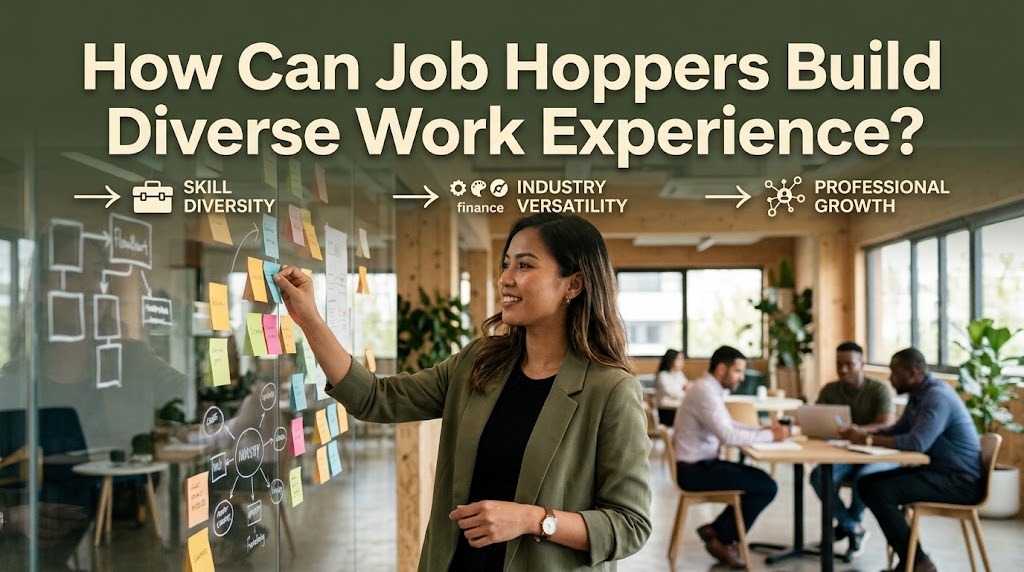
Job hoppers often move between different companies or positions to explore new opportunities. Although frequent job changes can create challenges, they can also help workers collect diverse work experience. Working in different environments allows people to understand various responsibilities, industries, and professional cultures. With careful planning, job hoppers can turn each career move into a useful step toward long term career development.
EXPLORE DIFFERENT JOB RESPONSIBILITIES
One way job hoppers can build diverse work experience is by taking positions with different responsibilities. Each role can provide opportunities to learn new tasks and understand different parts of a business. For example, someone who has experience in customer service may later explore marketing, sales, or content creation. Different responsibilities can help workers develop a wider range of professional skills.
However, job hoppers should still choose roles that have some connection to their career direction. Taking completely unrelated jobs without a clear purpose can make their career history difficult to explain. It is better to look for positions that add new abilities while supporting existing strengths. This approach can create a career path that is varied but still understandable.
WORK IN DIFFERENT INDUSTRIES
Moving between industries can also help job hoppers develop broader knowledge. A person who works in retail, for example, may learn about customers and sales before moving into digital marketing. Experience from different industries can provide new perspectives on how businesses operate. Industry diversity can become a valuable part of professional experience when the skills are transferable.
Working in different industries can also help employees understand different types of customers and business challenges. These experiences may improve communication, adaptability, and problem solving skills. Job hoppers should pay attention to what they learn from each industry rather than focusing only on their job titles. Over time, these lessons can create a more complete professional profile.
DEVELOP TRANSFERABLE SKILLS
Transferable skills are important for building diverse work experience because they can be used in many different jobs. Communication, teamwork, problem solving, time management, and adaptability are examples of skills that can support different career paths. Job hoppers should identify transferable skills that they develop in every position. This makes their previous experiences more valuable when applying for future jobs.
For example, a worker may develop communication skills through customer service and later use those skills in marketing. Project management experience can also be useful in administration, business development, or other professional roles. By recognizing these connections, job hoppers can show that their career changes have helped them become more capable. Their work history becomes a collection of connected skills rather than unrelated jobs.
TAKE PART IN DIFFERENT PROJECTS
Job hoppers can also build diverse experience by participating in projects outside their normal responsibilities. Special projects can expose employees to tasks that they do not usually handle in their daily roles. Projects can provide practical experience that strengthens both technical and soft skills. They can also give workers specific achievements that are easier to describe on a resume.
When joining a project, employees should try to understand their role and the results they contributed to. Keeping a record of important tasks and achievements can make future job applications easier. This information can also help during interviews when employers ask about previous experience. Project experience can therefore make a job hopper's career history more detailed and meaningful.
DOCUMENT AND CONNECT YOUR EXPERIENCE
Building diverse experience is more useful when job hoppers can clearly explain what they learned from each position. They should keep track of important skills, responsibilities, projects, and achievements throughout their careers. A well organized work history can help employers understand the value behind multiple job changes. Instead of simply listing companies, job hoppers should highlight how each position contributed to their professional development.
It is also useful to identify connections between different experiences. A marketing role may strengthen communication skills, while a sales position may improve negotiation and customer understanding. These skills can complement each other and create a broader professional profile. Connecting experiences can turn a varied career history into a clear story of continuous development.
CONCLUSION
Job hoppers can build diverse work experience by choosing roles that provide new responsibilities, exploring different industries, developing transferable skills, and participating in meaningful projects. The key is to make each career move contribute something valuable to professional development. Frequent job changes do not automatically create diverse experience if there is no learning or growth behind them.
A strong career history should show how different positions have helped a person develop useful skills and knowledge. By documenting achievements and connecting experiences, job hoppers can present their career changes more clearly to future employers. Diverse work experience becomes most valuable when it supports clear career goals and demonstrates continuous growth.
Tentang Penulis
Gusti Ayu Tita P
Penulis — Universitas STEKOM
Penulis aktif yang berfokus pada isu-isu akademik, teknologi pendidikan, dan pengembangan sumber daya manusia di lingkungan kampus.



