How Can Parents Help the Strawberry Generation Become More Independent?
Gusti Ayu Tita P
26 September 2026
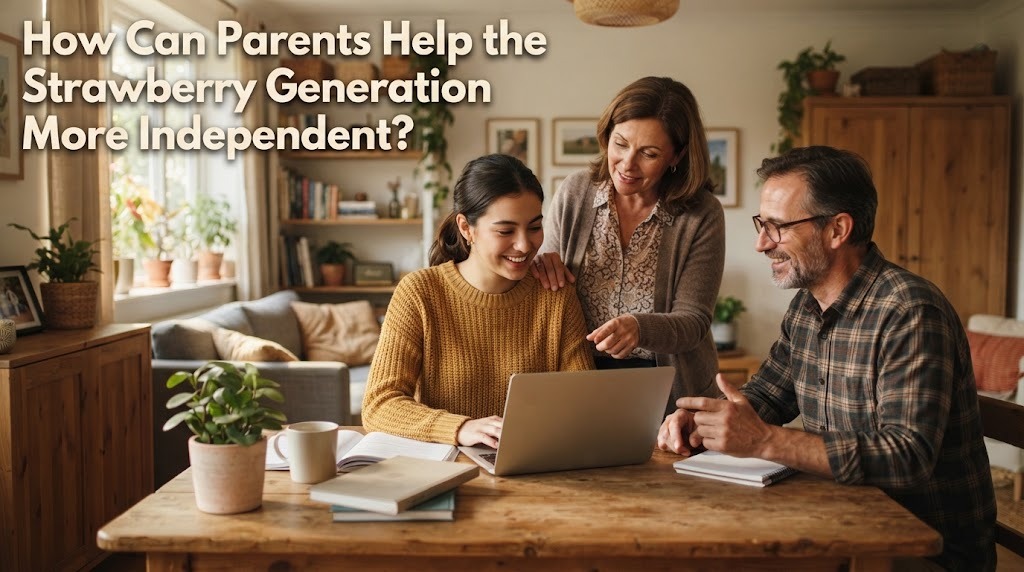
The Strawberry Generation is often associated with young people who may experience strong pressure from education, careers, relationships, finances, and social expectations. Some parents may respond by providing extensive protection and solving problems for their children. While parental support is important, too much assistance can sometimes reduce opportunities for young people to develop independence.
Parents can help by creating a balance between support and responsibility. Instead of making every decision or solving every problem, parents can gradually give young people opportunities to make choices, experience consequences, manage responsibilities, and learn from mistakes. This approach can help build confidence and practical independence.
GIVE CHILDREN OPPORTUNITIES TO MAKE DECISIONS
Independence begins when young people learn to make appropriate decisions for themselves. Parents can start by allowing children to choose between reasonable options, such as how to organize their schedules, manage school responsibilities, or spend their free time. Giving young people decision-making opportunities can help them develop confidence and personal responsibility.
Parents do not need to disappear from the process. They can discuss possible consequences and provide guidance without immediately deciding everything. Over time, young people can become more comfortable evaluating options and accepting responsibility for the choices they make.
TEACH RESPONSIBILITY THROUGH DAILY TASKS
Independence is not only about making major life decisions. It also develops through everyday responsibilities such as organizing personal belongings, preparing meals, managing schedules, completing assignments, and handling basic financial tasks. Regular responsibilities can teach young people that independence requires consistency and accountability.
Parents should avoid automatically taking over when a task becomes inconvenient or difficult. Instead, they can explain how something should be done and allow their children to practice. Small responsibilities can gradually prepare young people for larger responsibilities in education, work, and adult life.
ALLOW MANAGEABLE MISTAKES
Parents naturally want to protect their children from disappointment and failure. However, preventing every mistake can limit opportunities to learn from real experiences. Manageable mistakes can teach problem-solving, patience, responsibility, and resilience when young people are allowed to reflect on what happened.
This does not mean parents should intentionally place children in dangerous situations. Instead, parents can allow age-appropriate consequences when the risks are reasonable. A poor decision can become a valuable learning experience when parents help their children understand what they can do differently next time.
TEACH FINANCIAL AND PRACTICAL SKILLS
Financial independence is an important part of becoming an adult. Parents can introduce young people to basic skills such as budgeting, saving, distinguishing needs from wants, and planning expenses. Understanding money management can help young people make more responsible decisions when they eventually manage their own finances.
Practical skills are equally important. Young people can learn how to prepare simple meals, organize documents, communicate with institutions, manage appointments, and solve everyday problems. These abilities can increase confidence because young people know they can handle basic responsibilities without depending on their parents for everything.
ENCOURAGE PROBLEM SOLVING INSTEAD OF IMMEDIATE RESCUE
When young people encounter problems, parents may be tempted to provide an immediate solution. Although this can be helpful in urgent situations, constantly solving problems for children can prevent them from developing independent thinking. Parents can instead ask questions that encourage young people to identify possible solutions themselves.
For example, parents can ask what the young person thinks should happen next, what options are available, or what consequences each option could have. This approach allows parents to remain supportive while giving children the opportunity to practice decision-making and problem-solving.
SUPPORT GOALS WITHOUT CONTROLLING EVERY STEP
Parents can play an important role in helping young people set educational and career goals. However, support is different from controlling every decision. Young people need space to discover their interests, strengths, and preferred direction while receiving reasonable guidance from their families.
Parents can discuss goals, provide information, and share personal experiences without forcing a particular path. When young people feel trusted, they may become more willing to take responsibility for their future. Independence grows when guidance is combined with opportunities for personal choice.
BUILD COMMUNICATION AND EMOTIONAL CONFIDENCE
Independence does not mean young people should handle every problem alone. A healthy relationship allows children to know that they can ask for help when they genuinely need it. Parents can encourage independence while maintaining open communication and emotional support.
Parents should listen to concerns without immediately judging or criticizing every decision. This can make young people more comfortable discussing problems and learning from difficult experiences. Knowing that support is available can actually make it easier for young people to take responsible risks and become more independent.
CONCLUSION
Parents can help the Strawberry Generation become more independent by encouraging decision-making, assigning responsibilities, allowing manageable mistakes, teaching practical and financial skills, supporting problem-solving, respecting personal goals, and maintaining healthy communication. Independence develops gradually through repeated opportunities to practice responsibility.
The goal is not to remove parental support but to change how that support is provided. Parents can guide without controlling, protect without overprotecting, and help without solving every problem. With this balanced approach, young people can gradually develop greater confidence, responsibility, resilience, and independence.
Tentang Penulis
Gusti Ayu Tita P
Penulis — Universitas STEKOM
Penulis aktif yang berfokus pada isu-isu akademik, teknologi pendidikan, dan pengembangan sumber daya manusia di lingkungan kampus.