How Can Students Stay Productive During Demonstrations Without Neglecting Their Studies?
Gusti Ayu Tita P
28 September 2026
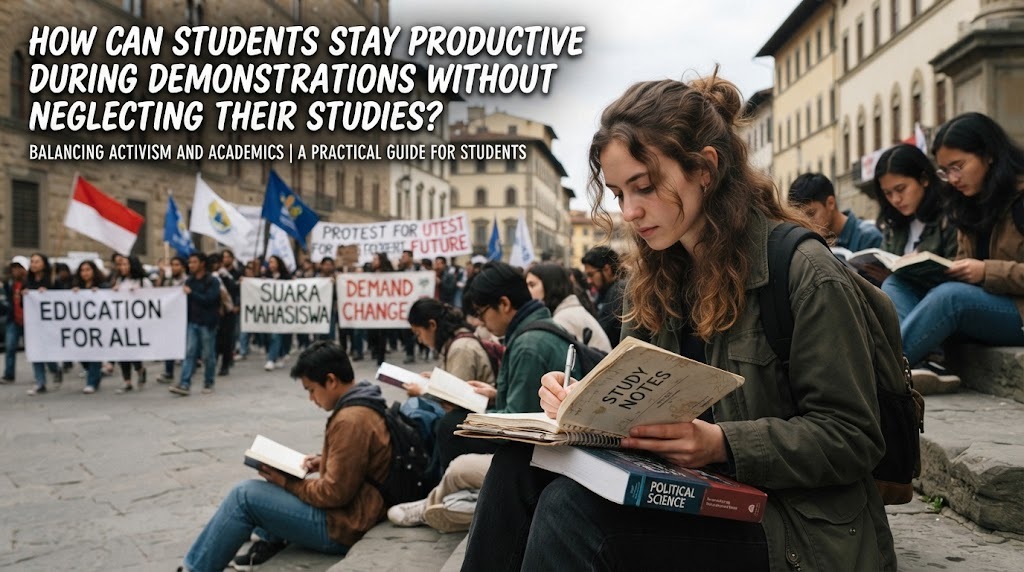
Students may participate in demonstrations while still having academic responsibilities to complete. Balancing both activities requires Time Management, preparation, and awareness of academic priorities. Students should understand their schedules before joining activities so that important assignments are not overlooked. They can also communicate with classmates when an activity affects their study plans. With proper organization, students can remain involved while continuing their education.
CREATING A CLEAR STUDY SCHEDULE
Students should create a study schedule that considers classes, assignments, organizational activities, and demonstration schedules. A clear plan can help them identify which academic tasks need to be completed first. Study Planning allows students to divide their available time into manageable periods. They can set specific times for reading, completing assignments, and reviewing lessons. A realistic schedule is easier to follow than an overly demanding plan.
Students should also avoid postponing important assignments until the last minute. Completing urgent academic tasks before participating can reduce unnecessary stress. Time Management helps students recognize which activities require immediate attention. They can use calendars, reminders, or simple task lists to monitor deadlines. Regular planning can help maintain a balance between academic and extracurricular responsibilities.
SETTING ACADEMIC PRIORITIES
Not every task has the same level of urgency or importance. Students can identify assignments, examinations, and projects that require immediate attention. Academic Priorities help students decide how to use limited time effectively. They should consider deadlines and the amount of preparation required for each task. This approach can prevent important academic responsibilities from being overlooked.
Students can divide large assignments into smaller tasks. Completing them gradually can make academic responsibilities easier to manage alongside other activities. Task Management allows students to monitor their progress and recognize unfinished work. Students should also avoid taking on more activities than they can reasonably handle. Maintaining realistic priorities can support both productivity and well-being.
USING TIME EFFICIENTLY
Students can use available time before or after demonstrations to complete academic tasks. Short periods can be used for reading notes, reviewing materials, or organizing assignments. Productive Study does not always require long study sessions when students have clear objectives. They can focus on one task at a time instead of trying to complete several activities simultaneously. Efficient study habits can help students make better use of limited time.
Students should also reduce unnecessary distractions when studying. Turning off nonessential notifications and choosing a suitable study environment can improve concentration. Focused Learning can help students complete tasks more efficiently. After finishing important academic responsibilities, students can participate in other activities with fewer concerns. This approach can support a healthier balance between study and participation.
COMMUNICATING WITH OTHERS
Communication can help students manage situations when demonstrations overlap with academic activities. Students can discuss schedules with classmates and share important academic information. Academic Communication can make it easier to stay updated on assignments or changes in class activities. When appropriate, students can communicate with lecturers or relevant academic staff about legitimate scheduling concerns. Clear communication can prevent misunderstandings.
Students should also communicate responsibly with members of organizations or activity groups. They can explain academic commitments and coordinate responsibilities accordingly. Team Coordination allows tasks to be distributed according to each member's availability. Students should avoid promising responsibilities they cannot complete. Honest communication can help maintain trust within both academic and organizational environments.
MAINTAINING HEALTH AND ENERGY
Productivity depends not only on schedules but also on physical and mental readiness. Students should get sufficient rest, maintain hydration, and eat adequately during busy periods. Healthy Routines can help students maintain concentration and energy. They should avoid sacrificing necessary rest simply to participate in every activity. Maintaining basic needs can support more sustainable productivity.
Students should also recognize when they need a break. Constant academic work and extracurricular activities can reduce concentration when there is no adequate recovery time. Balanced Activities allow students to manage responsibilities without continuously overloading themselves. Taking short breaks can help restore focus before returning to study. A sustainable routine can support long-term academic performance.
CONCLUSION
Students can remain productive during demonstrations without neglecting their studies by using Time Management, setting academic priorities, and creating realistic schedules. Efficient study habits can help them complete important tasks before or after other activities. Communication with classmates, lecturers, and organization members can also make scheduling easier. Students should maintain healthy routines and allow enough time for rest. With careful planning and responsible participation, students can balance academic responsibilities with activities that express their aspirations.
Tentang Penulis
Gusti Ayu Tita P
Penulis — Universitas STEKOM
Penulis aktif yang berfokus pada isu-isu akademik, teknologi pendidikan, dan pengembangan sumber daya manusia di lingkungan kampus.