How Can Workers Use PPE Correctly and Safely?
Gusti Ayu Tita P
29 September 2026
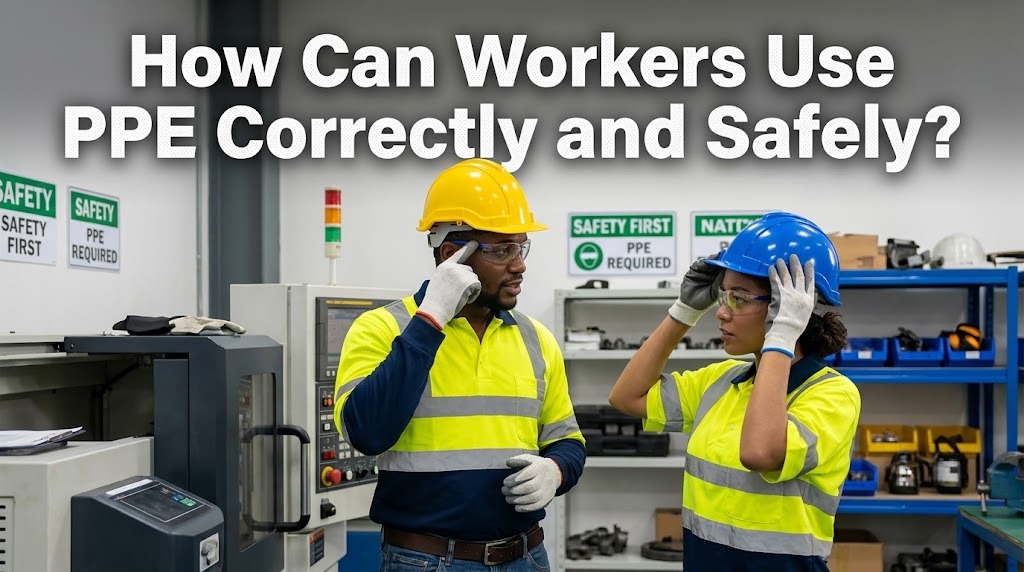
Personal Protective Equipment or PPE is an important part of workplace safety because it helps protect workers from different hazards. However, PPE can only provide effective protection when workers choose, wear, and maintain it correctly. Improper use can reduce the protection provided and may create additional safety problems. Workers therefore need to understand how each type of PPE should be used before starting a task. Correct PPE use should become a regular part of safe working practices.
WHY IS CORRECT PPE USE IMPORTANT?
Correct use of PPE helps workers reduce their exposure to workplace hazards. Depending on the job, workers may face dust, chemicals, noise, sharp objects, falling materials, heat, or other hazards. The appropriate PPE creates a protective barrier between the worker and a potential source of harm. However, PPE should not be considered a complete replacement for other safety controls. Hazard elimination, safer work methods, and engineering controls should be used whenever possible.
Workers who understand the purpose of their PPE are more likely to use it consistently. They should know which equipment is required for each task and what risks it is designed to address. Proper training can help workers recognize the limitations of PPE and use it according to workplace procedures. Employers should provide suitable equipment and clear instructions for its use. This combination can support safer working conditions.
HOW SHOULD WORKERS SELECT THE RIGHT PPE?
Workers should use PPE that matches the specific hazards of their workplace and task. Different equipment provides protection against different risks, so one type of PPE cannot protect against every hazard. For example, safety glasses may protect the eyes from certain flying particles, while chemical-resistant gloves may be needed when handling particular substances. PPE should also be appropriate for the working environment and compatible with other equipment being worn. Proper selection is essential for effective protection.
The fit of PPE is another important consideration. Equipment that is too loose, too tight, or unsuitable for the worker can interfere with movement and reduce its effectiveness. Workers should check that the equipment fits comfortably and does not interfere with other required protective equipment. Manufacturer instructions and workplace safety procedures should be followed when selecting and adjusting PPE. If workers are uncertain about suitable equipment, they should consult the responsible safety personnel.
HOW CAN WORKERS WEAR PPE CORRECTLY?
Before putting on PPE, workers should inspect it for damage, contamination, or signs of wear. They should make sure that straps, fasteners, lenses, filters, and other components are in suitable condition. PPE should be put on according to the instructions provided by the manufacturer or workplace safety procedures. Workers should also ensure that protective equipment covers the areas it is designed to protect. Incorrect positioning can reduce the level of protection.
Workers should avoid modifying PPE unless the manufacturer specifically allows it. Equipment should remain properly adjusted throughout the task, especially when workers move frequently or perform physically demanding activities. PPE should be worn throughout the period of exposure to the relevant hazard, not only when the hazard seems obvious. Workers should also avoid removing protective equipment in areas where the hazard is still present. These habits help maintain consistent protection during work.
HOW SHOULD PPE BE INSPECTED AND MAINTAINED?
Regular inspection helps workers identify PPE that may no longer provide adequate protection. Before use, workers should check for cracks, tears, broken parts, excessive wear, or other visible problems. Some PPE may also require cleaning or specialized inspection according to its type and intended use. Equipment contaminated with hazardous substances should be handled according to appropriate workplace procedures. Workers should never rely on damaged equipment for protection.
Proper storage is also important because unsuitable storage can damage PPE. Protective equipment should generally be kept in a clean and appropriate location where it will not be exposed unnecessarily to conditions that could reduce its effectiveness. Cleaning and maintenance procedures should follow manufacturer recommendations and workplace requirements. PPE that cannot be repaired or safely reused should be replaced. Consistent maintenance helps keep protective equipment ready for use.
WHAT SHOULD WORKERS DO WHEN PPE IS DAMAGED?
Workers should stop relying on PPE when they discover damage that could affect its protective function. They should report the problem to their supervisor or the person responsible for workplace safety and request suitable replacement equipment. Damaged PPE should not be used simply because replacement equipment is inconvenient to obtain. Depending on the hazard, continuing the task without suitable protection may expose workers to unnecessary risk. Workplace procedures should determine the appropriate response.
Workers should also report problems such as poor fit, discomfort that affects safe use, or equipment that does not match the task. Employers can then review whether the PPE is suitable and whether additional training is necessary. Regular communication helps identify problems before they contribute to an incident. PPE safety depends on proper selection, correct use, inspection, and maintenance. When these practices are applied consistently, PPE can provide an important layer of workplace protection.
CONCLUSION
Using PPE correctly and safely requires more than simply wearing protective equipment. Workers should select suitable PPE, check its condition, wear it correctly, and maintain it according to instructions. They should also receive appropriate training and follow workplace safety procedures. Damaged or unsuitable equipment should be reported and replaced rather than continued in use. When correct PPE use is combined with other hazard-control measures, it can help create a safer working environment.
Tentang Penulis
Gusti Ayu Tita P
Penulis — Universitas STEKOM
Penulis aktif yang berfokus pada isu-isu akademik, teknologi pendidikan, dan pengembangan sumber daya manusia di lingkungan kampus.