How Decentralization Influences Equal Regional Development?
Gusti Ayu Tita P
4 Oktober 2026
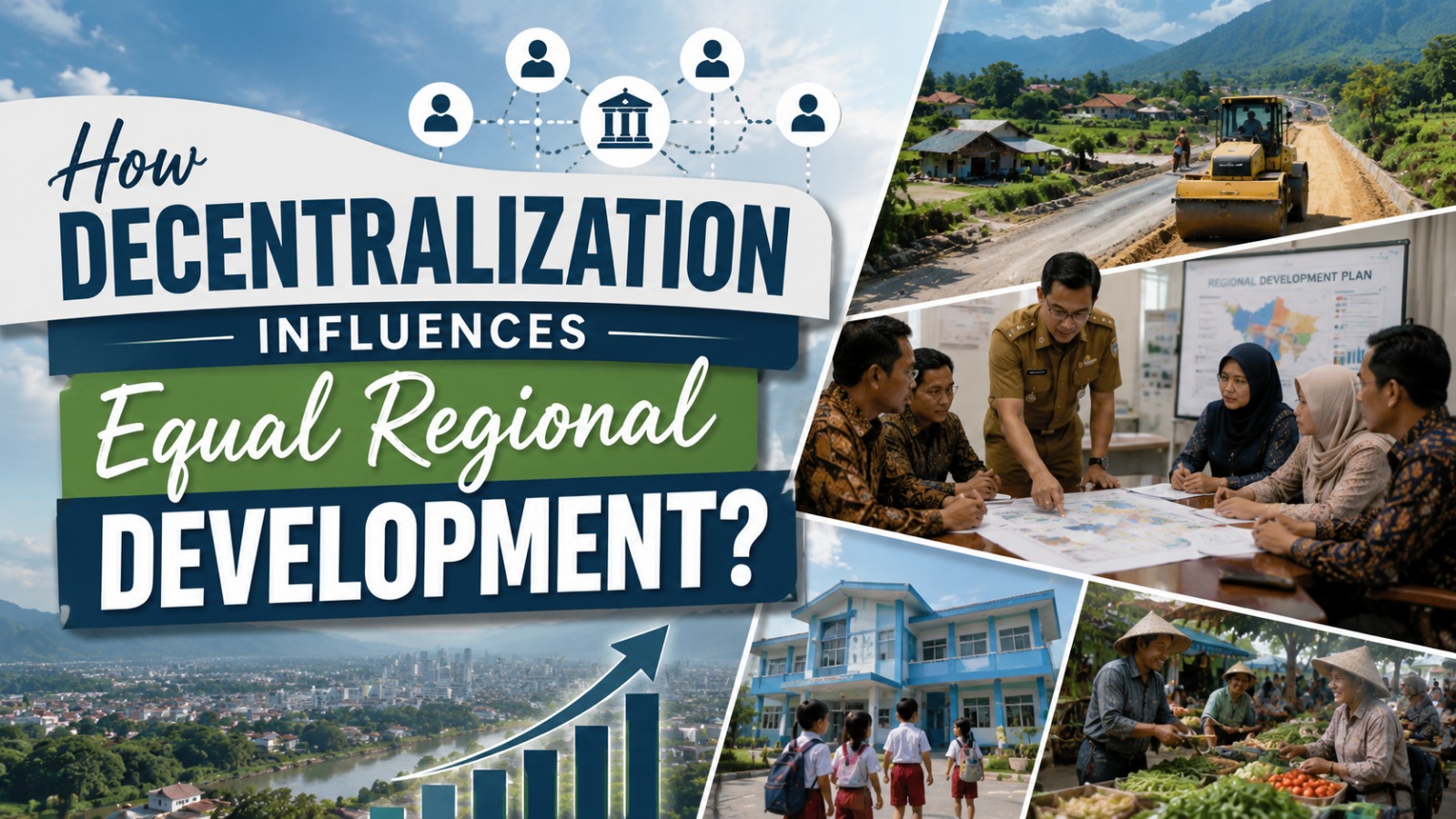
Decentralization is a system of government that transfers certain powers, responsibilities, and resources from the central government to regional authorities. This approach gives local governments greater flexibility to manage development based on the specific needs and potential of their areas. Each region has different economic conditions, natural resources, infrastructure, and social challenges. Therefore, local decision-making can help create development programs that are more relevant and responsive to local conditions.
Equal regional development means ensuring that people in different regions have fair opportunities to access public services, infrastructure, education, healthcare, and economic opportunities. Decentralization can support this goal by allowing regional governments to identify local problems and determine suitable solutions. However, decentralization alone does not automatically guarantee equal development. Its success depends on effective governance, fair resource distribution, strong institutions, and cooperation between different levels of government.
THE ROLE OF LOCAL GOVERNMENTS IN REGIONAL DEVELOPMENT
Local governments play an important role in implementing development programs that respond to the needs of their communities. With greater authority, they can prioritize projects based on local conditions instead of relying entirely on decisions made at the national level. For example, a rural region may focus on improving agricultural infrastructure, while a coastal area may prioritize fisheries and marine transportation. This flexibility allows development strategies to become more locally relevant and potentially more effective.
Local governments can also encourage regional innovation by developing policies based on their unique strengths. They may support local businesses, improve tourism, develop public facilities, or create training programs for residents. When these initiatives are properly managed, they can increase employment opportunities and improve household incomes. As a result, local communities can become more economically independent and contribute to broader national development.
DECENTRALIZATION AND FAIR DISTRIBUTION OF RESOURCES
One of the most important ways decentralization can influence equal development is through the distribution of public resources. Regional governments need sufficient financial resources to provide essential services and build infrastructure. Fiscal decentralization can give local authorities greater control over certain budgets and spending priorities. This allows them to direct funds toward the sectors and communities that require the most attention.
However, not all regions have the same financial capacity or economic potential. Some areas have strong industries and large sources of local revenue, while others depend more heavily on transfers from the central government. Therefore, fiscal equalization and intergovernmental transfers are important to reduce disparities between regions. Fair resource allocation can help less-developed areas improve their public services and infrastructure.
IMPROVING INFRASTRUCTURE AND PUBLIC SERVICES
Infrastructure development is a key factor in reducing regional inequality. Decentralized governments can identify infrastructure gaps and prioritize projects that directly support local communities. Better roads, transportation, electricity, clean water, internet access, schools, and healthcare facilities can improve people's quality of life. These improvements also make it easier for businesses to operate and connect with wider markets.
Decentralization can also improve the delivery of public services because local authorities are closer to the people they serve. They can identify problems more quickly and adjust programs according to local needs. However, service quality may differ between regions if local governments have unequal financial and administrative capacities. For this reason, national standards and effective monitoring remain necessary to ensure that all citizens receive essential services.
SUPPORTING LOCAL ECONOMIC OPPORTUNITIES
Equal regional development requires more than physical infrastructure. People also need access to economic opportunities that allow them to improve their livelihoods. Decentralization can help local governments develop sectors that have strong potential in their regions, including agriculture, tourism, manufacturing, fisheries, and small businesses.
Local governments can support these sectors through business training, simplified licensing, access to markets, and improved infrastructure. The growth of small and medium enterprises can create employment and strengthen local economies. When economic opportunities become more widely distributed, people may have fewer reasons to move to major cities in search of jobs. This can contribute to more balanced economic development between urban and rural areas.
REDUCING REGIONAL DISPARITIES
Regional disparities often occur because development is concentrated in certain cities or economically advanced areas. Decentralization can help address this problem by giving less-developed regions greater authority to plan and implement their own development strategies. Local governments can focus on sectors that are most relevant to their communities and use regional potential more effectively.
Nevertheless, decentralization may also increase disparities if wealthier regions have significantly greater resources and stronger administrative capacity. This situation shows that decentralization must be accompanied by equalization policies and effective coordination. Central governments still have an important role in ensuring that disadvantaged regions receive appropriate support. A balanced approach between local autonomy and national redistribution is essential for achieving equitable development.
CHALLENGES IN ACHIEVING EQUAL REGIONAL DEVELOPMENT
Despite its potential benefits, decentralization faces several challenges. Differences in financial capacity, human resources, infrastructure, and institutional quality can affect the ability of regions to manage development. Some local governments may have sufficient resources and skilled personnel, while others may struggle to plan and implement effective programs.
Another challenge is the risk of weak governance and inefficient use of public resources. Poor planning, lack of transparency, and corruption can reduce the impact of development programs. To address these issues, governments need strong accountability systems, reliable data, professional public officials, and continuous evaluation. Cooperation between central and local authorities is also essential to ensure that decentralization contributes to fair and sustainable development.
THE IMPORTANCE OF COORDINATION FOR BALANCED DEVELOPMENT
Effective coordination between central and local governments is necessary to maximize the benefits of decentralization. Local authorities need enough autonomy to respond to regional needs, while the central government must establish national standards and provide support where necessary. This balance helps prevent overlapping policies and ensures that development programs remain aligned with broader national objectives.
Data sharing and joint planning can also improve coordination. Governments at different levels can use accurate information to identify areas with limited access to services and prioritize development investments. When policies are based on reliable data, public resources can be directed toward communities that need them most. This approach can make regional development more targeted, efficient, and inclusive.
CONCLUSION
Decentralization can influence equal regional development by giving local governments greater authority to manage resources, improve public services, develop infrastructure, and create economic opportunities. By allowing decisions to be made closer to communities, development programs can become more responsive to local needs. However, the benefits of decentralization depend heavily on the quality of governance and the capacity of local institutions.
To achieve equal regional development, decentralization should be supported by fair resource distribution, fiscal equalization, strong public services, and effective coordination between central and local governments. With proper planning and accountability, decentralization can reduce regional disparities and create broader opportunities for communities. Ultimately, a balanced combination of local autonomy and national support can help build more inclusive, sustainable, and equitable regional development.
Tentang Penulis
Gusti Ayu Tita P
Penulis — Universitas STEKOM
Penulis aktif yang berfokus pada isu-isu akademik, teknologi pendidikan, dan pengembangan sumber daya manusia di lingkungan kampus.