How Did FIVB Begin And Influence The Development Of Volleyball?
Gusti Ayu Tita P
29 September 2026
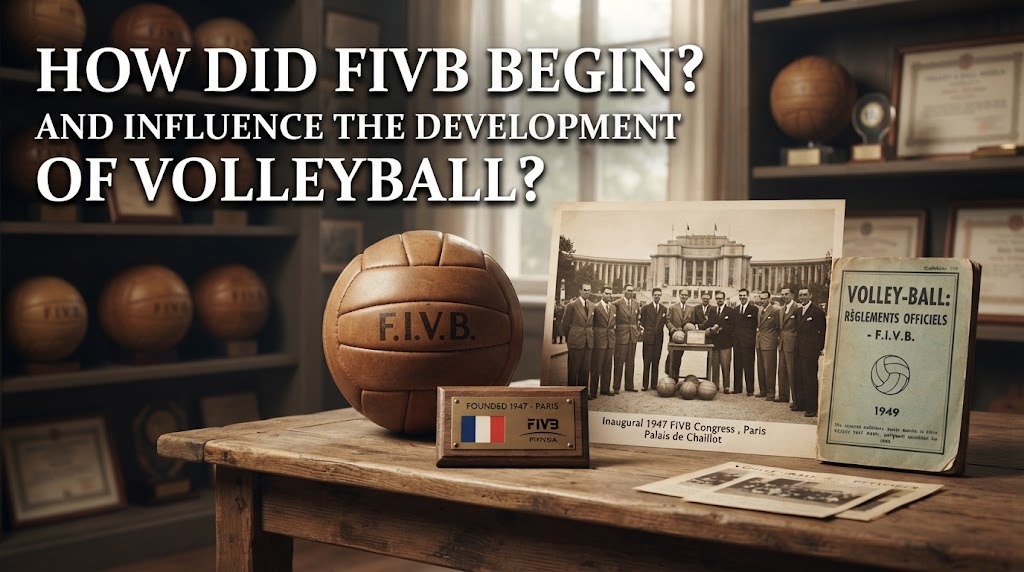
Volleyball has developed from a simple indoor game into a global sport played in many countries. One organization that has played a major role in this development is the FIVB, or Fédération Internationale de Volleyball. The organization was created to bring volleyball federations together and establish a common international structure for the sport. Its work has influenced the growth of volleyball through rules, competitions, international cooperation, and development programs. (FIVB)
HOW DID FIVB BEGIN?
The FIVB was officially founded on 20 April 1947 in Paris, France. Representatives from 14 countries came together to establish an international organization for volleyball. The founding countries included Belgium, Brazil, Czechoslovakia, Egypt, France, Hungary, Italy, the Netherlands, Poland, Portugal, Romania, the United States, Uruguay, and Yugoslavia. Paul Libaud of France was elected as the first FIVB President. (FIVB)
The creation of the FIVB provided volleyball with a more organized international structure. Before this organization existed, volleyball was already spreading to different countries, but an international federation was needed to coordinate its development. The FIVB initially established its headquarters in Paris, where they remained until the organization moved to Lausanne, Switzerland, in 1984. (FIVB)
WHY WAS FIVB CREATED?
The FIVB was created to promote and develop volleyball around the world. Its formation gave national volleyball organizations a common body through which they could cooperate and develop the sport internationally. The organization also became responsible for creating standards that could be used in international competitions. (FIVB)
Another important purpose was to make volleyball more consistent between countries. The FIVB was given responsibility for official rules, equipment standards, facilities, competitions, referees, and player eligibility. With these responsibilities, players and teams from different countries could participate in international competitions under common regulations. (FIVB)
HOW DID FIVB HELP VOLLEYBALL BECOME AN INTERNATIONAL SPORT?
One of the FIVB's earliest major contributions was the organization of the Volleyball World Championships. The first men's World Championship was held in 1949, followed by the first women's World Championship in 1952. These competitions created important international stages where national teams could compete against each other. (FIVB)
The growth of these international competitions also helped increase participation in volleyball. According to the FIVB, the World Championships generated strong interest and contributed to the growth of players and national federations affiliated with the organization. This helped volleyball move beyond individual countries and become a more established international sport. (FIVB)
WHAT WAS THE IMPACT OF FIVB ON THE OLYMPIC GAMES?
A major milestone came when volleyball officially entered the Olympic programme at Tokyo 1964. Although volleyball had previously appeared as a demonstration sport at the Paris 1924 Olympic Games, its official Olympic debut came four decades later. The inclusion of volleyball in the Olympics gave the sport an important international platform and helped increase its recognition. (FIVB)
The Olympic appearance also strengthened the connection between international volleyball and the global sports community. Since 1964, volleyball has remained part of the Olympic programme, alongside major FIVB competitions. This helped provide athletes with another prestigious international goal and gave fans an opportunity to watch national teams compete on one of the world's biggest sporting stages. (FIVB)
HOW DID FIVB DEVELOP BEACH VOLLEYBALL?
The FIVB also played an important role in the international development of beach volleyball. The first FIVB-sanctioned beach volleyball tournament was held in Rio de Janeiro in 1987. The organization later developed an international beach volleyball circuit and expanded opportunities for both men's and women's competitions. (FIVB)
Beach volleyball reached another major milestone when it became an Olympic sport at Atlanta 1996. The first Olympic tournament attracted more than 107,000 spectators over six days, showing the strong public interest in the discipline. Since then, beach volleyball has continued to appear at the Olympic Games and has become an important part of the international volleyball community. (FIVB)
HOW DID FIVB INFLUENCE VOLLEYBALL RULES?
The FIVB has helped volleyball develop by establishing and updating the Official Volleyball Rules. Having internationally recognized rules makes it easier for teams from different countries to compete under the same conditions. These rules cover important aspects of the game, including playing procedures, competition standards, and officiating. (FIVB)
The organization can also evaluate possible changes to volleyball regulations as the sport develops. This allows the rules to respond to changes in competition and modern sporting practices. Consistent rules are important because they help players, coaches, referees, and fans understand how international volleyball should be played. (FIVB)
HOW DOES FIVB SUPPORT VOLLEYBALL DEVELOPMENT?
The influence of the FIVB is not limited to major competitions. Its objectives include encouraging the growth of volleyball in all its forms and supporting the creation and development of national federations. This means the organization also contributes to the wider structure needed for volleyball to grow in different countries. (FIVB)
Through international competitions and development activities, the FIVB helps create more opportunities for athletes and volleyball organizations. Its work connects national federations, continental confederations, athletes, officials, and other members of the volleyball community. This international network has helped volleyball become one of the world's widely played sports. (FIVB)
WHAT IS THE OVERALL INFLUENCE OF FIVB?
The FIVB has influenced volleyball by providing a global governing structure for the sport. Its establishment in 1947 was followed by major developments such as the World Championships, Olympic volleyball, and the international growth of beach volleyball. These developments created more opportunities for national teams and athletes to participate in high-level competitions. (FIVB)
Its influence can also be seen in the standardization of rules and international competition systems. By coordinating volleyball activities across countries, the FIVB has helped create a more unified volleyball community. As a result, volleyball has continued to develop from a game created in the United States in 1895 into a major international sport. (FIVB)
CONCLUSION
The FIVB began on 20 April 1947, when representatives from 14 countries founded an international federation for volleyball in Paris. Its creation gave the sport a stronger international structure and established a system for developing common rules and competitions. The organization later contributed to important milestones, including the World Championships in 1949 and 1952, volleyball's Olympic debut in 1964, and beach volleyball's Olympic debut in 1996. (FIVB)
Overall, the FIVB has influenced volleyball by helping make the sport more organized, standardized, competitive, and internationally connected. Its continued work with national federations and competitions remains an important part of volleyball's global development.
Tentang Penulis
Gusti Ayu Tita P
Penulis — Universitas STEKOM
Penulis aktif yang berfokus pada isu-isu akademik, teknologi pendidikan, dan pengembangan sumber daya manusia di lingkungan kampus.