How Do Ministry Civil Servants Improve Innovation in Public Services?
Gusti Ayu Tita P
26 September 2026
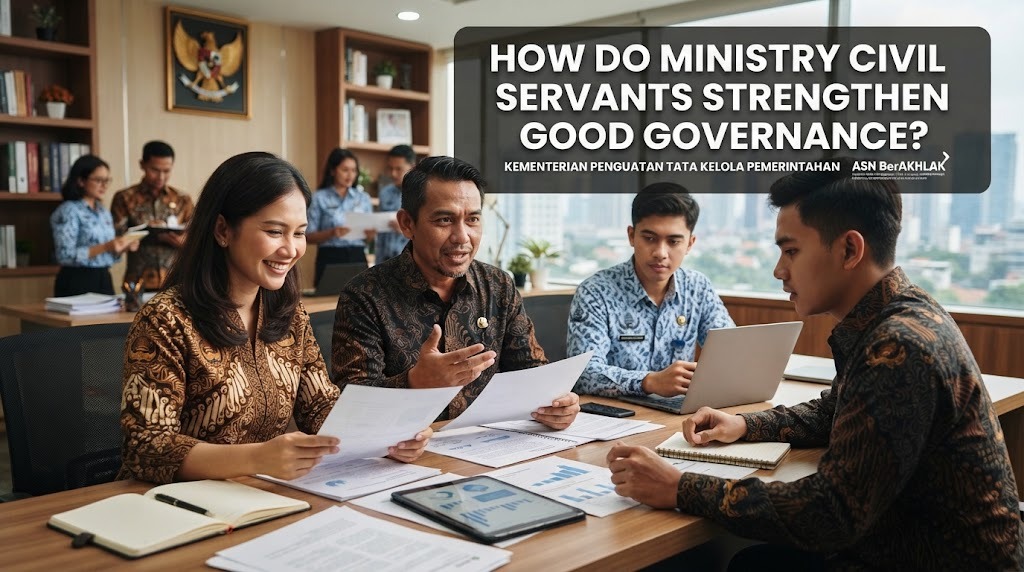
Public services need to continue developing as technology, community needs, and government systems change. Ministry Civil Servants play an important role in improving services because they are directly involved in implementing government programs and administrative processes. Innovation can help make public services more efficient, accessible, and responsive. However, innovation should remain aligned with regulations, public needs, and institutional responsibilities.
UNDERSTANDING PUBLIC SERVICE INNOVATION
Public service innovation involves developing new or improved ways to provide services to the community. Service Innovation can include changes in procedures, technology, communication methods, or service delivery. Civil servants can identify areas where existing processes are difficult, slow, or inefficient. These observations can become the starting point for developing practical improvements.
Innovation does not always require expensive technology or major organizational changes. Simple improvements, such as clearer information, easier procedures, and better coordination, can also create meaningful benefits. Public Services should focus on making processes easier for people while maintaining applicable standards. Civil servants need to evaluate whether an innovation actually addresses a real public need.
USING DIGITAL TECHNOLOGY
Digital technology provides opportunities to improve government services in many areas. Civil servants can use online platforms, electronic documents, databases, and digital communication tools to simplify administrative processes. Digital Services can reduce unnecessary paperwork and make some services more accessible to the public. Technology can also help institutions manage information more efficiently.
However, digital transformation requires careful planning and appropriate employee skills. Civil servants need to understand how digital systems work and how information should be protected. Digital Transformation should consider accessibility, security, reliability, and the ability of users to operate the system. Technology should support public services rather than create additional difficulties for people who need assistance.
USING DATA FOR BETTER DECISIONS
Reliable data can help government institutions understand service conditions and identify areas that require improvement. Civil servants can examine information about service usage, complaints, processing times, and other relevant indicators. Data Analysis can provide evidence for evaluating whether a particular service is working effectively. Decisions based on reliable information can reduce unnecessary assumptions.
Data can also help institutions measure the results of new programs or service improvements. Employees can compare conditions before and after an innovation and identify areas that still need adjustment. Evidence Based Decisions allow public institutions to evaluate innovation more systematically. At the same time, data should be handled responsibly and according to applicable privacy and security requirements.
ENCOURAGING COLLABORATION AND CREATIVE IDEAS
Innovation can become stronger when employees work together and share ideas. Civil servants from different departments may have different perspectives on the same public service problem. Team Collaboration can help combine knowledge, experience, and technical abilities when developing solutions. Cooperation with other government institutions can also support more coordinated services.
Civil servants can also learn from feedback provided by the public and other stakeholders. Complaints and suggestions can reveal problems that may not be visible from an internal perspective. Creative Solutions should therefore be developed by considering both institutional experience and public needs. A culture that welcomes constructive ideas can encourage employees to continuously improve their work.
EVALUATING AND IMPROVING SERVICES
Innovation should not stop after a new system or procedure has been introduced. Civil servants need to evaluate whether the change has produced the intended results. Service Quality can be measured through indicators such as processing time, accessibility, accuracy, user feedback, and administrative efficiency. Regular evaluation helps institutions identify weaknesses and make appropriate adjustments.
Continuous improvement is important because public needs and technology can change over time. An innovation that works well today may require modification in the future. Continuous Improvement allows government institutions to respond to changing conditions without abandoning professional standards. Through evaluation and adaptation, civil servants can help create public services that are more effective and responsive.
CONCLUSION
Ministry Civil Servants can improve public services through Service Innovation, digital technology, data analysis, collaboration, and continuous evaluation. Innovation does not always require complicated technology because improvements in procedures and communication can also benefit the public. Civil servants need to ensure that new approaches remain secure, accessible, efficient, and consistent with applicable regulations. Public feedback and reliable data can help institutions identify areas that require improvement. Through continuous innovation, government employees can contribute to public services that better respond to changing community needs.
Tentang Penulis
Gusti Ayu Tita P
Penulis — Universitas STEKOM
Penulis aktif yang berfokus pada isu-isu akademik, teknologi pendidikan, dan pengembangan sumber daya manusia di lingkungan kampus.