How Does Digital Transformation Affect Ministry Civil Servants Performance?
Gusti Ayu Tita P
23 September 2026
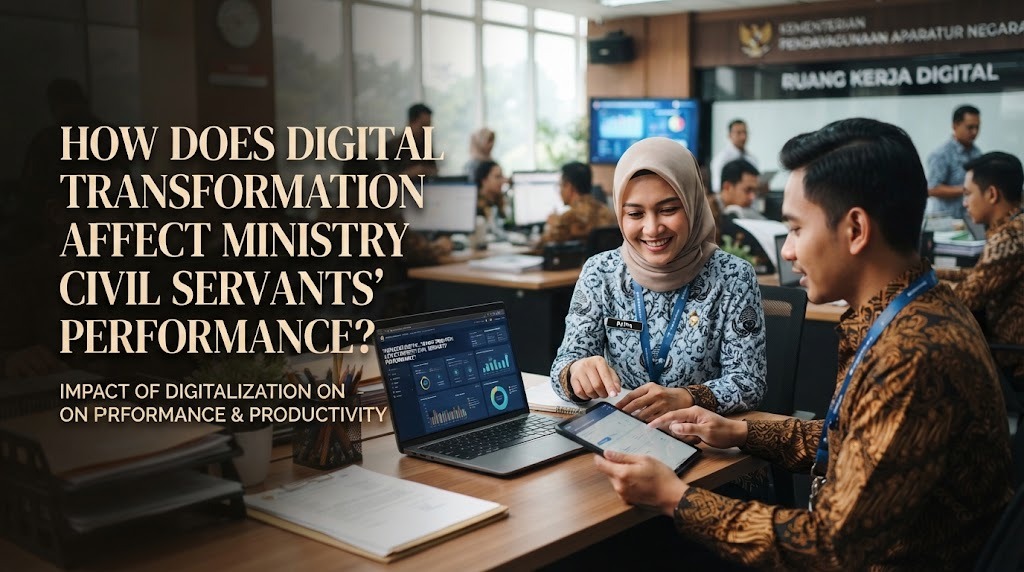
Digital transformation is changing how government institutions manage information, provide services, and complete administrative tasks. For Ministry Civil Servants, this transformation can influence daily responsibilities, communication, data management, and public services. Digital systems can make some processes faster and more organized when they are implemented properly. At the same time, civil servants need to develop new skills to work effectively with changing technologies.
The impact of digital transformation is not limited to replacing manual processes with digital tools. It can also change work procedures, employee competencies, and organizational culture. Civil servants may need to learn new applications, understand digital security, and adapt to new methods of collaboration. Therefore, digital transformation requires both technological infrastructure and human readiness.
IMPROVING ADMINISTRATIVE EFFICIENCY
Digital transformation can improve administrative efficiency by reducing repetitive manual processes. Digital documents, electronic databases, and online approval systems can make information easier to organize and retrieve. Civil servants can spend less time handling physical documents and more time focusing on tasks that require analysis and decision-making. However, the actual improvement depends on whether the digital system is properly designed and used.
Digital workflows can also make the status of certain tasks easier to monitor. Information can be shared between authorized employees without repeatedly creating physical copies. Standardized digital procedures may help reduce unnecessary steps and improve coordination between departments. Civil servants still need to check information carefully because digital systems do not automatically eliminate human errors.
DEVELOPING DIGITAL SKILLS
The use of new technologies creates a need for digital skills among civil servants. Employees may need to understand digital applications, data management, online communication, and basic cybersecurity practices. The required skills can vary depending on the responsibilities and systems used by each ministry. Continuous training can help employees understand how new tools should be used in their work.
Digital skills should not only focus on operating software. Civil servants also need to understand how to use technology responsibly and protect sensitive information. Digital literacy can help employees evaluate information, recognize potential security risks, and use digital resources effectively. Continuous learning becomes increasingly important as government technologies and working methods develop.
SUPPORTING DATA BASED WORK
Digital transformation can provide government institutions with greater access to organized data. Civil servants can use relevant data to support administrative processes, program evaluation, and service planning. When data is accurate and properly managed, it can help employees understand trends and identify areas that require attention. This can support more informed decision-making within government institutions.
However, having large amounts of data does not automatically guarantee better decisions. Data needs to be collected, maintained, protected, and interpreted appropriately. Data quality and data security are therefore important parts of digital government. Civil servants need to understand their responsibilities when handling information and follow applicable rules and procedures.
CHANGING WORK AND COLLABORATION
Digital tools can change how Ministry Civil Servants collaborate with colleagues and other units. Online meetings, shared digital documents, messaging platforms, and electronic workflows can support communication across different locations. These tools can make coordination easier when employees cannot meet physically. They also allow some tasks to continue without depending entirely on face-to-face meetings.
However, digital collaboration requires clear communication and responsible use of technology. Employees need to understand which information can be shared and which information requires restricted access. Effective digital collaboration also depends on clear responsibilities and reliable communication channels. Technology can support teamwork, but employees still need professional communication and coordination skills.
IMPROVING PUBLIC SERVICE DELIVERY
One of the important effects of digital transformation is its potential to improve public service delivery. Online services can allow citizens to access certain government information or administrative services without visiting an office for every process. Digital platforms may also help institutions manage requests and information more systematically. The benefits depend on the accessibility, reliability, and usability of the services provided.
Civil servants play an important role in ensuring that digital services remain understandable and responsive to public needs. Not every citizen has the same level of digital access or digital literacy, so institutions need to consider service accessibility and inclusion. Employees may also need to assist citizens who experience difficulties when using digital systems. In this way, technology can support public services while human assistance remains important.
CONCLUSION
Digital transformation can affect Ministry Civil Servants by changing administrative processes, required skills, data management, collaboration, and public service delivery. Digital systems can support efficiency and accessibility, but successful implementation also requires employee training, data security, appropriate infrastructure, and organizational readiness. Civil servants therefore need to continuously develop their digital competencies while maintaining professional responsibilities. When technology and human capabilities develop together, digital transformation can better support government work and public services.
Tentang Penulis
Gusti Ayu Tita P
Penulis — Universitas STEKOM
Penulis aktif yang berfokus pada isu-isu akademik, teknologi pendidikan, dan pengembangan sumber daya manusia di lingkungan kampus.