How Does FIVB Develop Beach Volleyball Around The World?
Gusti Ayu Tita P
29 September 2026
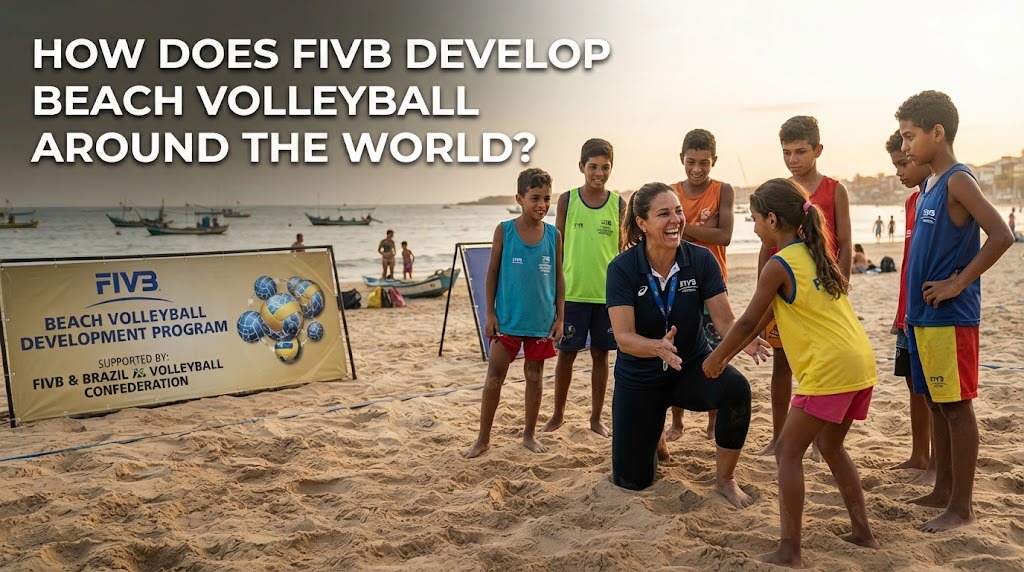
Beach volleyball has become a popular sport in many countries, and the FIVB plays an important role in supporting its global development. The organisation works with National Federations to improve athletes, coaches, facilities, and competition opportunities. Through development programmes, FIVB helps countries build stronger beach volleyball programmes and prepare athletes for international competitions. Its support is designed to help the sport grow at both elite and development levels. (FIVB)
SUPPORTING NATIONAL BEACH VOLLEYBALL PROGRAMMES
FIVB develops beach volleyball by providing support to National Federations around the world. Through the Volleyball Empowerment programme, federations can receive assistance in areas such as coaching, equipment, and knowledge transfer. This support helps countries create better training systems for their beach volleyball athletes. It also allows developing programmes to gain access to professional resources and expertise. (FIVB)
FIVB support is available across different regions and levels of development. Since its launch in 2017, Volleyball Empowerment has supported more than 207 National Federations through more than 1,747 approved projects as of April 2026. This shows how the programme is being used to strengthen volleyball and beach volleyball in different parts of the world. (FIVB)
PROVIDING COACHING SUPPORT
Coaches are an important part of developing successful beach volleyball athletes. FIVB provides coaching support so National Federations can improve the technical knowledge and preparation of their teams. Better coaching can help athletes develop skills such as serving, receiving, blocking, attacking, defence, and tactical decision-making. This support also helps create stronger long-term training systems. (FIVB)
FIVB's development programmes can also connect countries with experienced coaching expertise. In 2025, the organisation approved 341 Volleyball Empowerment projects across 107 National Federations, covering coaching, equipment, and knowledge transfer. These programmes help federations build stronger environments for athletes and coaches. (FIVB)
PROVIDING EQUIPMENT AND TRAINING RESOURCES
Good equipment and training facilities are important for the growth of beach volleyball. FIVB provides equipment support through Volleyball Empowerment projects to help National Federations improve their training environments. Better resources can give athletes more opportunities to practise regularly and prepare for international competition. This is especially useful for countries that are still developing their beach volleyball systems. (FIVB)
FIVB is also expanding access to professional training environments through its International Centres of Excellence. These centres include facilities for elite and developmental training, with some offering beach volleyball facilities, sports science, medical services, recovery support, and education programmes. National Federations can apply for support to organise training camps at recognised centres. (FIVB)
INCREASING INTERNATIONAL COMPETITION OPPORTUNITIES
International competition gives beach volleyball athletes valuable experience. FIVB development support can help national teams increase their participation in international events and gain experience against athletes from different countries. Regular competition allows players to test their technical skills and tactical strategies in real match situations. It can also help athletes understand the demands of high-level beach volleyball. (FIVB)
New Zealand provides an example of how long-term support can contribute to increased international participation. Since 2019, its men's and women's beach volleyball programmes have received a combined USD 462,000 through Volleyball Empowerment. FIVB reported that the women's programme more than doubled its World Tour match volume after joining the programme in 2021. (FIVB)
DEVELOPING BEACH VOLLEYBALL TRAINING CENTRES
FIVB is also developing a global network of International Centres of Excellence to improve access to high-quality training environments. The network has two levels, including High-Performance International Training Centres and International Training Centres. These centres can support elite national teams, developing athletes, coach education, youth programmes, and regional activities. (FIVB)
Beach volleyball is specifically included in this development network. In June 2026, the Alanya International Beach Sports Centre in Türkiye was recognised as an FIVB International Centre of Excellence for Beach Volleyball. The centre is intended to strengthen Alanya's role as a beach volleyball hub and provide another professional environment for the Global Volleyball Movement. (FIVB)
SHARING KNOWLEDGE BETWEEN COUNTRIES
FIVB also develops beach volleyball by encouraging knowledge transfer between coaches, athletes, and National Federations. Sharing technical knowledge can help countries improve training methods and develop their own coaching systems. It can also reduce differences in access to professional expertise between developing and established programmes. (FIVB)
Knowledge transfer is one of the three main pillars of Volleyball Empowerment, together with coach support and equipment. Through these programmes, FIVB aims to make development more sustainable instead of providing only short-term assistance. This approach helps National Federations build their own expertise and continue developing beach volleyball over time. (FIVB)
SUPPORTING BEACH VOLLEYBALL ATHLETES
Athletes are at the centre of beach volleyball development. FIVB programmes help create better conditions for athletes by supporting coaching, equipment, training environments, and international participation. These factors can help players develop their technical abilities and gain experience at higher levels. Stronger athlete development can also contribute to stronger national teams. (FIVB)
The results can be seen across different regions. In September 2026, FIVB reported that 10 of 16 men's teams competing at the CSV South America Beach Volleyball Championship had received Volleyball Empowerment support. Supported teams included pairs from Brazil, Chile, Colombia, Paraguay, and Venezuela. (FIVB)
BUILDING LONG TERM GLOBAL DEVELOPMENT
FIVB's approach focuses not only on individual competitions but also on long-term development. Volleyball Empowerment is part of the FIVB Strategic Vision 2032 and aims to help National Federations build sustainable high-performance pathways. This includes developing coaches, improving technical expertise, providing equipment, and creating better training environments. (FIVB)
By combining these forms of support, FIVB helps more countries create stronger beach volleyball programmes. The organisation's current development strategy also encourages cooperation between FIVB, National Federations, training centres, coaches, and athletes. In this way, beach volleyball can continue expanding across different regions while improving its competitive level. (FIVB)
CONCLUSION
FIVB develops beach volleyball around the world through coaching support, equipment, knowledge transfer, training centres, and international competition opportunities. Its Volleyball Empowerment programme gives National Federations resources that can help athletes and coaches reach higher levels. The development of International Centres of Excellence also provides more access to professional training environments. Through these combined efforts, FIVB continues to strengthen beach volleyball and support its growth across different countries. (FIVB)
Tentang Penulis
Gusti Ayu Tita P
Penulis — Universitas STEKOM
Penulis aktif yang berfokus pada isu-isu akademik, teknologi pendidikan, dan pengembangan sumber daya manusia di lingkungan kampus.