How Does FIVB Organize International Volleyball Competitions?
Gusti Ayu Tita P
29 September 2026
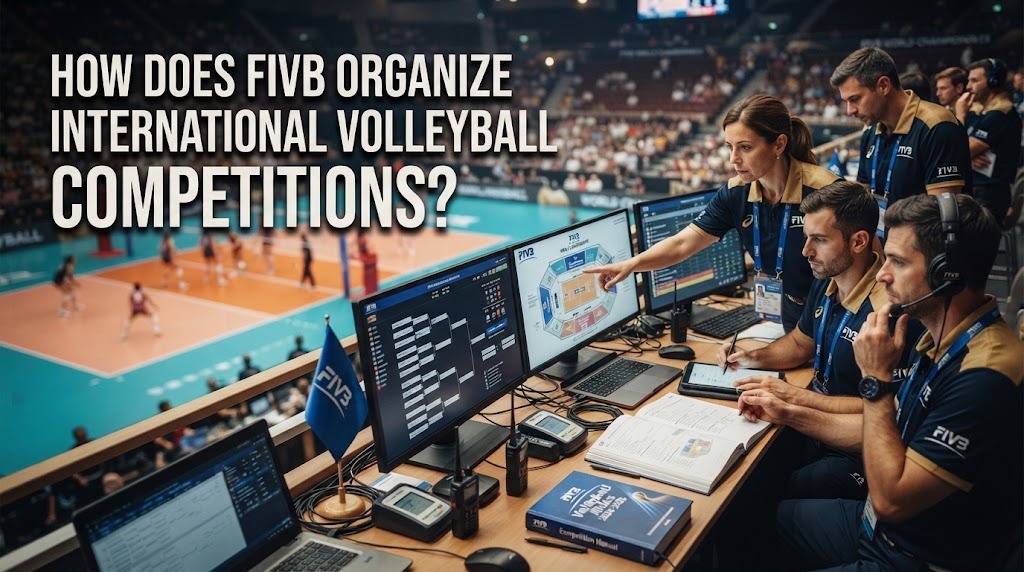
The FIVB or Fédération Internationale de Volleyball is the international governing body responsible for volleyball around the world. One of its important responsibilities is organizing and regulating international volleyball competitions involving national teams, clubs, and different age groups. The FIVB creates competition regulations, determines formats, coordinates hosts, and establishes standards for teams and officials. These systems help international volleyball competitions operate in an organized and consistent way. (FIVB)
SETTING COMPETITION REGULATIONS
The FIVB begins the organization of an international competition by establishing competition regulations. These regulations determine important aspects such as the competition format, participating teams, eligibility requirements, scheduling, and technical procedures. The regulations provide a common framework for everyone involved in the event. This helps national teams and organizers understand their responsibilities before the competition begins. (FIVB)
The FIVB also has different regulations for different types of events. Its official competition calendar includes events such as the Volleyball Nations League, World Championships, Club World Championships, and youth world championships. Each competition has its own schedule and structure based on its purpose and participating teams. (FIVB)
SELECTING HOST COUNTRIES AND VENUES
Another important part of organizing international volleyball is selecting suitable host countries and venues. Major competitions are held in different locations so that volleyball can reach audiences in various parts of the world. Host organizations need to meet the requirements established for the competition. The FIVB and its event partners then coordinate the necessary preparations for the tournament. (FIVB)
The Volleyball Nations League is a clear example of this international approach. In 2026, VNL matches were scheduled across 12 countries and 17 host cities, with China hosting both the women's and men's finals. Holding matches in multiple locations allows national teams to compete internationally while giving different communities opportunities to host high-level volleyball. (FIVB)
DETERMINING THE COMPETITION FORMAT
The FIVB determines a suitable competition format for each international event. Depending on the tournament, teams may compete in preliminary pools before moving into a knockout stage. The format determines how teams meet each other and how they qualify for the next stage. This creates a clear pathway from the beginning of the tournament to the championship match.
For example, the 2026 VNL features 18 men's teams and 18 women's teams. During the competition, teams play matches across several competition weeks before the best-ranked teams advance to the Final Phase. The women's Final Phase, for example, brings together the seven highest-placed teams from the preliminary phase plus the host nation. (FIVB)
MANAGING TEAM QUALIFICATION
The FIVB also establishes qualification systems for major international competitions. Qualification can depend on factors such as continental championships, world rankings, previous competition results, or the host country's status. These systems determine which national teams earn places in a particular tournament. The rules can differ depending on the competition and its edition.
For the FIVB Volleyball World Championships, the approved 2025–2028 calendar provides a qualification structure involving host countries, the reigning world champion, continental championships, and FIVB World Rankings. This creates a defined pathway for national teams to reach the world championship. (FIVB)
CREATING THE MATCH SCHEDULE
The FIVB and its event partners must create a match schedule that considers teams, venues, travel, competition stages, and athlete recovery. A well-planned schedule is important because international tournaments can involve many matches in different countries or cities. The schedule also needs to provide enough time for teams to prepare for their next matches. This makes competition management more complex than simply deciding who plays whom.
The VNL provides an example of this approach. In the 2025 expanded format, each team played 12 preliminary matches across three competition weeks, with three pools of six teams at different venues each week. The schedule was designed to provide competition while also giving players additional recovery time. (FIVB)
APPLYING OFFICIAL VOLLEYBALL RULES
International competitions must follow the official volleyball rules established by the FIVB. These rules provide common standards for playing actions, scoring, rotations, officiating, and other important parts of a match. Using the same rules helps teams from different countries compete under consistent conditions. Referees and other officials apply these standards during matches.
The FIVB can also test possible changes to rules and competition procedures. In 2026, approved tests included areas such as video challenge procedures, coach and referee interaction, playing actions, and pre-match protocols. Any potential changes to the Official Volleyball Rules are reviewed after the testing process. (FIVB)
ORGANIZING OFFICIALS AND TECHNOLOGY
International competitions require qualified referees and technical officials to ensure matches are conducted according to the regulations. The FIVB establishes systems for international refereeing and competition officials. Modern competitions can also use technology to assist officials with difficult decisions. These systems are intended to support accurate officiating while maintaining the flow of the match.
Technology has become increasingly important in major FIVB competitions. For the 2026 Volleyball Nations League, a remote Video Challenge System hub was introduced, allowing selected challenge and technical functions to be managed remotely. The system was designed to improve operational efficiency while maintaining the required officiating standards. (FIVB)
MANAGING THE FINAL STAGES
After the preliminary stage, qualifying teams can advance to the knockout or final stage, depending on the competition format. At this point, the tournament usually becomes more direct because teams need to win important matches to continue. Quarterfinals, semifinals, and medal matches can be included in the final stage. The exact structure depends on the regulations of the specific competition.
The 2025 VNL, for example, used a Final Phase involving the top seven teams from the preliminary phase plus the host country in each gender. The teams then competed through quarterfinals, semifinals, and medal matches to determine the champions. This format creates a clear progression from the preliminary competition to the final match. (FIVB)
ENSURING CONSISTENT COMPETITION STANDARDS
The FIVB also works to ensure that international competitions follow consistent organizational and technical standards. Its regulations cover areas such as competition management, technical preparation, and the responsibilities of participating organizations. The FIVB Volleyball Department is responsible for following and controlling the technical preparation of FIVB and world competitions. (FIVB)
This consistency is important because international competitions involve teams, officials, organizers, and spectators from different countries. Common standards make it easier for everyone to understand how competitions should operate. Through these regulations, the FIVB helps create an organized environment for international volleyball.
CONCLUSION
The FIVB organizes international volleyball competitions through a combination of regulations, qualification systems, competition formats, host venues, schedules, officials, and technical standards. It determines how teams qualify, how matches are arranged, and how different stages of a tournament are conducted. Major events such as the Volleyball Nations League demonstrate how these systems can be applied across multiple countries and venues. (FIVB)
Overall, the FIVB provides the international framework that allows volleyball competitions to run consistently across the world. By combining competition planning, official rules, technology, and international coordination, it supports the organization and development of high-level volleyball.
Tentang Penulis
Gusti Ayu Tita P
Penulis — Universitas STEKOM
Penulis aktif yang berfokus pada isu-isu akademik, teknologi pendidikan, dan pengembangan sumber daya manusia di lingkungan kampus.