How Does FIVB Promote Fair Play In Volleyball Matches?
Gusti Ayu Tita P
29 September 2026
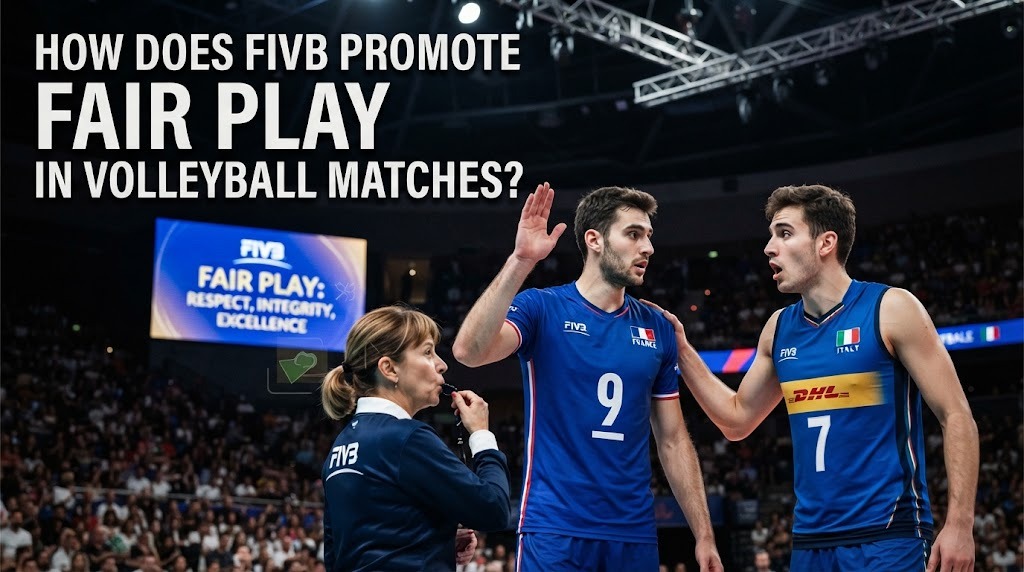
Fair play is an important part of international volleyball. The FIVB promotes fair competition by creating rules, enforcing ethical standards, supporting clean sport, and protecting the integrity of matches. These measures apply to athletes, coaches, officials, and other people involved in FIVB competitions. Through its regulations and educational programmes, FIVB aims to create a sporting environment based on respect, honesty, fairness, and responsibility.
ESTABLISHING CLEAR VOLLEYBALL RULES
One of the main ways FIVB promotes fair play is by establishing official volleyball rules. These rules explain how matches should be played and how players, coaches, and officials should behave during competitions. Having common rules allows teams from different countries to compete under the same framework. FIVB regularly reviews its rules and competition procedures to keep the sport organised and understandable.
FIVB also has specific regulations covering sports, events, discipline, ethics, and medical and anti-doping matters. These regulations create a broader framework for international competitions beyond the actions that happen during a rally. The FIVB Board of Administration is responsible for enacting and updating many of these regulations.
ENSURING FAIR REFEREEING
Referees play an important role in maintaining fair play during volleyball matches. FIVB develops officiating standards and provides rules that guide referees when making decisions. Officials are expected to apply the rules consistently to both teams. This helps reduce unfair advantages caused by different interpretations of the game.
FIVB's Rules of the Game and Refereeing Commission has specifically reaffirmed its commitment to integrity and fair play. The commission works on areas related to rules, refereeing, technology, and the integrity of the game. FIVB also continues to evaluate new procedures and technologies that can support accurate decision-making.
USING VIDEO CHALLENGE TECHNOLOGY
Technology can help support fair decisions when an important action is difficult to judge in real time. The Video Challenge System allows certain decisions to be reviewed using video evidence. This can help officials examine specific situations and make decisions based on available visual information. The system is used according to FIVB competition regulations.
Video technology is particularly useful because volleyball actions can happen very quickly. A challenge can give officials another opportunity to examine a disputed situation instead of relying only on what they saw during the rally. FIVB has also tested changes to video challenge procedures as part of its wider review of competition rules and procedures.
PREVENTING DOPING
Anti-doping is another major part of fair play in volleyball. FIVB's anti-doping programme aims to protect clean athletes and maintain a level playing field. The programme applies to volleyball, beach volleyball, and snow volleyball. FIVB also provides education about prohibited substances, testing procedures, athlete rights, and responsibilities.
FIVB has delegated its global anti-doping testing programme to the International Testing Agency. Athletes can also receive information about the Prohibited List, Therapeutic Use Exemptions, and doping control procedures. These measures are designed to help athletes understand their responsibilities and avoid accidental anti-doping violations.
PREVENTING COMPETITION MANIPULATION
Fair play also means protecting matches from competition manipulation. FIVB's Code of Ethics prohibits participants from manipulating the course or result of a competition in a way that violates sporting ethics or the principle of fair play. This rule applies to the wider volleyball community, not only players on the court. Competition integrity is therefore treated as an important part of FIVB governance.
FIVB also requires participants to complete an e-learning course on the prevention of competition manipulation. The programme is intended to educate people involved in volleyball about the risks and responsibilities connected with competition integrity. FIVB states that the current certificate validity has been extended through 31 December 2026 while the course content is being reviewed and updated.
ENFORCING DISCIPLINARY RULES
FIVB promotes fair play by taking action when participants violate its regulations. The organisation has an independent Disciplinary Panel Sub-Committee that can impose disciplinary sanctions within FIVB competitions. Possible cases can involve inappropriate conduct, offensive behaviour, or other breaches of the regulatory framework. This system helps ensure that competition rules have consequences when they are not followed.
For example, in June 2026, FIVB announced disciplinary decisions involving three cases from the Volleyball Nations League. The cases involved misconduct or inappropriate reactions connected with matches, and sanctions included a formal warning, a fine, and a one-match suspension. Such decisions demonstrate how FIVB applies its disciplinary framework to protect respect and fair play.
PROTECTING ATHLETES FROM HARASSMENT AND ABUSE
Fair play also requires athletes to compete in a safe sporting environment. FIVB has a safeguarding framework designed to prevent and respond to harassment and abuse at its events. The organisation states that everyone participating in an FIVB event has the right to protection from non-accidental violence, harassment, and abuse. Safeguarding is therefore connected to athlete welfare as well as competition integrity.
FIVB's safeguarding policy is incorporated into its Disciplinary Regulations. Incidents involving harassment or abuse can therefore lead to disciplinary consequences. FIVB also requires participants in its competitions to complete safeguarding education, helping them understand their rights and responsibilities in maintaining a safe environment.
PROMOTING ATHLETE RESPONSIBILITY
FIVB also promotes fair play by encouraging athletes to understand their rights and responsibilities. In March 2026, the FIVB Board of Administration endorsed an Athletes' Rights and Responsibilities Declaration. The declaration was developed through consultation with the FIVB Athletes' Commission and contains 12 aspirational rights and 10 responsibilities.
This framework helps emphasise that fair play is a shared responsibility. Athletes are not only expected to follow competition rules but also to contribute to a respectful sporting environment. When players understand their responsibilities, they can better support positive relationships with teammates, opponents, officials, and other participants.
PROTECTING THE INTEGRITY OF VOLLEYBALL
FIVB's overall approach combines rules, ethics, officiating, technology, anti-doping, safeguarding, and disciplinary procedures. These areas work together to protect the integrity of international volleyball. Fair play cannot depend on one rule or one official because competitions involve many people and different situations. A complete regulatory framework helps address these different aspects.
FIVB's current legal framework includes its Constitution, General Regulations, Sports Regulations, Event Regulations, Disciplinary Regulations, Code of Ethics, and Medical and Anti-Doping Regulations. Together, these documents provide rules for different aspects of the Global Volleyball Movement.
CONCLUSION
FIVB promotes fair play in volleyball matches through clear rules, fair refereeing, video technology, anti-doping programmes, competition integrity measures, safeguarding, and disciplinary procedures. It also educates athletes and other participants about their rights and responsibilities. These efforts help create competitions where teams can compete under common standards and athletes can participate in a safe environment. By combining education, regulation, technology, and enforcement, FIVB works to protect the fairness and integrity of international volleyball.
Tentang Penulis
Gusti Ayu Tita P
Penulis — Universitas STEKOM
Penulis aktif yang berfokus pada isu-isu akademik, teknologi pendidikan, dan pengembangan sumber daya manusia di lingkungan kampus.