How Does FIVB Support The Development Of Women’s Volleyball?
Gusti Ayu Tita P
29 September 2026
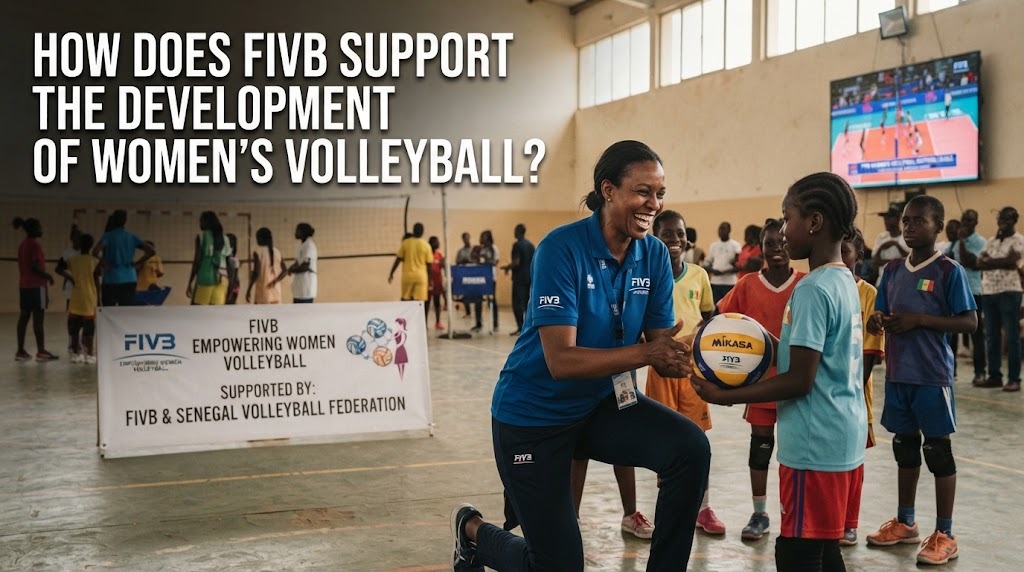
Women’s volleyball has become an important part of the global volleyball community. The Fédération Internationale de Volleyball or FIVB supports its development through competitions, athlete development, coaching programmes, and opportunities for women in leadership. FIVB also works with National Federations to strengthen women’s national teams and create better development pathways. These efforts are part of a wider approach to making volleyball more accessible and providing opportunities for women and girls.
FIVB support is not limited to players on the court. It also includes coaches, technical staff, young athletes, and women working in volleyball leadership. Through programmes such as Volleyball Empowerment and initiatives for female coaches, FIVB helps strengthen different parts of the women’s volleyball system. This creates opportunities for women to participate and develop at several levels of the sport.
SUPPORTING WOMEN’S NATIONAL TEAMS
One of the main ways FIVB supports women’s volleyball is through Volleyball Empowerment. The programme provides National Federations with support in areas such as coaching, equipment, and knowledge transfer. These resources can help women’s national teams improve their training systems and technical preparation. FIVB states that the programme is designed to help national teams and athletes reach their full potential and compete at major events.
The support can be different from one country to another because National Federations have different needs. For example, a federation may receive coaching support while another may need equipment or technical knowledge. In 2026, FIVB reported that women’s national teams in several countries received targeted and application-based support. This approach allows development programmes to respond to specific conditions within each national volleyball system.
PROVIDING COACHING SUPPORT
Qualified coaches are essential for developing women volleyball players. Coaches help athletes improve technical skills, tactics, physical preparation, teamwork, and match performance. Through Volleyball Empowerment, FIVB can provide coaching support to National Federations and national teams. This gives athletes access to additional technical expertise and structured training programmes.
FIVB also focuses specifically on increasing opportunities for female coaches. From 2026, women’s national teams competing in the Volleyball Nations League were encouraged to include at least one female coach in their staff. FIVB provides financial assistance when a female coach is registered, and teams meeting the requirement can have an additional coach on the bench.
DEVELOPING FEMALE COACHES
Increasing the number of female coaches can create more career opportunities for women within volleyball. FIVB’s female coach initiative is designed to give women greater access to high-level coaching experience and professional development. During the 2026 VNL, 13 of the 18 participating women’s national teams registered at least one female coach during the opening week.
FIVB has also extended this approach to younger age-group competitions. Teams participating in the Volleyball Age Group World Championships must include at least one female coach on their roster. This can give young players greater visibility of women in coaching roles. Over time, such opportunities can help create a wider pathway from female athlete to coach and eventually leader.
PROVIDING EQUIPMENT AND TRAINING RESOURCES
Good equipment is important for women’s national teams to train effectively. FIVB Volleyball Empowerment includes volleyball equipment support as one of its main development areas. National Federations can receive equipment based on approved development projects and their specific requirements. Better training resources can help athletes practise skills under more suitable conditions.
Equipment support can also strengthen the wider training environment around a women’s national team. It may provide resources needed by athletes, coaches, and technical staff. In 2026, FIVB reported that women’s teams participating in the AVC Women’s Cup had benefited from coaching, equipment, and knowledge transfer support. This demonstrates how different forms of assistance can work together to support women’s volleyball.
SHARING KNOWLEDGE AND TECHNICAL SKILLS
Women’s volleyball development also requires strong technical knowledge. FIVB provides knowledge transfer programmes that can improve the skills of coaches, technical staff, and administrators. These programmes can help National Federations develop knowledge that can continue to be used after a specific project ends. This makes knowledge sharing an important part of long-term volleyball development.
FIVB has also organized programmes specifically focused on women in volleyball. In December 2025, an FIVB Knowledge Transfer Programme in India brought together more than 100 female coaches for four days of learning and collaboration. The programme covered coaching fundamentals, advanced coaching, match analysis, youth development, grassroots participation, and women’s leadership. Participants were expected to share the knowledge with other coaches and communities in their regions.
CREATING MORE OPPORTUNITIES FOR WOMEN IN LEADERSHIP
FIVB also recognizes that women’s participation should extend beyond playing and coaching. Its gender equality initiatives aim to create opportunities for women in leadership and decision-making positions. In February 2026, FIVB signed a Memorandum of Understanding with the Global Observatory for Gender Equality and Sport to support gender equality and inclusion across volleyball.
The partnership includes work on gender equality research involving coaches, players, and governance structures. This shows that developing women’s volleyball involves more than improving athletic performance. It also includes creating pathways for women to contribute to the management and leadership of the sport. Participation, opportunity, and leadership are therefore connected parts of women’s volleyball development.
SUPPORTING YOUNG FEMALE ATHLETES
Developing women’s volleyball also requires attention to the next generation of athletes. FIVB supports international youth competitions where young female players can gain experience against athletes from other countries. Age-group competitions can help players develop their technical skills and understand the demands of international volleyball. They can also provide an important pathway toward senior national teams.
The presence of female coaches at age-group competitions can strengthen this development environment. Young players can see women working in professional coaching roles while they are beginning their own volleyball careers. This can help make different career pathways within volleyball more visible. FIVB's female coach initiative specifically includes age-group World Championships as part of this approach.
PROMOTING EQUAL OPPORTUNITIES
FIVB describes gender equality as an important part of its global volleyball approach. The organization highlights equal participation, equal rules, equal prize money, and equal visibility as elements of its vision for the sport. This framework supports the idea that women’s volleyball should have opportunities to develop alongside the men's game.
FIVB also emphasizes equal opportunities both on and off the court. This means development can include athletes, coaches, officials, administrators, and leaders. Creating opportunities across these areas can help women participate more fully in the volleyball community. It also gives young girls more examples of possible roles they can pursue in the sport.
STRENGTHENING WOMEN’S VOLLEYBALL AROUND THE WORLD
FIVB works with National Federations in different regions, allowing women’s volleyball development to take place across many countries. Volleyball Empowerment has supported National Federations through coaching, equipment, and knowledge transfer. In 2025, FIVB reported 341 approved projects across 107 National Federations, including 124 coaching projects, 109 equipment projects, and 108 knowledge transfer projects.
The impact can also be seen in international competitions. In September 2026, FIVB reported that Chile, Argentina, and Colombia, all beneficiaries of Volleyball Empowerment support, finished first, second, and third in the women’s volleyball tournament at the 2026 South American Games. These examples show how development support can contribute to stronger national team programmes in different regions.
CONCLUSION
FIVB supports the development of women’s volleyball through national team assistance, coaching programmes, equipment, knowledge transfer, youth competitions, and opportunities for female coaches and leaders. Volleyball Empowerment provides practical resources to National Federations, while newer initiatives focus specifically on increasing women's participation in coaching and leadership.
These programmes create a broader development pathway for women in volleyball. Athletes can receive better training support, coaches can gain professional experience, and young players can see more female role models within the sport. Through continued investment and international cooperation, FIVB aims to strengthen women’s participation, development, and opportunities across global volleyball.
Tentang Penulis
Gusti Ayu Tita P
Penulis — Universitas STEKOM
Penulis aktif yang berfokus pada isu-isu akademik, teknologi pendidikan, dan pengembangan sumber daya manusia di lingkungan kampus.