How Does PPE Protect the Eyes from Workplace Hazards?
Gusti Ayu Tita P
29 September 2026
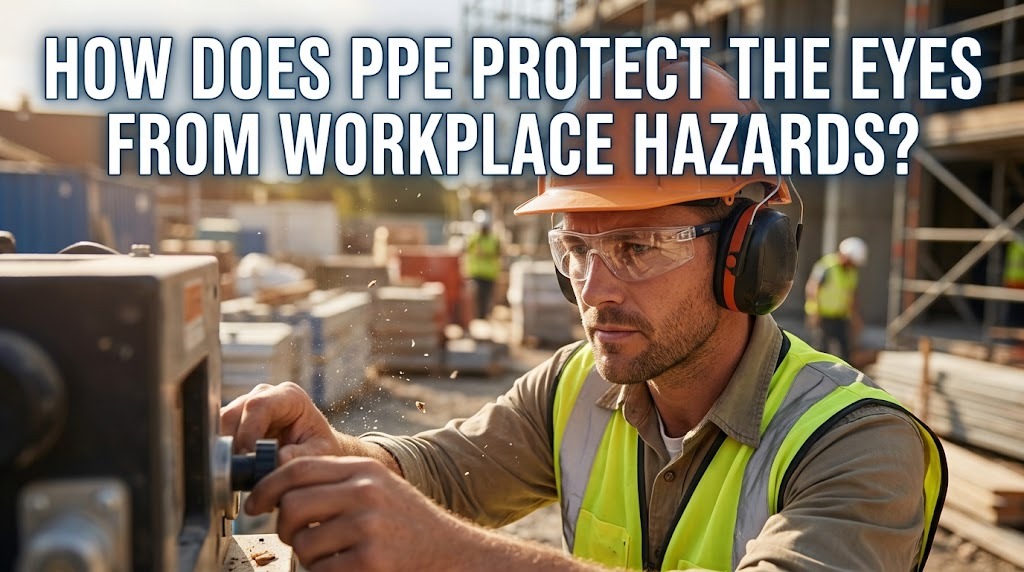
Eye protection is an important part of workplace safety because the eyes can be easily affected by many types of hazards. Workers may encounter flying particles, dust, chemicals, bright light, sparks, or other materials that can cause eye injuries. Using suitable Personal Protective Equipment (PPE) can help reduce the risk of eye damage during work. The type of eye protection should be selected according to the hazards present in the workplace.
COMMON WORKPLACE HAZARDS THAT CAN AFFECT THE EYES
Workers can face many hazards that may harm their eyes while performing daily tasks. Dust, flying particles, metal fragments, chemical splashes, and sparks are common examples of hazards that may cause eye injuries. Some jobs may also expose workers to intense light or radiation, such as certain welding activities. Without suitable protection, even a small particle can cause discomfort or injury.
The level of danger depends on the type of work and the materials being handled. Construction, manufacturing, laboratories, workshops, and healthcare environments may each have different eye hazards. Identifying these hazards is therefore important before choosing protective equipment. A proper assessment helps employers determine what type of eye protection workers need.
HOW SAFETY GLASSES PROTECT THE EYES
Safety glasses are designed to provide protection against certain common workplace hazards, particularly flying particles and debris. They usually have impact-resistant lenses and may include side protection depending on their design. Safety glasses are commonly used in workshops, construction areas, manufacturing facilities, and other environments where particles may be present. However, they may not provide sufficient protection against every type of hazard.
Workers should make sure their safety glasses fit properly and remain in good condition. Scratched, cracked, or damaged lenses may affect visibility and reduce the usefulness of the equipment. Workers should also keep the lenses clean so they can see their surroundings clearly. Proper use helps maintain both eye protection and workplace awareness.
WHEN GOGGLES ARE MORE SUITABLE
Safety goggles provide a closer seal around the eyes than many standard safety glasses. This design can offer better protection against certain chemical splashes, dust, and other hazards that may approach the eyes from different directions. Goggles can be particularly useful in laboratories, industrial processes, and tasks involving liquids or fine particles. The appropriate type should still be determined by the specific workplace hazard.
Not all goggles provide the same level of protection. Some are designed for chemical hazards, while others are intended for impact protection or specific applications. Workers should check the equipment specifications and workplace requirements before using them. Selecting goggles based on the actual hazard can provide more appropriate eye safety.
IMPORTANCE OF PROPER FIT AND USE
Eye protection works best when it fits the worker correctly and is worn as intended. Equipment that is loose, uncomfortable, or unsuitable may interfere with vision and encourage workers to remove it during tasks. Workers should adjust their PPE when possible and make sure it remains securely positioned. Proper fit can also help reduce gaps through which certain hazards could reach the eyes.
Workers should receive appropriate instruction on how to wear, clean, store, and inspect their eye protection. They should check for cracks, scratches, damage, or contamination before using the equipment. If protective equipment is damaged or no longer provides suitable protection, it should be replaced according to workplace procedures. Consistent use is an important part of preventing avoidable eye injuries.
CHOOSING EYE PPE BASED ON WORKPLACE RISKS
The correct eye PPE should always be selected according to the hazards identified in the workplace. Safety glasses may be suitable for some impact hazards, while goggles or specialized protection may be necessary for other exposures. In some tasks, additional face protection may also be required to protect areas beyond the eyes. Risk assessment helps employers determine the appropriate combination of protective equipment.
Eye protection should also be considered together with other workplace safety controls. Employers should first reduce hazards through suitable engineering controls and safe work practices whenever possible. PPE then provides an additional layer of protection when hazards cannot be completely eliminated. By matching eye PPE to workplace risks, organizations can help workers perform their tasks more safely.
CONCLUSION
PPE protects the eyes by providing a physical barrier against workplace hazards such as particles, dust, chemical splashes, and intense light. Different tasks require different forms of eye protection, so workers should not assume that one type of PPE is suitable for every situation. Proper fit, regular inspection, cleaning, and correct use are also essential for effective protection. Selecting eye PPE based on a careful assessment of workplace risks can help reduce the possibility of eye injuries and support a safer working environment.
Tentang Penulis
Gusti Ayu Tita P
Penulis — Universitas STEKOM
Penulis aktif yang berfokus pada isu-isu akademik, teknologi pendidikan, dan pengembangan sumber daya manusia di lingkungan kampus.