How Does PPE Protect Workers from Workplace Hazards?
Gusti Ayu Tita P
29 September 2026
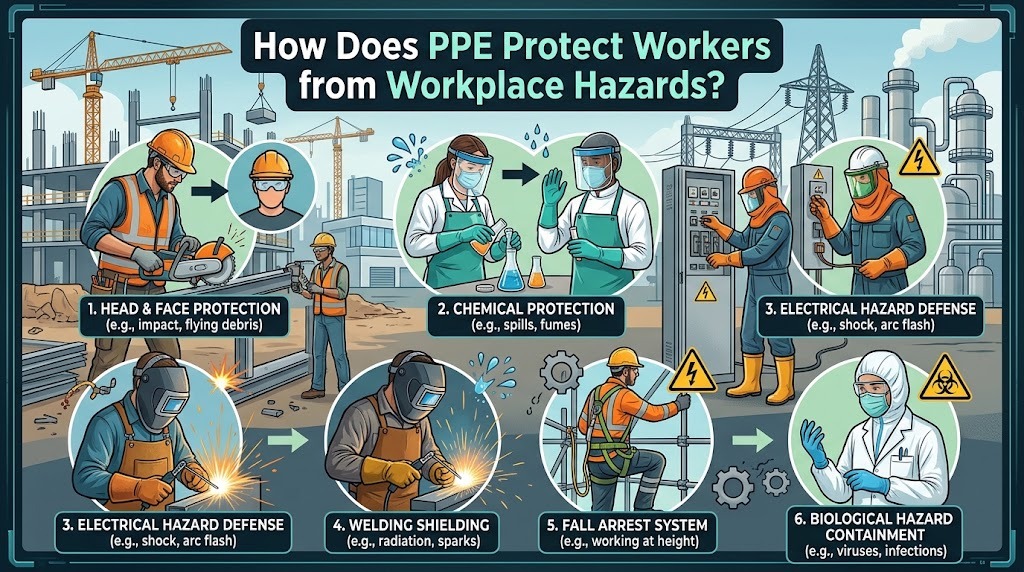
Workplace hazards can come from machines, chemicals, dust, noise, heat, falling objects, and sharp materials. Without proper protection, these hazards can cause injuries or other health problems. Personal Protective Equipment (PPE) is used to reduce workers’ exposure to these dangers. PPE includes equipment such as helmets, safety glasses, gloves, masks, ear protection, and safety footwear. Understanding how PPE works can help workers use it correctly and safely.
UNDERSTANDING PPE AND WORKPLACE HAZARDS
Personal Protective Equipment (PPE) refers to equipment worn or used by workers to reduce exposure to workplace hazards. The type of PPE needed depends on the specific risks found in a working environment. For example, construction workers may need safety helmets and protective footwear, while workers handling chemicals may need gloves, goggles, and protective clothing. PPE acts as a protective barrier between the worker and a potential source of harm.
Workplace hazards can be physical, chemical, biological, or environmental. Identifying these hazards before starting work is important because different risks require different protective equipment. PPE does not remove the hazard itself, but it can help reduce the worker’s exposure and lower the potential severity of an injury. Therefore, PPE should be considered an important part of a wider workplace safety program.
HOW PPE CREATES PROTECTION FOR WORKERS
PPE protects workers by creating a physical barrier between their bodies and hazardous materials or conditions. Safety glasses, for example, can help prevent dust, particles, or chemical splashes from reaching the eyes. Gloves can provide protection against certain chemicals, sharp materials, heat, or other hazards when the correct type is selected. Similarly, helmets can help protect the head from impacts and falling objects.
Different PPE works in different ways depending on its design and purpose. Respiratory protection can reduce exposure to certain airborne contaminants when properly selected and used, while hearing protection can reduce exposure to excessive workplace noise. However, PPE is effective only when it is appropriate for the hazard, correctly fitted, properly maintained, and consistently used. Workers should also follow workplace safety procedures when using PPE.
TYPES OF PPE USED AGAINST WORKPLACE HAZARDS
There are several common types of PPE designed to protect different parts of the body. Head protection such as safety helmets can help protect against impact and falling objects. Eye and face protection includes safety glasses, goggles, and face shields, which can help protect against particles, splashes, and other hazards. Hand protection includes different types of gloves selected according to the materials and tasks involved.
Other PPE includes safety footwear, protective clothing, hearing protection, and respiratory protection. Safety footwear can help protect the feet from impacts, punctures, slipping, or other identified risks. Hearing protection can reduce exposure to hazardous noise, while respiratory equipment can help protect workers from certain airborne hazards when used correctly. Choosing PPE should always be based on the actual risks present in the workplace.
WHY PROPER PPE SELECTION MATTERS
Choosing the right PPE is important because not every type of protective equipment provides the same protection. Workers should consider the type of hazard, the level of exposure, the work activity, and the equipment’s suitability for the task. PPE should also fit the worker properly so that it does not interfere with movement, visibility, communication, or other essential activities. Poorly selected PPE may provide inadequate protection or create additional problems.
Employers should conduct workplace risk assessments to identify hazards and determine appropriate protective measures. PPE should be used as part of the hierarchy of controls, rather than as the only method of controlling workplace risks. When possible, hazards should first be eliminated or reduced through safer processes, engineering controls, or administrative measures. Proper PPE selection then provides an additional layer of protection when exposure cannot be sufficiently controlled.
USING AND MAINTAINING PPE SAFELY
Workers need to understand how to wear, adjust, inspect, clean, store, and maintain PPE before using it. Damaged, contaminated, expired, or unsuitable equipment may not provide the expected level of protection. PPE should be inspected regularly, especially before use, to identify signs of damage or wear. Workers should also report defective equipment and follow their workplace procedures for replacement.
Training is another important part of PPE safety. Workers should know when PPE is required, what type should be used, how it should fit, and what its limitations are. PPE should be used consistently whenever the identified hazard is present. With proper training and maintenance, PPE can become an effective part of everyday workplace safety.
CONCLUSION
PPE helps protect workers from workplace hazards by creating a protective barrier against risks such as impacts, chemicals, particles, noise, and other dangerous conditions. Its effectiveness depends on selecting the correct equipment, ensuring a proper fit, using it correctly, and maintaining it regularly. PPE should also work together with other workplace safety controls rather than replacing them. By understanding workplace risks and following proper safety procedures, workers can reduce their exposure to hazards and support a safer working environment.
Tentang Penulis
Gusti Ayu Tita P
Penulis — Universitas STEKOM
Penulis aktif yang berfokus pada isu-isu akademik, teknologi pendidikan, dan pengembangan sumber daya manusia di lingkungan kampus.