
How Does the Workplace Environment Encourage Workaholic Habits?
Gusti Ayu Tita P
24 September 2026
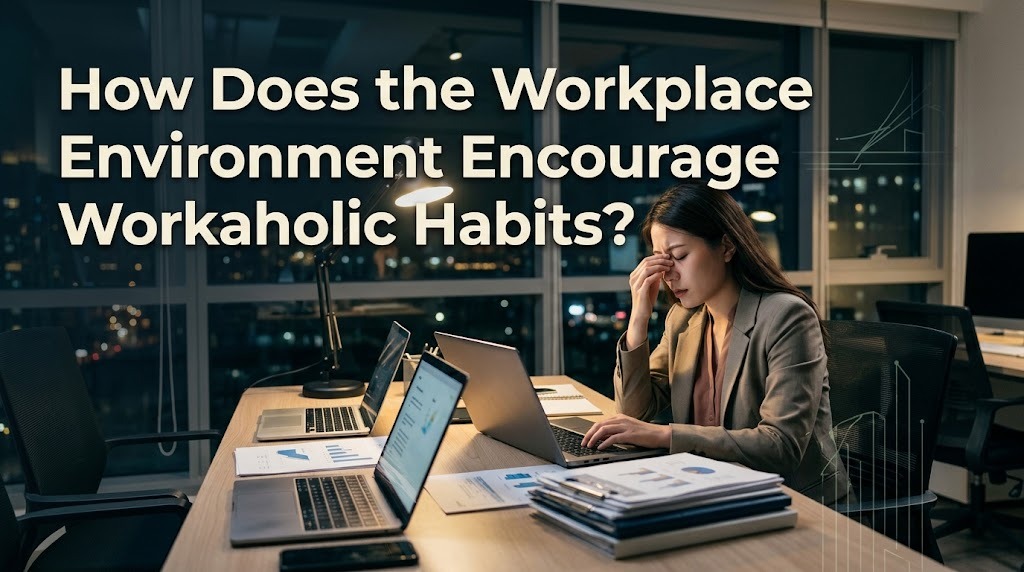
The workplace environment can influence how employees manage their time, energy, and boundaries. A workplace that constantly rewards long hours or expects employees to remain available may encourage unhealthy working patterns. However, workaholism is influenced by multiple factors, so the workplace is not necessarily the only cause. Work culture, workload, leadership, and communication practices can all affect how employees approach their responsibilities. Understanding these factors can help organizations create healthier working environments.
A CULTURE THAT VALUES LONG WORKING HOURS
Workplace culture can influence what employees consider normal behavior. If staying late is frequently viewed as a sign of commitment, employees may feel pressure to work beyond their normal hours. Some workers may begin to believe that spending more time at work is necessary to demonstrate dedication. Long working hours should not automatically be treated as a measure of commitment or performance.
This culture can become stronger when employees regularly see colleagues working late or responding to messages outside working hours. New employees may copy these behaviors because they want to fit into the workplace. Over time, excessive working can become normalized even when it is not required. Clear expectations about working hours can help reduce this pressure.
HEAVY WORKLOAD AND TIGHT DEADLINES
A consistently heavy workload can make it difficult for employees to maintain reasonable working hours. When there are too many responsibilities and limited time, workers may feel that they must work longer to complete everything. Frequent urgent deadlines can also create a sense that there is never enough time to stop. Unrealistic workloads can therefore contribute to unhealthy work patterns.
Not every demanding period is harmful because some jobs naturally include busy seasons or important deadlines. The concern arises when excessive demands become a regular part of the workplace. Managers can help by setting realistic priorities and reviewing workloads when employees consistently have more tasks than they can reasonably complete. This can support both employee well-being and sustainable performance.
LEADERSHIP AND WORKPLACE EXPECTATIONS
Managers and supervisors can strongly influence workplace behavior through their actions and expectations. If leaders regularly send messages outside working hours or expect immediate responses, employees may feel that they must always be available. Even without directly asking employees to work longer, these behaviors can create pressure to remain connected.
Healthy leadership involves communicating priorities clearly and respecting reasonable boundaries. Managers can demonstrate this by avoiding unnecessary after-hours communication and focusing on the quality of completed work rather than simply the number of hours spent working. Clear expectations can help employees understand when they are expected to be available. This can reduce uncertainty and unnecessary pressure.
TECHNOLOGY AND CONSTANT AVAILABILITY
Digital technology has made communication faster and more convenient, but it can also blur the boundary between work and personal time. Employees may receive emails, workplace messages, and notifications at any hour of the day. If they feel obligated to respond immediately, constant digital availability can make it difficult to disconnect from work.
Creating clear communication rules can help employees protect their personal time. For example, organizations can establish guidelines for nonurgent messages outside regular working hours. Employees can also use notification settings to reduce unnecessary interruptions. Technology should support work rather than make employees feel that they must be connected at all times.
REWARDS AND RECOGNITION FOR OVERWORKING
Workplace rewards can influence which behaviors employees repeat. If promotions, praise, or recognition consistently appear to favor people who work the longest hours, employees may conclude that excessive work is necessary for career progress. This can encourage people to sacrifice rest or personal time to gain recognition. Recognition systems can influence workplace habits even when long hours are not an official requirement.
Organizations can instead consider outcomes, work quality, collaboration, and responsible time management when recognizing employee contributions. This can create a broader understanding of professional performance. Employees can remain motivated without believing that they must always work longer than others. A balanced approach can also support more sustainable performance over time.
CONCLUSION
The workplace environment can encourage workaholic habits through long-hour cultures, excessive workloads, constant availability, leadership expectations, and reward systems that appear to favor overworking. These factors do not affect every employee in the same way, and workaholism can also involve personal characteristics and circumstances. However, organizations can reduce unhealthy pressure by setting realistic workloads, respecting personal time, and evaluating performance based on meaningful results. Clear workplace boundaries can help employees remain productive without feeling that they must work constantly. A healthier work environment benefits both employees and the organization in the long term.
Tentang Penulis
Gusti Ayu Tita P
Penulis — Universitas STEKOM
Penulis aktif yang berfokus pada isu-isu akademik, teknologi pendidikan, dan pengembangan sumber daya manusia di lingkungan kampus.



