The development of educational technology has transformed the way students and lecturers interact in the learning process. One of the most significant innovations in modern education is hybrid learning. This learning method combines traditional classroom instruction with online learning activities, creating a more flexible and interactive educational environment.
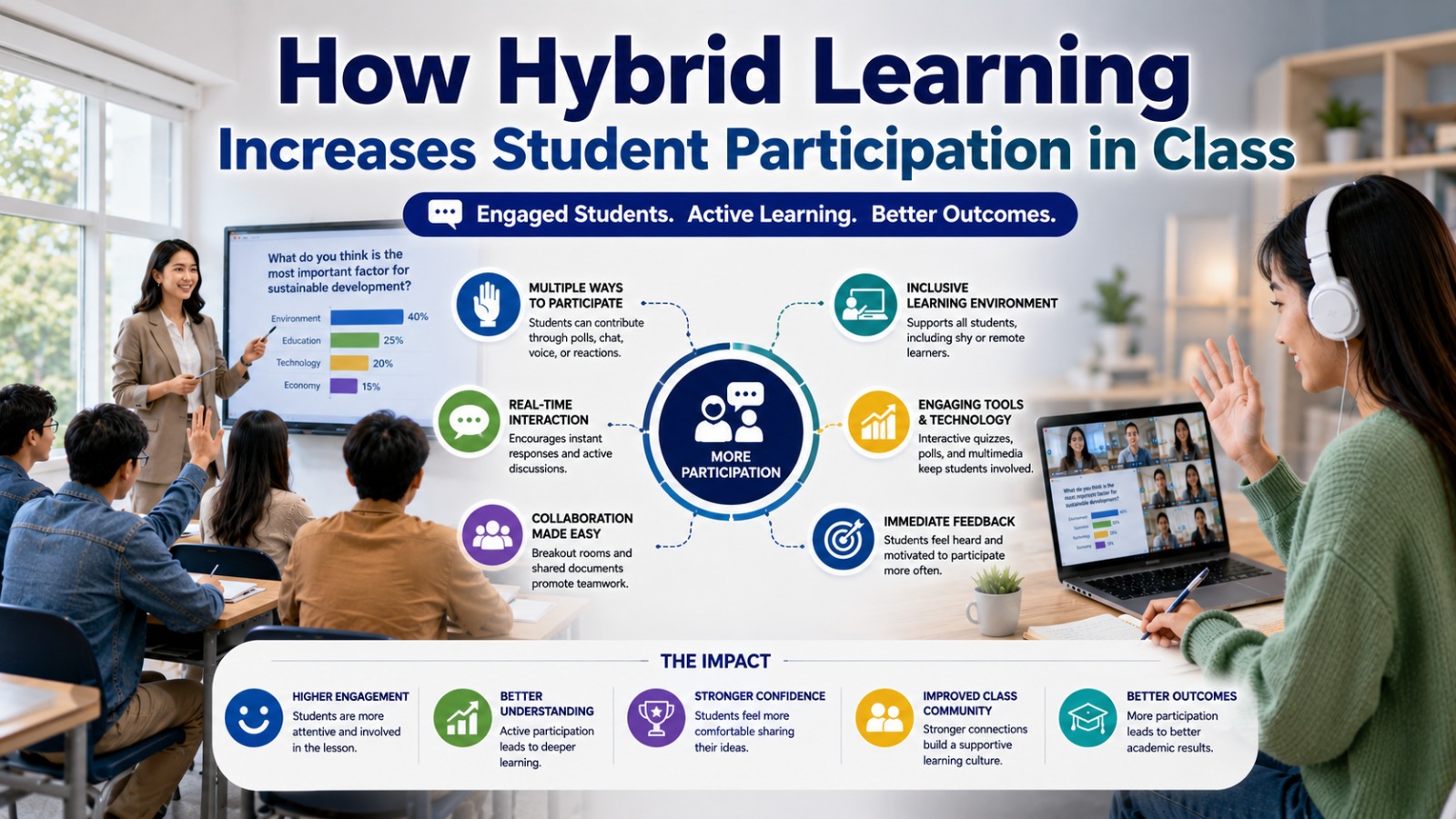
One of the biggest advantages of hybrid learning is its ability to increase student participation in class. Through the integration of digital tools and face-to-face interaction, students have more opportunities to engage actively in discussions, assignments, and collaborative learning activities. As a result, hybrid learning has become an effective solution for improving classroom participation and learning outcomes.
UNDERSTANDING HYBRID LEARNING
Hybrid learning is an educational approach that combines in-person classroom sessions with online learning systems. In this model, students can participate in direct classroom discussions while also accessing digital learning materials through online platforms.
Lecturers can use video conferencing, online quizzes, discussion forums, and multimedia presentations to support the learning process. This combination creates a more dynamic and flexible learning environment for students.
Hybrid learning allows educational institutions to adapt to modern technological developments while maintaining the benefits of traditional face-to-face education.
CREATING A MORE INTERACTIVE LEARNING ENVIRONMENT
One of the main reasons hybrid learning increases student participation is because it creates a more interactive learning atmosphere. Traditional lecture-based teaching methods sometimes make students passive listeners. Hybrid learning changes this by encouraging students to participate actively through various digital and classroom activities.
Interactive tools such as live polls, online quizzes, breakout discussions, and collaborative projects motivate students to become more involved during lessons. Students can express their opinions more comfortably using digital communication platforms, especially those who may feel shy speaking in front of large groups.
This interactive environment helps students feel more connected to the learning process.
PROVIDING FLEXIBILITY FOR STUDENTS
Flexibility is another important factor that increases student participation in hybrid learning. Students can access lectures, assignments, and educational materials from different locations and at different times.
This flexibility allows students to manage their schedules more effectively, especially those with part-time jobs, internships, or personal responsibilities. Since students can review recorded lectures and online resources repeatedly, they are often better prepared for classroom discussions and activities.
Better preparation leads to greater confidence and higher participation levels during learning sessions.
ENCOURAGING ACTIVE COMMUNICATION
Hybrid learning encourages continuous communication between students and lecturers. Online discussion forums, messaging applications, and virtual consultation sessions allow students to ask questions and share ideas more easily.
In traditional classrooms, some students may hesitate to participate directly due to fear of making mistakes. However, digital communication tools provide alternative ways for students to express their thoughts and interact with lecturers.
This open communication system helps create a supportive and inclusive learning environment where students feel valued and motivated to participate.
USING DIGITAL TOOLS TO BOOST ENGAGEMENT
Digital technology plays a major role in increasing participation in hybrid learning environments. Lecturers can use various educational tools to make lessons more engaging and interactive.
Videos, animations, gamified quizzes, and multimedia presentations help students understand learning materials more effectively. Interactive online platforms also allow students to collaborate on projects, share ideas, and participate in group discussions regardless of their physical location.
These digital learning experiences can make education more enjoyable and reduce boredom during lessons.
SUPPORTING DIFFERENT LEARNING STYLES
Every student has a unique learning style. Some students learn better through visual presentations, while others prefer discussions, reading materials, or hands-on activities.
Hybrid learning supports multiple learning preferences by combining online and offline teaching methods. Students can choose learning approaches that suit their individual needs, making them more comfortable and engaged during the learning process.
When students feel that learning methods match their preferences, they are more likely to participate actively in class activities and discussions.
BUILDING STUDENT CONFIDENCE
Hybrid learning can help build student confidence in participating during lessons. Online platforms often provide students with more time to think before responding to questions or joining discussions.
Students who are less confident speaking directly in class may feel more comfortable sharing their ideas through chat features, online forums, or virtual presentations. As students gain confidence in expressing themselves digitally, they may also become more active during face-to-face sessions.
This gradual increase in confidence contributes to higher overall participation levels.
IMPROVING COLLABORATION AMONG STUDENTS
Collaboration is an important aspect of hybrid learning. Group projects, online teamwork activities, and virtual discussions encourage students to interact with classmates regularly.
Digital collaboration tools allow students to work together more efficiently, even when they are not physically present in the same location. These collaborative experiences improve communication skills, teamwork abilities, and social interaction among students.
When students feel connected to their peers, they are more likely to participate actively in academic activities.
CHALLENGES IN MAINTAINING PARTICIPATION
Although hybrid learning offers many benefits, maintaining student participation can still be challenging. Some students may experience internet connectivity problems, lack motivation during online sessions, or feel distracted while learning remotely.
Lecturers must design engaging learning activities and provide regular feedback to keep students motivated. Educational institutions should also ensure that students have access to the necessary technology and support systems.
By addressing these challenges, hybrid learning can continue to improve participation and learning effectiveness.
CONCLUSION
Hybrid learning has become an effective educational approach for increasing student participation in class. By combining face-to-face instruction with digital learning tools, this method creates more interactive, flexible, and engaging learning environments.
The use of technology, active communication, collaborative activities, and flexible access to learning resources helps students become more involved in the educational process. As education continues to evolve in the digital era, hybrid learning will likely remain an important strategy for improving student engagement and academic success.
Tentang Penulis
Gusti Ayu Tita P
Penulis — Universitas STEKOM
Penulis aktif yang berfokus pada isu-isu akademik, teknologi pendidikan, dan pengembangan sumber daya manusia di lingkungan kampus.