
How Is Multiple Personality Different From Mood Changes?
Gusti Ayu Tita P
24 September 2026
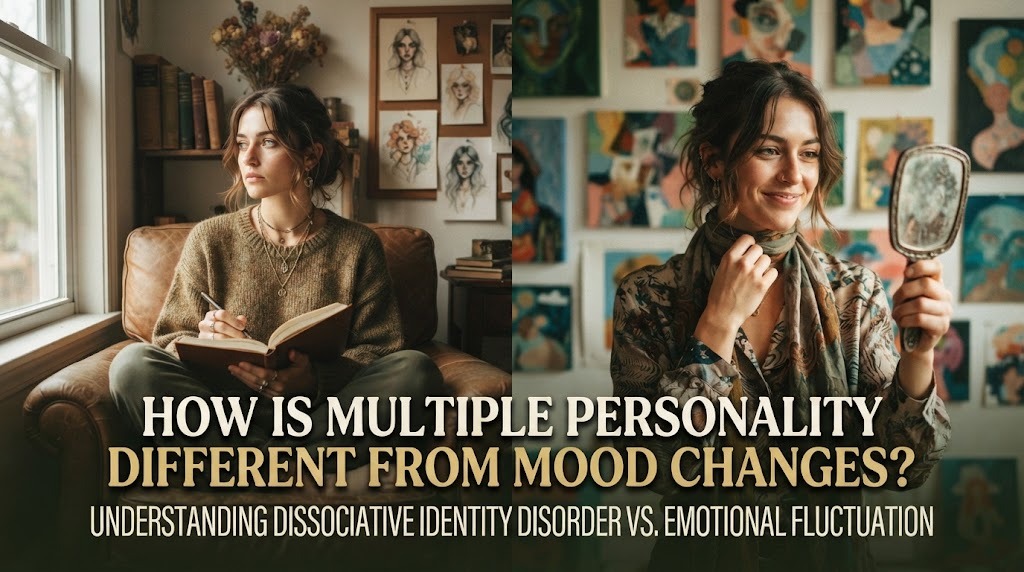
People sometimes confuse multiple personality with ordinary mood changes because both can involve noticeable changes in behavior or emotions. However, they are not the same experience and have different characteristics. The medical term commonly associated with multiple personality is Dissociative Identity Disorder or DID, which involves disruptions in identity, memory, and awareness. Mood changes usually involve shifts in emotions, such as feeling happy, sad, angry, or worried. Understanding the difference can help people recognize these experiences more accurately.
WHAT IS MULTIPLE PERSONALITY?
The term multiple personality is commonly used to describe Dissociative Identity Disorder, a mental health condition involving two or more distinct identity states or personality states. A person with DID may experience changes in behavior, thoughts, emotions, memories, or awareness. One important feature can be significant gaps in memory that are more than ordinary forgetfulness. These experiences may affect relationships, school, work, and everyday activities.
DID is a complex condition and can appear differently from one person to another. Some people may notice clear changes in how they behave, while others may mainly experience confusion, memory problems, or a feeling of disconnection from themselves. These symptoms can also occur in other conditions, so a professional assessment is needed. The condition should not be diagnosed simply because someone seems to have different sides of their personality.
WHAT ARE NORMAL MOOD CHANGES?
Mood changes are shifts in a person's emotional state that can happen throughout everyday life. Someone may feel happy in the morning, become stressed later, and then feel calm again after resting or solving a problem. These changes can be influenced by sleep, stress, relationships, school, work, physical health, or other daily experiences. Normal mood changes do not usually involve separate identity states or major unexplained memory gaps.
Everyone experiences different emotions, and having different reactions in different situations is a normal part of life. A person may act serious at school but relaxed with friends without having a dissociative disorder. Changing emotions does not mean changing identities. The important factor is understanding whether the changes are ordinary emotional responses or part of a larger pattern of psychological symptoms.
HOW DOES DID DIFFER FROM MOOD CHANGES?
The main difference is that DID involves disturbances in identity and dissociation, while ordinary mood changes mainly involve changes in emotions. A person experiencing a mood change generally remains aware of who they are, even when their feelings or behavior change. Someone with DID may experience changes in identity states along with disruptions in memory or awareness. This distinction is important because emotional changes alone do not indicate DID.
Another difference is the experience of memory and continuity. People normally remember most of their daily experiences even when their mood changes. In DID, a person may have significant periods of missing or unclear memories that cannot be explained by normal forgetfulness. These differences can be difficult to recognize from the outside, which is why professional evaluation can be important when symptoms cause distress or interfere with daily life.
CAN MOOD CHANGES HAPPEN WITH DID?
Yes, people with DID can also experience mood changes. Having DID does not prevent someone from experiencing normal emotions such as happiness, sadness, anger, fear, or excitement. Mood changes may occur because of everyday situations, stress, relationships, or other mental health conditions. Therefore, mood changes by themselves cannot be used to determine whether someone has DID.
The important point is to look at the overall pattern of symptoms. If emotional changes happen together with identity disruption, dissociation, and significant memory gaps, a professional may need to explore whether a dissociative condition is involved. However, these symptoms can have different explanations. A qualified mental health professional should consider the person's complete history before making a diagnosis.
WHAT DOES DISSOCIATION LOOK LIKE?
Dissociation is a feeling of disconnection from thoughts, memories, emotions, identity, or surroundings. Mild forms can sometimes occur during everyday experiences, such as becoming deeply absorbed in an activity and losing track of time. More serious dissociation can involve feeling detached from oneself or experiencing significant gaps in memory. In DID, dissociation is an important part of the condition.
Dissociation is different from simply feeling sad, angry, or happy. A person can experience strong emotions while remaining connected to their identity and memories. When dissociation becomes frequent or severe, it may interfere with daily activities and relationships. Because dissociation can occur in several mental health conditions, its presence alone does not automatically mean someone has DID.
WHY CAN PEOPLE CONFUSE THE TWO?
People may confuse DID with mood changes because behavior and emotions can look different from the outside. Someone may suddenly become quiet, emotional, energetic, or withdrawn, and observers may assume that the person has changed personalities. However, behavior can change for many ordinary reasons, including stress, tiredness, social situations, or emotional reactions. Appearance alone cannot establish whether someone has DID.
Media portrayals can also create misunderstandings about multiple personality. Movies and social media sometimes present DID in exaggerated or inaccurate ways, which can make the condition seem similar to dramatic mood changes. In reality, DID is a complex dissociative disorder involving identity and memory disruptions. Accurate information is important for reducing stigma and avoiding incorrect assumptions about other people.
WHEN SHOULD SOMEONE SEEK PROFESSIONAL HELP?
A person may benefit from professional support when emotional or dissociative symptoms become difficult to manage or interfere with daily life. Warning signs can include frequent unexplained memory gaps, feeling disconnected from oneself, confusion about identity, or significant difficulties at school, work, or in relationships. Persistent emotional changes that cause serious distress can also be a reason to seek help. These symptoms do not automatically mean someone has DID, but they deserve attention.
A mental health professional can ask about symptoms, personal history, daily functioning, and other possible explanations. Professional assessment is more reliable than self-diagnosis based on online descriptions or short videos. Getting appropriate support can help a person understand what they are experiencing and find suitable ways to manage it. Early support may also prevent symptoms from becoming more disruptive.
HOW CAN PEOPLE BETTER UNDERSTAND THE DIFFERENCE?
The simplest way to understand the difference is to focus on emotion versus identity and dissociation. Mood changes mainly describe changes in feelings, while DID involves disruptions in identity, awareness, and memory. A person can experience many emotions without having DID. Similarly, someone with DID may also experience ordinary mood changes as part of everyday life.
It is also important to avoid labeling people based only on their behavior. Only a qualified professional can properly assess a mental health condition. Learning about DID from reliable sources can help people understand that it is more complicated than simply having different moods. A respectful and informed approach is better than making assumptions about someone's mental health.
CONCLUSION
Multiple personality and mood changes are not the same thing. Mood changes usually involve shifts in emotions caused by everyday experiences, stress, or other factors, while Dissociative Identity Disorder involves disruptions in identity, memory, and awareness. A key difference is the presence of dissociation and significant memory gaps, although symptoms can vary between individuals. Mood changes can also occur in people with DID, so emotions alone cannot determine whether someone has the disorder.
Understanding this difference can help reduce misunderstanding and stigma surrounding dissociative conditions. People should not be labeled as having multiple personality simply because their mood or behavior changes. When symptoms are persistent, confusing, or disruptive, seeking professional assessment can provide a clearer understanding and appropriate support.
Tentang Penulis
Gusti Ayu Tita P
Penulis — Universitas STEKOM
Penulis aktif yang berfokus pada isu-isu akademik, teknologi pendidikan, dan pengembangan sumber daya manusia di lingkungan kampus.



