How SEO Specialists Optimize On-Page SEO for Better Search Rankings?
Gusti Ayu Tita P
19 Oktober 2026
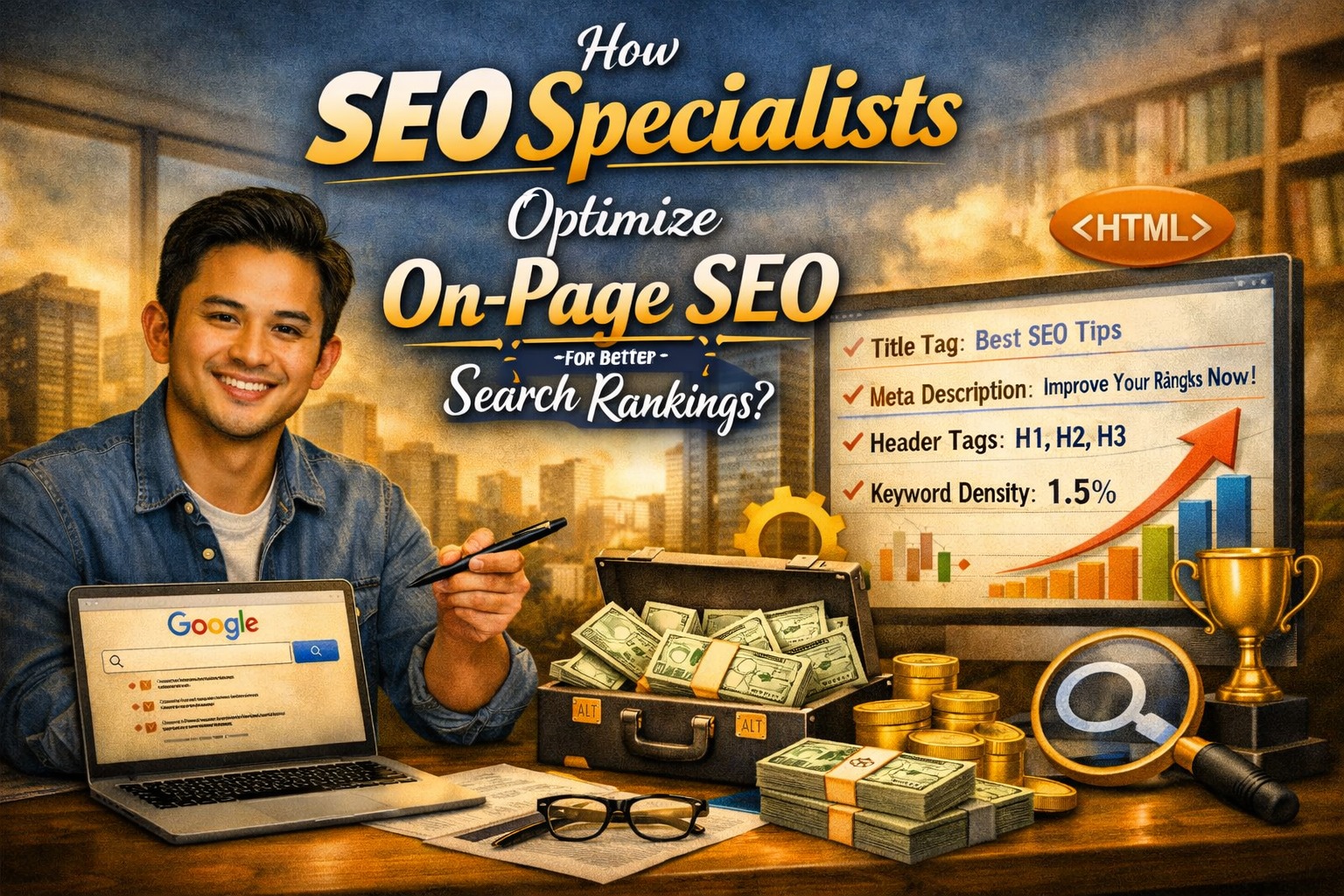
In today's competitive digital landscape, on-page SEO plays a crucial role in determining how well a website performs in search engine results. A skilled SEO specialist understands that optimizing individual web pages is essential for improving visibility, increasing organic traffic, and delivering a better user experience. Unlike off-page SEO, which focuses on external signals such as backlinks, on-page SEO emphasizes optimizing the content and structure within a website.
Businesses that invest in effective search engine optimization often experience better rankings, higher click-through rates, and increased conversions. Every element on a webpage, from headings and keywords to images and internal links, contributes to search performance. By applying proven optimization techniques, SEO specialists help websites meet both user expectations and search engine requirements. Understanding these strategies is essential for anyone looking to build a strong online presence.
UNDERSTANDING THE ROLE OF ON-PAGE SEO
On-page SEO refers to the process of optimizing various elements within a webpage to improve its relevance and visibility in search engines. An SEO specialist carefully analyzes each page to ensure that it aligns with the target keyword while remaining valuable and informative for readers. This includes improving content quality, page structure, metadata, and user experience. Search engines prioritize pages that provide useful information in a well-organized format.
A successful optimization strategy also focuses on satisfying user intent. Instead of simply adding keywords repeatedly, SEO specialists create content that answers real questions and solves problems. They also ensure that pages are easy to navigate and load quickly on different devices. These improvements contribute to better engagement and stronger search rankings over time.
CONDUCTING EFFECTIVE KEYWORD RESEARCH
Every successful SEO campaign begins with comprehensive keyword research. SEO specialists identify keywords that have strong search demand while remaining relevant to the website's content and business objectives. Choosing the right keywords helps search engines understand the topic of a webpage and match it with user searches. Long-tail keywords are often included because they target more specific search intent and face less competition.
Once the target keywords are selected, they are naturally integrated into the title, headings, introduction, body content, image alt text, and meta description. Keyword placement should feel natural and never interrupt the reading experience. Overusing keywords, commonly known as keyword stuffing, can negatively impact rankings. Maintaining the right balance is one of the most important responsibilities of an experienced SEO specialist.
CREATING HIGH-QUALITY AND USER-FOCUSED CONTENT
Search engines reward websites that publish high-quality content designed to help users rather than manipulate rankings. SEO specialists focus on producing original, informative, and engaging articles that answer readers' questions in a clear and organized manner. Content should provide practical value while remaining easy to understand for audiences with different levels of knowledge.
In addition to being informative, content must remain updated as industries and search algorithms evolve. Regularly refreshing articles with new information improves their relevance and helps maintain rankings. Well-structured paragraphs, descriptive headings, and logical content flow also enhance readability. These factors increase the likelihood that visitors will spend more time on the page, sending positive signals to search engines.
OPTIMIZING TITLE TAGS, META DESCRIPTIONS, AND HEADINGS
One of the first elements search engines evaluate is the title tag. SEO specialists create compelling titles that include the primary keyword while encouraging users to click on the search result. A well-written title accurately reflects the content and remains within the recommended character limit. This improves both visibility and click-through rates.
The meta description serves as a summary that appears beneath the title in search results. Although it is not a direct ranking factor, an attractive meta description can significantly improve user engagement. Proper use of heading tags such as H1, H2, and H3 also improves content organization and helps search engines better understand page structure. These elements work together to strengthen overall on-page SEO performance.
IMPROVING INTERNAL LINKS, IMAGES, AND PAGE EXPERIENCE
Internal linking is another essential aspect of on-page SEO. SEO specialists connect related pages within a website to help users discover additional information while allowing search engines to crawl content more efficiently. A logical internal linking structure distributes page authority and improves website navigation. It also encourages visitors to spend more time exploring the website.
Images should also be optimized using descriptive file names, compressed file sizes, and meaningful alt text. Faster-loading images improve page speed, which contributes to a better user experience. Mobile responsiveness, secure HTTPS connections, and intuitive navigation further strengthen page quality. These technical improvements support stronger search engine optimization and increase the likelihood of achieving higher rankings.
MONITORING PERFORMANCE AND CONTINUOUS OPTIMIZATION
SEO is not a one-time process but an ongoing effort that requires continuous monitoring. SEO specialists regularly analyze website performance using analytics and search performance tools to identify strengths and opportunities for improvement. Important metrics include organic traffic, keyword rankings, bounce rate, click-through rate, and conversion rate. These insights help determine which optimization strategies are delivering the best results.
Search engine algorithms continue to evolve, making regular updates essential for maintaining visibility. SEO specialists review existing content, optimize underperforming pages, and adapt to new ranking factors as they emerge. Continuous improvement ensures that websites remain competitive despite changing search trends. Businesses that consistently invest in optimization are more likely to achieve sustainable growth and long-term online success.
CONCLUSION
A professional SEO specialist understands that effective on-page SEO requires much more than inserting keywords into a webpage. Success depends on combining keyword research, valuable content, optimized metadata, internal linking, technical improvements, and continuous performance analysis into one comprehensive strategy. Every optimization effort should focus on providing an outstanding experience for users while meeting search engine guidelines.
As search engines become increasingly sophisticated, websites that prioritize quality, relevance, and usability will continue to perform better. Businesses that consistently apply these best practices can improve search rankings, attract more organic traffic, and build stronger online credibility. Investing in effective search engine optimization remains one of the smartest long-term strategies for digital success.
Tentang Penulis
Gusti Ayu Tita P
Penulis — Universitas STEKOM
Penulis aktif yang berfokus pada isu-isu akademik, teknologi pendidikan, dan pengembangan sumber daya manusia di lingkungan kampus.