How to Measure Employee Training Success Without Wasting Investment?
Gusti Ayu Tita P
7 Oktober 2026
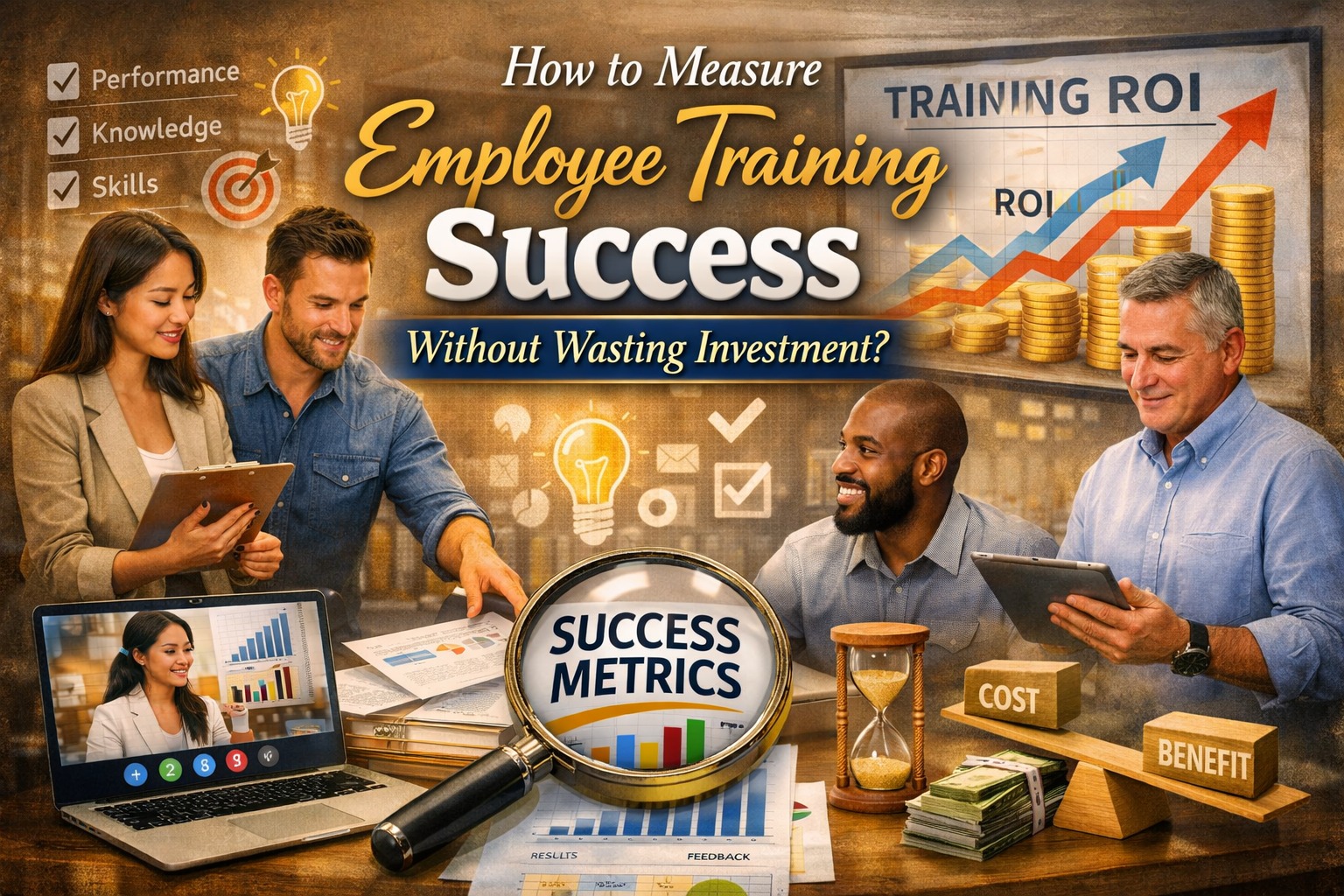
Employee training is one of the most valuable investments a company can make. Organizations spend significant resources on developing employee skills, improving productivity, and enhancing workplace performance. However, many businesses struggle to determine whether their training programs actually deliver meaningful results. Without proper evaluation, companies risk wasting time, money, and effort on ineffective learning initiatives.
Measuring training success allows organizations to understand the return on their investment and identify areas for improvement. By using the right metrics and evaluation methods, businesses can ensure that employee development programs contribute directly to organizational goals. This article explains how to effectively measure training success while maximizing the value of every training investment.
WHY MEASURING EMPLOYEE TRAINING SUCCESS IS IMPORTANT
Many companies focus heavily on delivering training but overlook the importance of evaluating outcomes. Without measurement, it becomes difficult to know whether employees have gained new knowledge, improved their skills, or applied what they learned in the workplace. As a result, organizations may continue investing in programs that produce little value.
Effective employee training evaluation helps businesses identify strengths and weaknesses within their learning programs. It also provides valuable insights into employee performance improvements and overall business impact. When training results are measured accurately, organizations can make better decisions regarding future learning and development strategies.
DEFINE CLEAR TRAINING OBJECTIVES BEFORE STARTING
The first step in measuring success is establishing clear and measurable objectives. Every training program should have specific goals that align with business needs. These objectives may include increasing productivity, improving customer service, enhancing technical skills, or reducing workplace errors.
When objectives are clearly defined, it becomes easier to evaluate outcomes. Organizations can compare actual results with expected goals and determine whether the training has been successful. Clear objectives also help employees understand what they are expected to achieve throughout the learning process.
TRACK KNOWLEDGE RETENTION AND LEARNING OUTCOMES
One of the most common ways to assess training effectiveness is by measuring knowledge retention. Companies can conduct pre-training and post-training assessments to evaluate how much employees have learned. Comparing results before and after training provides a clear picture of learning progress.
Knowledge assessments should focus on practical understanding rather than memorization. Employees who can apply newly acquired information in real workplace situations demonstrate genuine learning success. This method provides reliable data for evaluating the effectiveness of a training program effectiveness strategy.
MEASURE CHANGES IN EMPLOYEE PERFORMANCE
Successful training should lead to noticeable improvements in employee performance. Organizations can track key performance indicators (KPIs) before and after training to determine whether employees are applying their new skills effectively.
Examples of performance metrics include productivity levels, sales figures, customer satisfaction ratings, project completion rates, and error reduction. Monitoring these indicators helps companies understand the direct impact of training on workplace performance. This approach ensures that employee development programs contribute to measurable business outcomes.
COLLECT EMPLOYEE FEEDBACK REGULARLY
Employee feedback is an essential component of training evaluation. Participants can provide valuable insights about training content, delivery methods, learning materials, and overall effectiveness. Surveys, questionnaires, and interviews are commonly used to gather feedback.
Regular feedback helps organizations identify areas that need improvement and understand how employees perceive the training experience. Employees who find training relevant and engaging are more likely to apply what they have learned. Therefore, feedback serves as an important indicator of overall training success.
CALCULATE TRAINING RETURN ON INVESTMENT (ROI)
One of the most effective ways to measure training success is by calculating training ROI. This process compares the financial benefits generated by training against the costs associated with delivering the program. A positive return indicates that the investment has produced meaningful value for the organization.
To calculate ROI, businesses should consider factors such as increased productivity, higher revenue, reduced turnover, and lower operational costs. Measuring financial outcomes helps management determine whether training initiatives support long-term business growth and profitability.
MONITOR LONG-TERM BUSINESS IMPACT
Training success should not be evaluated solely based on immediate results. Organizations must also examine the long-term impact of learning initiatives on business performance. Continuous monitoring helps determine whether training benefits are sustainable over time.
Long-term indicators may include employee retention rates, leadership development, workplace innovation, and organizational efficiency. Tracking these metrics ensures that training investments continue to generate value long after the program has ended. This approach strengthens overall workforce development efforts and supports continuous improvement.
USE DATA TO IMPROVE FUTURE TRAINING PROGRAMS
The information collected from evaluations should be used to enhance future training initiatives. Data-driven decision-making enables organizations to refine training content, improve delivery methods, and address learning gaps more effectively.
Regular analysis of training results helps businesses create more targeted and efficient learning experiences. By continuously optimizing training programs, organizations can maximize employee growth while minimizing unnecessary spending. This strategy ensures that every investment contributes to meaningful and measurable success.
CONCLUSION
Measuring employee training success is essential for ensuring that learning investments produce real business value. Organizations that establish clear objectives, track performance improvements, collect feedback, and calculate training ROI can accurately evaluate the effectiveness of their training programs.
By using data-driven evaluation methods, businesses can avoid wasting resources and continuously improve their learning strategies. Effective measurement not only enhances employee performance, but also strengthens employee training evaluation, supports workforce development, and contributes to long-term organizational success.
Tentang Penulis
Gusti Ayu Tita P
Penulis — Universitas STEKOM
Penulis aktif yang berfokus pada isu-isu akademik, teknologi pendidikan, dan pengembangan sumber daya manusia di lingkungan kampus.