How Will Technological Change Affect Bank Indonesia Employee Careers?
Gusti Ayu Tita P
23 September 2026
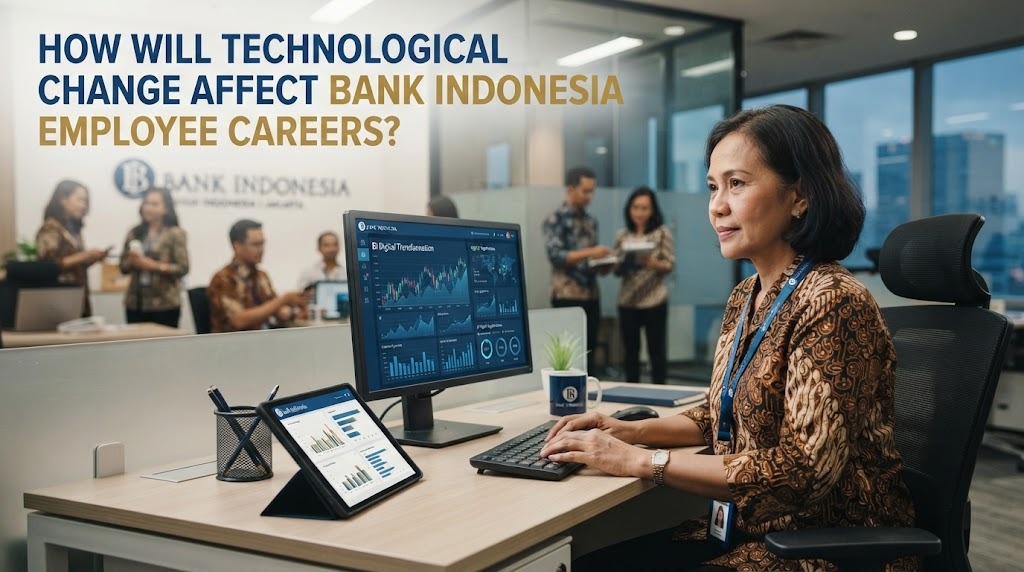
Technological change is influencing the way financial institutions operate, manage information, and provide services. For Bank Indonesia employees, technological development can create changes in daily tasks, required skills, work processes, and career development. New technologies can support faster data processing and more efficient communication. At the same time, employees need to continuously develop their abilities to remain prepared for changes in the financial sector.
The impact of technology is not limited to the introduction of new digital tools. It can also influence job responsibilities, professional skills, collaboration, data management, and decision-making processes. Employees may need to understand technologies related to financial systems, data analysis, cybersecurity, and digital communication. Continuous learning can therefore become an important part of career development in a changing work environment.
CHANGING WORK RESPONSIBILITIES
Technology can change the way employees complete their daily responsibilities. Some repetitive administrative tasks may become more automated, allowing employees to focus on activities that require analysis, judgment, and problem-solving. Digital systems can also help organize large amounts of information and make certain workflows easier to monitor. However, employees still need to understand the processes behind these systems.
Changes in responsibilities may require employees to learn new methods of working. Tasks that previously relied heavily on manual processes may increasingly involve digital platforms and analytical tools. Employees who understand both their professional field and relevant technologies can adapt more effectively to these changes. Technology awareness can therefore become an important part of career development.
DEVELOPING DIGITAL AND ANALYTICAL SKILLS
Technological change can increase the importance of digital skills in financial sector careers. Employees may need to understand data analysis, digital systems, information security, and other technologies relevant to their responsibilities. The exact skills required can vary depending on the position and organizational needs. Training and professional development can help employees build these competencies.
Analytical skills are also important because financial institutions work with large amounts of information. Employees need to understand how data can support research, monitoring, and decision-making. Critical thinking and data literacy can complement technical knowledge when employees evaluate information. Developing these abilities can help employees respond to increasingly technology-driven work environments.
INCREASING THE IMPORTANCE OF CYBERSECURITY
As financial activities become more digital, cybersecurity becomes increasingly important. Financial institutions handle information and systems that require careful protection from unauthorized access and other security risks. Employees need to understand basic security practices, including appropriate handling of credentials, data, and digital communication. Following security procedures is part of maintaining a responsible professional environment.
Cybersecurity is not only the responsibility of technology specialists. Employees in different roles can contribute by following security policies and reporting suspicious activity through appropriate channels. Security awareness can reduce risks caused by human error. Continuous training can help employees understand how security practices develop alongside technological changes.
SUPPORTING CONTINUOUS LEARNING
Technological development means that some skills may need to be updated over time. Bank Indonesia employees can benefit from continuous learning through training, professional development programs, research, and other relevant learning activities. Employees can also follow developments in financial technology and digital systems related to their field. This approach can help them understand how changes in technology may affect their responsibilities.
Continuous learning does not mean that employees must master every new technology. Instead, they need to identify which developments are relevant to their roles and learn how to use them appropriately. Adaptability and professional learning can help employees respond to changes without losing focus on their core responsibilities. A learning-oriented approach can also support long-term career development.
CREATING NEW CAREER DEVELOPMENT OPPORTUNITIES
Technological change can also create new areas of professional development. Employees may have opportunities to strengthen expertise in data analysis, digital finance, cybersecurity, technology management, research, and financial innovation, depending on organizational needs and available career pathways. Existing professional knowledge can be combined with new technical skills to support broader responsibilities.
Career development still depends on qualifications, organizational requirements, performance, and available opportunities. Employees can prepare by identifying relevant competencies and gaining experience through appropriate assignments or training. A combination of professional expertise and digital capability can provide useful preparation for evolving roles. In this way, technological change can influence not only current tasks but also the skills employees develop throughout their careers.
CONCLUSION
Technological change can affect Bank Indonesia employee careers by changing work responsibilities, digital skills, cybersecurity requirements, learning needs, and career development opportunities. Employees can prepare for these changes by strengthening relevant technical and analytical abilities while maintaining their professional expertise. Continuous learning and adaptability can help employees respond to evolving technologies. As technology continues to influence the financial sector, combining professional knowledge with appropriate digital skills can support effective career development.
Tentang Penulis
Gusti Ayu Tita P
Penulis — Universitas STEKOM
Penulis aktif yang berfokus pada isu-isu akademik, teknologi pendidikan, dan pengembangan sumber daya manusia di lingkungan kampus.