
Indonesia's Future Without Corruption.Challenges, Hope, and Collective Action
Gusti Ayu Tita P
23 September 2026
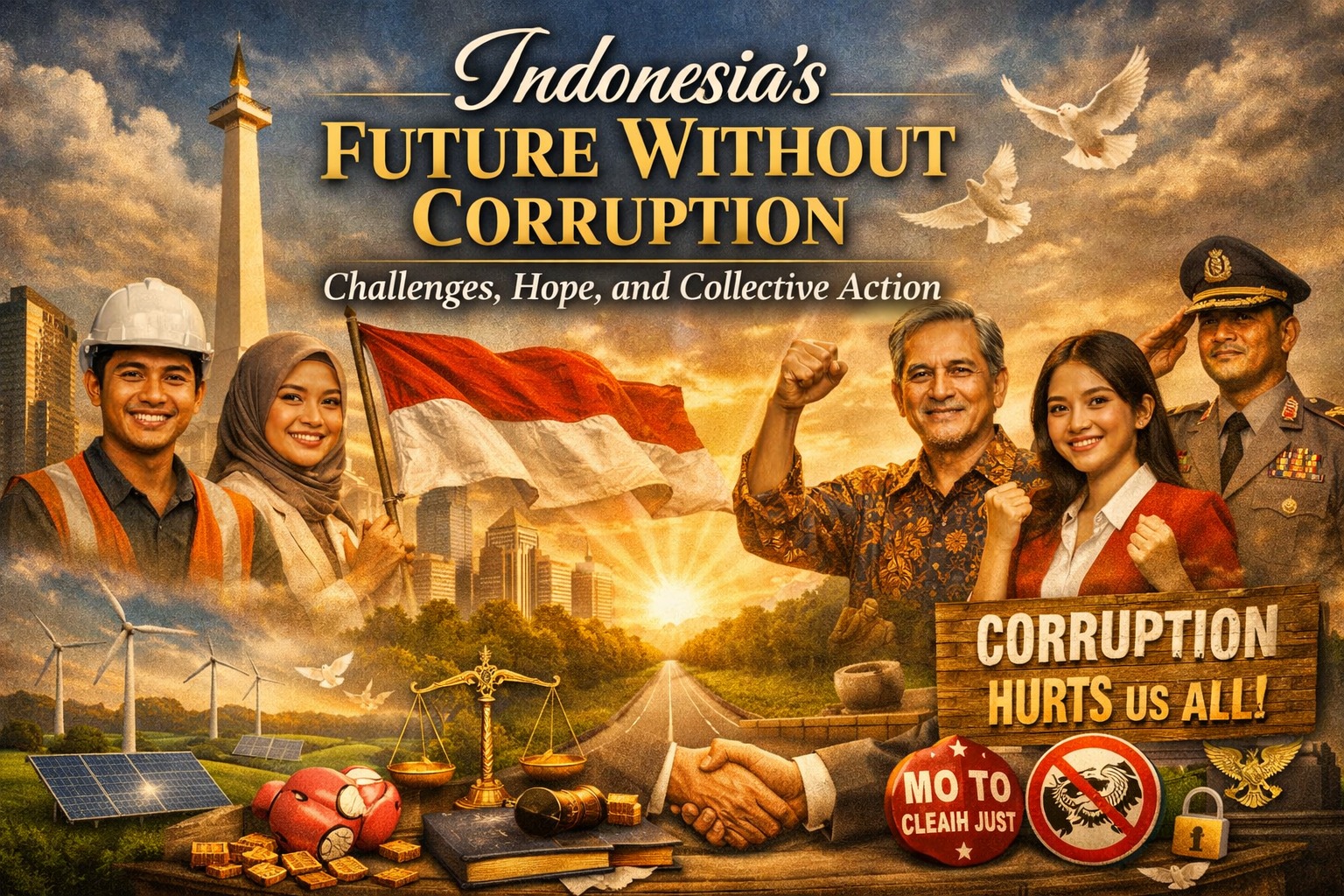
A corruption-free Indonesia is a vision shared by millions of citizens who want a nation built on honesty, fairness, and accountability. Corruption has long affected many aspects of society, including economic growth, public services, education, and investment opportunities. Although significant progress has been made through stronger regulations and increased public awareness, corruption remains one of the country's greatest challenges.
Building a better future requires more than strict law enforcement. It also depends on the willingness of individuals, communities, businesses, and government institutions to work together. By strengthening integrity, promoting transparency, and encouraging public participation, Indonesia can move toward sustainable development and greater prosperity.
UNDERSTANDING THE CHALLENGES OF CORRUPTION
Corruption exists in many forms, such as bribery, embezzlement, fraud, and the misuse of public authority for personal gain. These practices reduce the quality of government services, discourage investment, and weaken confidence in public institutions. When corruption becomes widespread, it creates unfair competition and limits opportunities for honest individuals and businesses.
Another challenge is that corruption often develops through long-standing habits and weak oversight. Some cases involve complex networks that are difficult to detect without effective monitoring systems. Strengthening legal institutions, improving digital governance, and increasing public accountability are essential steps to overcome these obstacles.
THE IMPACT OF A CORRUPTION-FREE INDONESIA
Reducing corruption would create significant benefits for both the economy and society. More public funds could be directed toward education, healthcare, infrastructure, and social welfare instead of being lost through illegal activities. This would improve the overall quality of life and support more balanced national development.
A country with higher levels of transparency and good governance is also more attractive to domestic and international investors. Increased investment creates new businesses, expands employment opportunities, and strengthens economic stability. As trust grows between citizens and public institutions, social harmony and national confidence also improve.
THE ROLE OF GOVERNMENT AND LAW ENFORCEMENT
The government plays a central role in preventing corruption by implementing clear regulations, strengthening oversight, and ensuring fair law enforcement. Public officials must demonstrate integrity, follow ethical standards, and remain accountable for every decision they make. Transparent procurement systems and digital public services can reduce opportunities for dishonest practices.
Law enforcement agencies also need adequate resources, professional training, and independence to investigate corruption cases effectively. Consistent legal action sends a strong message that corruption carries serious consequences. Fair and impartial enforcement helps build public trust and reinforces the rule of law.
WHY PUBLIC PARTICIPATION MATTERS
Fighting corruption is not solely the responsibility of government institutions. Every citizen can contribute by refusing to offer or accept bribes, reporting suspicious activities, and supporting organizations that promote anti-corruption values. Public awareness campaigns encourage people to recognize unethical behavior and understand its long-term consequences.
Communities, universities, schools, and the private sector also play important roles in promoting ethical behavior. By encouraging transparency, responsible leadership, and open communication, society creates an environment where corruption becomes less acceptable. Collective action strengthens accountability at every level.
EDUCATION AS THE FOUNDATION OF INTEGRITY
Education is one of the most effective tools for building a future without corruption. Schools and universities can teach students about honesty, responsibility, fairness, and ethical decision-making from an early age. These values help shape future leaders who prioritize public interest over personal gain.
Educational institutions can also encourage critical thinking and civic responsibility through discussions, projects, and community service. When young people understand the importance of integrity, they are more likely to reject corrupt practices throughout their personal and professional lives. Long-term cultural change begins with education.
TECHNOLOGY SUPPORTS TRANSPARENCY
Modern technology provides valuable opportunities to reduce corruption. Digital government services, electronic procurement systems, online financial reporting, and transparent public databases make administrative processes more open and easier to monitor. Automation also reduces unnecessary human interaction, limiting opportunities for bribery.
Citizens benefit from easier access to government information and online reporting platforms. Data analytics and digital monitoring tools help authorities identify unusual financial activities more quickly. When combined with strong governance, technology becomes a powerful instrument for increasing accountability and reducing corruption risks.
BUILDING HOPE THROUGH COLLECTIVE ACTION
Indonesia's future depends on cooperation among government agencies, businesses, educational institutions, civil society organizations, and ordinary citizens. Every act of honesty, no matter how small, contributes to building a stronger culture of integrity. Sustainable progress requires continuous commitment rather than temporary campaigns.
Collective action also inspires optimism. As more people choose ethical behavior and demand greater accountability, corruption becomes increasingly difficult to sustain. Through collaboration, transparency, and responsible leadership, Indonesia can continue moving toward a future that benefits everyone.
CONCLUSION
Creating Indonesia's future without corruption is a long-term journey that requires determination, cooperation, and shared responsibility. While challenges remain, there is strong hope that continued improvements in good governance, transparency, education, and public participation will produce lasting change.
Every citizen has a role in shaping this future. By practicing honesty, supporting anti-corruption initiatives, and encouraging accountability in daily life, Indonesia can build a more prosperous, fair, and trusted nation for future generations.
Tentang Penulis
Gusti Ayu Tita P
Penulis — Universitas STEKOM
Penulis aktif yang berfokus pada isu-isu akademik, teknologi pendidikan, dan pengembangan sumber daya manusia di lingkungan kampus.



