
Indonesia's Journey in Olympic History
Gusti Ayu Tita P
23 September 2026
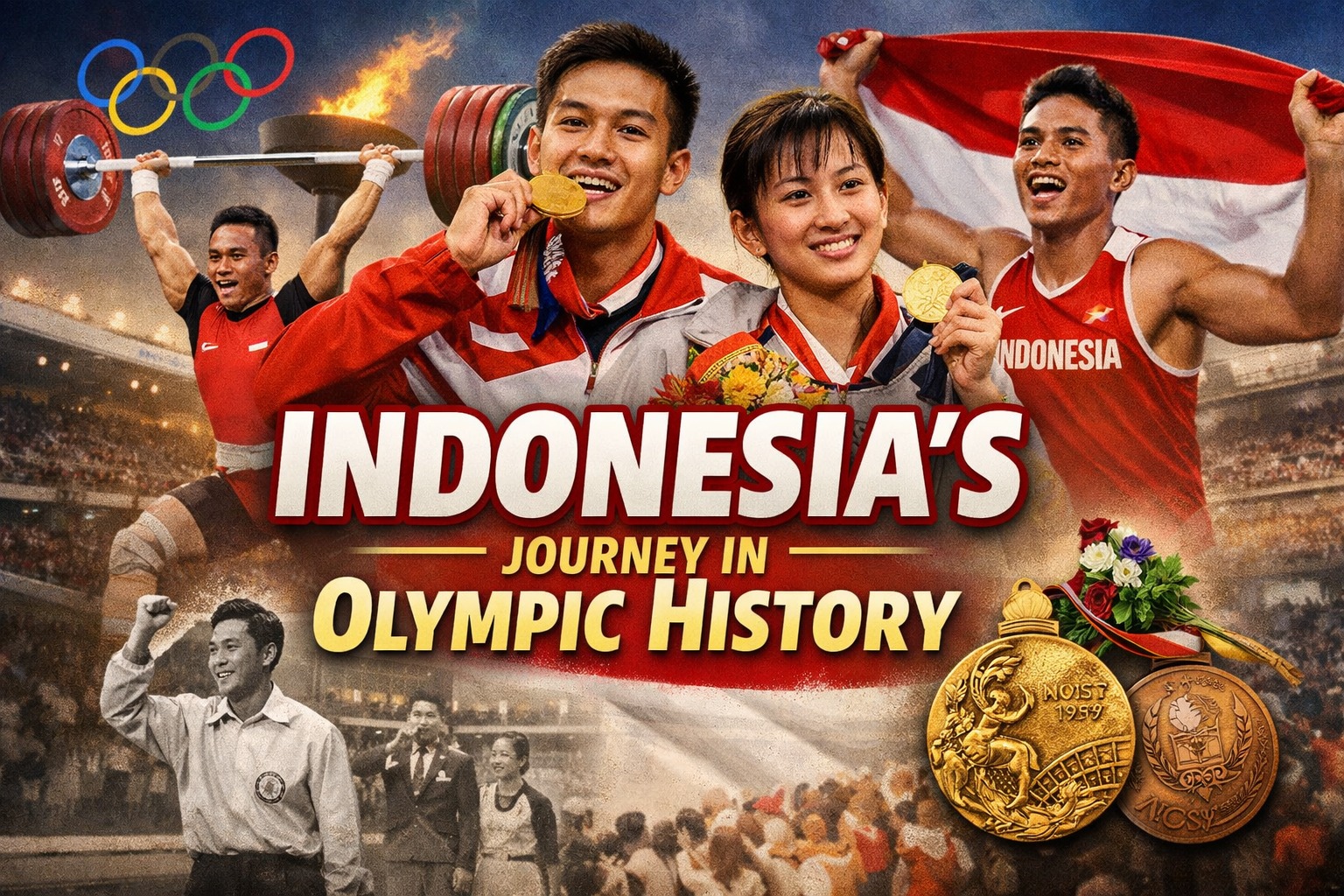
Indonesia's journey in Olympic history is a remarkable story of determination, national pride, and sporting excellence. Since making its Olympic debut in 1952, the country has steadily built a reputation as one of Southeast Asia's strongest Olympic nations. Although Indonesia has a relatively small population of elite Olympic athletes compared to many larger countries, it has consistently produced world-class champions, especially in badminton and weightlifting.
The Olympic Games have become an important stage where Indonesian athletes showcase their talent while inspiring millions of people across the nation. Every medal won represents years of hard work, sacrifice, and dedication. Indonesia's Olympic achievements continue to motivate younger generations to pursue excellence in sports.
INDONESIA'S FIRST APPEARANCE AT THE OLYMPICS
Indonesia officially participated in the 1952 Helsinki Olympic Games, marking the country's first appearance at the world's largest international sporting event. The participation symbolized Indonesia's growing presence in global sports only a few years after gaining independence. Although the delegation was relatively small and did not win any medals, the experience provided valuable lessons for future Olympic campaigns.
During the following decades, Indonesia gradually expanded its participation across multiple sporting disciplines. Athletes gained more international experience, while the government and sports organizations invested in athlete development. These early years laid the foundation for Indonesia's future Olympic success.
THE BREAKTHROUGH OF INDONESIA'S FIRST GOLD MEDALS
The 1992 Barcelona Olympics became a historic milestone when Indonesia won its first-ever Olympic gold medals. The country's breakthrough came through badminton, a sport that has long been one of Indonesia's greatest strengths. The victories immediately elevated Indonesia's status among successful Olympic nations.
The men's singles gold medal was won by Alan Budikusuma, while Susi Susanti captured the women's singles title. Their achievements created unforgettable national celebrations and inspired countless young athletes to pursue badminton professionally. These victories remain among the most iconic moments in Indonesian sports history.
BADMINTON AS INDONESIA'S OLYMPIC POWERHOUSE
Badminton has consistently been Indonesia's most successful Olympic sport. Over the years, Indonesian players have collected numerous gold, silver, and bronze medals, making the country one of badminton's global powerhouses. Strong coaching systems, competitive domestic tournaments, and a rich sporting culture have contributed to this continued success.
Many legendary athletes have strengthened Indonesia's Olympic legacy through badminton. Their victories have demonstrated exceptional discipline, skill, teamwork, and mental toughness. Even today, badminton remains one of Indonesia's strongest medal prospects at every Olympic Games.
SUCCESS IN WEIGHTLIFTING AND OTHER SPORTS
Besides badminton, weightlifting has become another important contributor to Indonesia's Olympic medal tally. Indonesian weightlifters have consistently earned medals across several Olympic editions through years of disciplined training and international competition. Their achievements show that Indonesia's sporting excellence extends beyond a single discipline.
Other sports have also shown encouraging progress, including archery, climbing, and various combat sports. Although medal success in these events has been more limited, Indonesia continues investing in athlete development and modern training facilities. Expanding competitive strength across multiple sports remains an important national objective.
CHALLENGES FACED BY INDONESIAN ATHLETES
Competing at the Olympic level requires athletes to overcome numerous challenges. Many Indonesian athletes face intense competition from countries with larger sports budgets, more advanced facilities, and broader talent pools. Maintaining peak physical and mental performance throughout Olympic preparation is also demanding.
Despite these obstacles, Indonesian athletes continue to demonstrate remarkable resilience, perseverance, and commitment. Support from coaches, sports scientists, families, and fans plays a significant role in helping athletes perform at their best. Continuous improvement in sports management is expected to strengthen Indonesia's future Olympic performances.
THE FUTURE OF INDONESIA IN THE OLYMPIC GAMES
Indonesia has a promising future in the Olympic movement through stronger athlete development programs and improved sports infrastructure. Greater investment in youth training, sports science, nutrition, and international competition can help produce the next generation of Olympic champions. Identifying talented athletes from an early age remains a key strategy for long-term success.
With continued dedication and national support, Indonesia has the potential to achieve even greater Olympic results in the coming years. Every Olympic cycle provides new opportunities for athletes to create history and inspire the nation. The country's Olympic journey continues as a symbol of hope, determination, and national unity.
CONCLUSION
Indonesia's journey in Olympic history reflects decades of hard work, resilience, and sporting achievement. From its first Olympic appearance in 1952 to winning historic gold medals in 1992, Indonesia has established itself as a respected Olympic nation. While badminton remains the country's greatest strength, progress in other sports signals an encouraging future.
As investment in athlete development continues, Indonesia is well positioned to achieve even greater success on the Olympic stage. Every Olympic achievement strengthens national pride and motivates future generations to dream bigger. The journey is still ongoing, and Indonesia's Olympic story continues to inspire the world.
Tentang Penulis
Gusti Ayu Tita P
Penulis — Universitas STEKOM
Penulis aktif yang berfokus pada isu-isu akademik, teknologi pendidikan, dan pengembangan sumber daya manusia di lingkungan kampus.



