Integrating Time Management and Stress Regulation as Keys to Outstanding Academic Performance
Gusti Ayu Tita P
1 April 2026
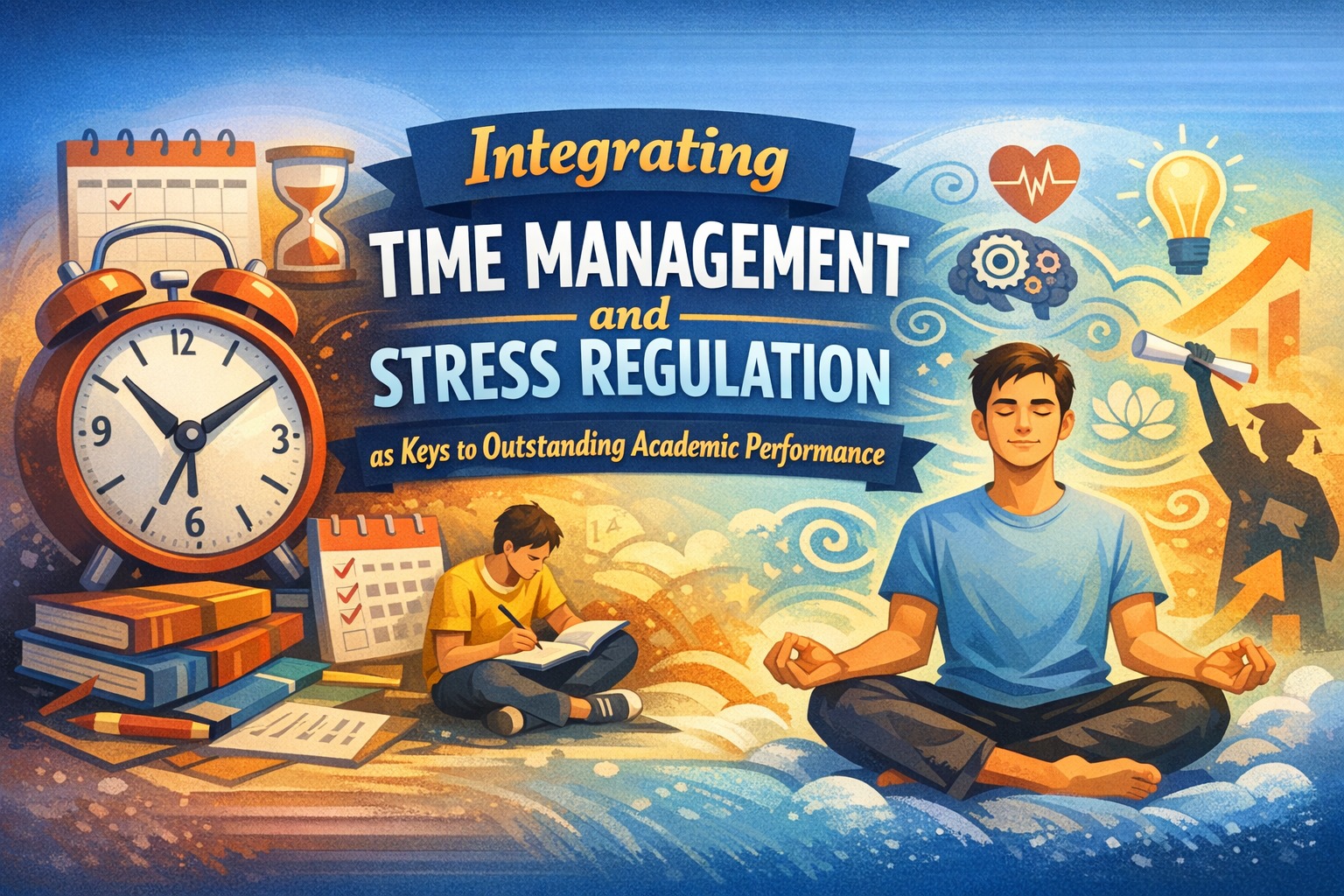
Achieving outstanding academic performance requires more than intelligence and hard work. In today’s demanding academic environment, students must effectively manage their time while maintaining emotional stability. The integration of time management and stress regulation has become a critical factor in ensuring consistent productivity and long-term success. This article explores how these two elements work together to enhance student performance.
THE CONNECTION BETWEEN TIME MANAGEMENT AND STRESS LEVELS
Poor time management often leads to increased stress, missed deadlines, and reduced academic quality. When students fail to plan their tasks effectively, they tend to procrastinate, resulting in last-minute pressure. Conversely, structured time management creates clarity, reduces uncertainty, and allows students to approach their responsibilities with confidence and control.
STRATEGIC TIME MANAGEMENT FOR ACADEMIC EXCELLENCE
Effective time management involves more than creating a schedule. It requires prioritizing tasks, setting realistic goals, and maintaining discipline. Students should break large assignments into manageable parts, allocate time based on task complexity, and regularly evaluate their progress. By doing so, they can maintain steady productivity without feeling overwhelmed.
UNDERSTANDING STRESS AND ITS IMPACT ON LEARNING
Stress is a natural response to academic demands, but excessive stress can hinder concentration, memory, and overall performance. Recognizing the signs of stress—such as fatigue, anxiety, and lack of focus—is the first step toward managing it. Students who are aware of their stress levels can take proactive measures to maintain balance.
EFFECTIVE STRESS REGULATION TECHNIQUES
To regulate stress, students should adopt healthy coping strategies. Practices such as mindfulness, physical activity, and adequate sleep play a crucial role in maintaining mental well-being. Additionally, taking short breaks during study sessions and engaging in relaxing activities can help restore focus and energy.
CREATING A BALANCED DAILY ROUTINE
A well-balanced routine integrates academic tasks with rest and personal time. Students should design daily schedules that include study periods, relaxation, social interaction, and self-care. This balance prevents burnout and promotes sustainable performance over time. Consistency in maintaining this routine is key to achieving long-term results.
THE ROLE OF SELF-DISCIPLINE AND CONSISTENCY
Time management and stress regulation require strong self-discipline. Students must commit to their schedules and consistently apply stress management techniques. Over time, these habits become part of their daily routine, leading to improved efficiency and emotional stability.
CONCLUSION
Integrating time management with stress regulation is essential for achieving outstanding academic performance. By organizing their time effectively and maintaining emotional balance, students can enhance productivity, reduce pressure, and sustain high levels of achievement. Success in academics is not just about working harder, but also about working smarter and maintaining well-being.
Tentang Penulis
Gusti Ayu Tita P
Penulis — Universitas STEKOM
Penulis aktif yang berfokus pada isu-isu akademik, teknologi pendidikan, dan pengembangan sumber daya manusia di lingkungan kampus.