Key Factors That Determine the Success of Decentralization Policies
Gusti Ayu Tita P
4 Oktober 2026
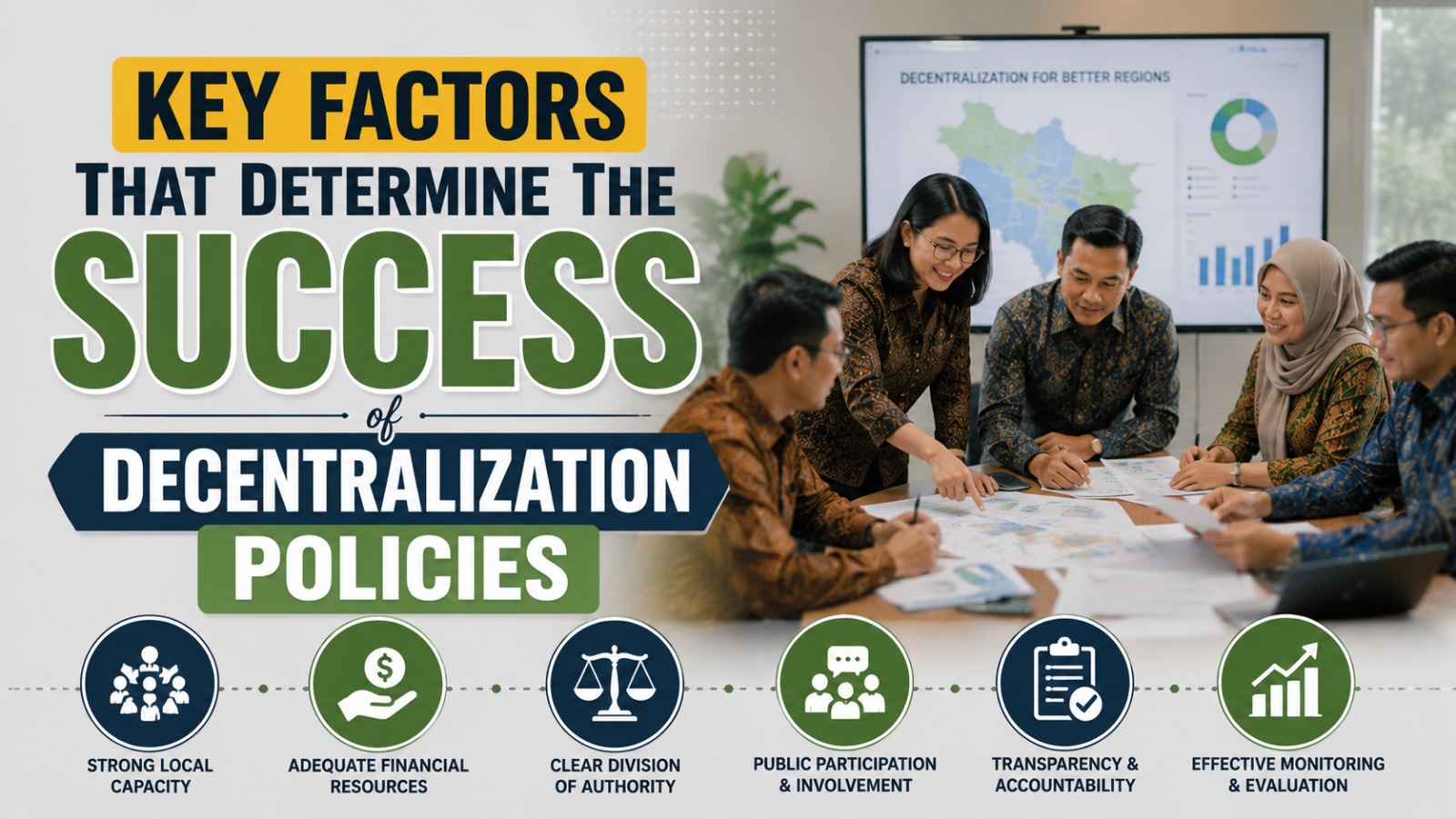
Decentralization is a governance approach that transfers certain powers, responsibilities, and resources from the central government to regional or local authorities. The main purpose is to allow decisions to be made closer to the communities affected by government policies. With greater local authority, regional governments can develop programs that reflect their specific social, economic, and geographic conditions. However, transferring authority alone does not guarantee successful decentralization.
The success of decentralization policies depends on several interconnected factors. These include the capacity of local institutions, financial resources, political commitment, public participation, accountability, and effective coordination between levels of government. When these elements work together, decentralization can improve public services, strengthen local economies, and encourage more responsive governance.
STRONG LOCAL GOVERNMENT CAPACITY
One of the most important factors in successful decentralization is the capacity of local governments to manage their responsibilities. Regional authorities need skilled employees who understand public administration, budgeting, policy development, and community needs. Strong human resources allow local governments to design and implement programs more effectively. Without sufficient expertise, newly transferred responsibilities may lead to inefficient services and poor policy outcomes.
Institutional capacity is equally important because local governments need clear procedures and reliable systems to perform their duties. Regular training, professional development, and performance evaluation can improve the quality of local administration. Strong institutions are better prepared to manage public resources and respond to changing community needs. Therefore, capacity building should be a continuous part of decentralization programs.
ADEQUATE FINANCIAL RESOURCES
Financial resources are essential for local governments to carry out their responsibilities effectively. Regional authorities need sufficient funding to provide public services, build infrastructure, and implement development programs. Fiscal decentralization can give local governments greater control over certain revenues and expenditures. This flexibility allows them to allocate resources according to local priorities.
However, regional financial capacity can vary significantly between areas. Wealthier regions may have stronger sources of local revenue, while less-developed regions may depend heavily on financial transfers from the central government. Effective fiscal equalization is therefore necessary to reduce disparities and ensure that all regions can provide essential services. Transparent financial management is also important to prevent waste and improve public trust.
CLEAR DIVISION OF AUTHORITY
A successful decentralization policy requires a clear division of responsibilities between central, regional, and local governments. Each level of government should understand which functions it is responsible for managing. Unclear authority can create overlapping duties, administrative conflicts, and delays in public service delivery. Clear legal frameworks can help prevent these problems.
Coordination is also necessary when responsibilities are shared across different levels of government. National authorities may establish broad standards, while local governments adapt programs to regional conditions. This approach creates a balance between local autonomy and national priorities. Effective coordination ensures that decentralization supports national development without limiting appropriate local decision-making.
POLITICAL COMMITMENT AND LEADERSHIP
Political commitment is another major factor that determines whether decentralization policies can succeed. Leaders at both national and regional levels need to support the principles of local autonomy and responsible governance. Without consistent political support, decentralization reforms may be weakened by changing priorities or institutional resistance.
Strong local leadership can also encourage innovation and improve public service delivery. Effective leaders should be willing to listen to citizens, use public resources responsibly, and evaluate government programs objectively. They must also demonstrate integrity and accountability when exercising their authority. Responsible leadership helps ensure that decentralization serves public interests rather than narrow political or personal goals.
PUBLIC PARTICIPATION AND COMMUNITY INVOLVEMENT
The success of decentralization is closely connected to public participation. Citizens should have opportunities to express their needs, provide feedback, and contribute to discussions about local development. Community involvement helps governments understand real problems and create policies that are more relevant to local conditions.
Public participation also strengthens government accountability. When citizens can monitor programs and access information, local officials have greater incentives to perform their duties responsibly. Public consultations, community meetings, and digital feedback platforms can create stronger communication between governments and communities. As a result, decentralization can become more inclusive and responsive.
TRANSPARENCY AND ACCOUNTABILITY
Transparency and accountability are essential for preventing the misuse of authority and public resources. Local governments should provide accessible information about budgets, policies, development programs, and their results. Citizens need reliable information to understand how government decisions are made and how public funds are spent.
Effective accountability mechanisms should include financial audits, performance evaluations, public reporting, and appropriate oversight. These mechanisms help identify problems and encourage officials to correct weaknesses. Strong transparency can also increase public trust in local institutions. Without accountability, decentralization may create opportunities for corruption and inefficient administration.
EFFECTIVE MONITORING AND EVALUATION
Regular monitoring and evaluation are necessary to determine whether decentralization policies achieve their intended goals. Governments should measure outcomes such as public service quality, economic development, infrastructure access, and community welfare. Reliable data can help policymakers identify successful programs and areas that require improvement.
Evaluation should not only focus on whether a program has been completed but also on its actual impact. A development project may be completed on time but still fail to meet community needs. By using evidence-based evaluation, governments can improve policies and allocate resources more effectively. Continuous learning allows decentralization systems to adapt to changing conditions.
BALANCED LOCAL AUTONOMY AND CENTRAL SUPPORT
Successful decentralization requires a balanced relationship between local autonomy and central government support. Local governments need enough freedom to respond to regional needs and develop innovative solutions. At the same time, the central government remains important in setting national standards, providing financial assistance, and supporting regions with limited capacity.
This balance is particularly important in countries with significant differences between regions. Central support can help ensure that people in less-developed areas receive essential services comparable to those available in more advanced regions. At the same time, excessive central control may limit local innovation. The most effective approach combines local flexibility with national coordination and oversight.
CONCLUSION
The success of decentralization policies depends on more than simply transferring authority from the central government to regional governments. Strong local capacity, adequate financial resources, clear responsibilities, political commitment, public participation, and effective accountability are all essential. These factors must work together to create a decentralization system that delivers meaningful benefits to communities.
When supported by transparent governance, continuous evaluation, and balanced central support, decentralization can improve public services and promote regional development. Governments should continuously strengthen local institutions while ensuring that public resources are managed responsibly. Ultimately, successful decentralization is achieved when local autonomy is combined with capable leadership, active citizens, and effective coordination across all levels of government.
Tentang Penulis
Gusti Ayu Tita P
Penulis — Universitas STEKOM
Penulis aktif yang berfokus pada isu-isu akademik, teknologi pendidikan, dan pengembangan sumber daya manusia di lingkungan kampus.