Legal Steps to Take When Facing a Land Dispute
Gusti Ayu Tita P
2 September 2026
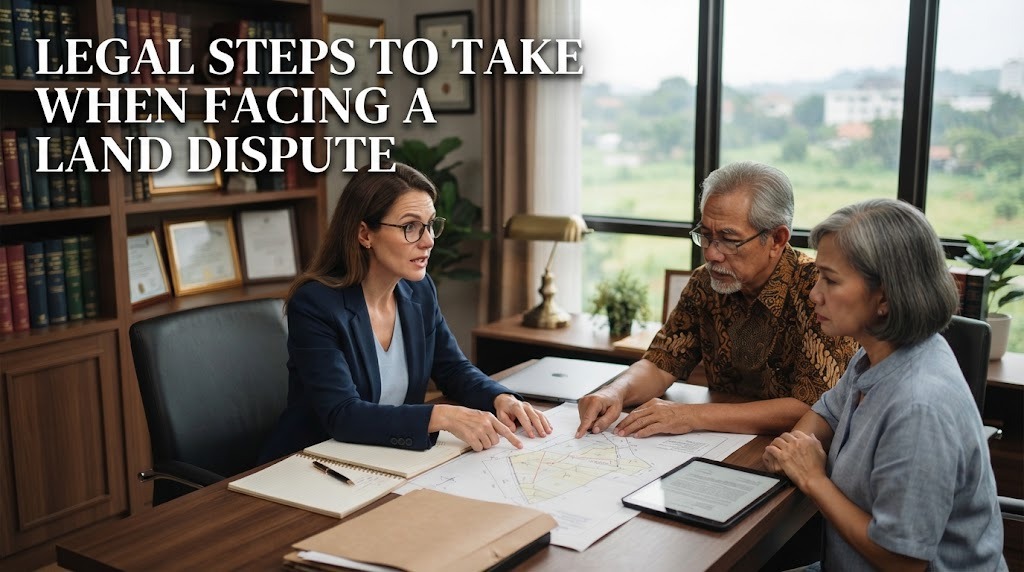
A land dispute can become a complicated legal problem when two or more parties claim rights over the same property. Disputes may arise from unclear ownership, overlapping certificates, inheritance, land sales, unclear boundaries, or unauthorized use of someone else's land. Handling the problem carefully is important because land ownership is closely connected to legal documents, administrative records, and physical conditions. A structured approach can help protect your rights while reducing the risk of making the dispute more complicated.
VERIFY THE LAND OWNERSHIP DOCUMENTS
The first step in facing a land dispute is to collect and verify all documents related to the property. These may include land certificates, sale and purchase deeds, inheritance documents, grants, land measurement documents, and other evidence of acquisition. The name of the right holder, land area, location, boundaries, and other information should be checked carefully. Indonesian land regulations also recognize various forms of evidence concerning land control and acquisition in certain circumstances.
Do not rely only on verbal statements or old documents without checking their connection to the disputed property. Compare the documents with the actual condition of the land and its history. If there are differences between the documents and the physical property, these differences should be investigated before taking further legal action. Proper documentation can become an important foundation for negotiation, mediation, or court proceedings.
CHECK THE LAND STATUS WITH THE LAND OFFICE
If the dispute concerns ownership or land registration, checking the relevant land records with the local Land Office can be an important step. This may help clarify information concerning the registered rights, land measurements, and administrative history of the property. It is particularly important when there are allegations of overlapping claims or multiple certificates. The Ministry of Agrarian Affairs and Spatial Planning National Land Agency continues to develop land administration services to strengthen legal certainty over land rights.
Bring the available documents when requesting information or administrative services. The information obtained can help determine whether the problem is primarily administrative, civil, or involves another legal issue. If the dispute involves complicated land records, professional legal assistance may be useful to interpret the documents correctly.
GATHER EVIDENCE OF LAND CONTROL AND OWNERSHIP
A strong land dispute case should be supported by relevant and consistent evidence. In addition to certificates, evidence may include purchase agreements, payment records, inheritance documents, photographs, correspondence, and documents showing the history of the property. Evidence concerning physical control of land may also be relevant in certain circumstances. Indonesian regulations recognize evidence concerning continuous land control, acquisition history, and clear boundaries under specific conditions.
Witnesses may also help explain the history of the property, particularly when they have direct knowledge of the land transaction or long-term possession. However, witness statements should ideally be supported by documentary or other evidence. Organize the evidence chronologically so that the history of the land can be explained clearly. This approach makes it easier to identify where the dispute actually began.
TRY NEGOTIATION BEFORE GOING TO COURT
A direct negotiation can be an effective first option when the parties are still willing to communicate. Each party can present their documents, explain their claims, and discuss possible solutions. A settlement may involve correcting boundaries, dividing rights, transferring ownership according to a lawful agreement, or taking another mutually acceptable approach. Resolving the dispute amicably can also reduce the time and costs associated with litigation.
Any agreement reached should be documented clearly. The document should identify the parties, the disputed property, the agreed solution, and the obligations that must be fulfilled. If the agreement requires a change in land rights or registration, the necessary administrative procedures should also be completed. A written settlement is generally safer than relying solely on a verbal promise.
USE MEDIATION WHEN NEGOTIATION FAILS
If direct negotiation does not resolve the dispute, mediation can provide another opportunity for settlement. Mediation involves negotiations assisted by a neutral mediator who helps the parties explore possible solutions without imposing a decision on them. The Supreme Court describes mediation as a dispute-resolution process through negotiation with the assistance of a mediator.
Mediation can take place outside court in appropriate circumstances or as part of court proceedings when the case is filed. In court proceedings, mediation is an important part of the civil dispute-resolution process under the applicable Supreme Court regulation.
If an agreement is reached, the terms should be recorded properly so that the settlement can be implemented and enforced according to the applicable legal procedure.
SEND A FORMAL LEGAL NOTICE IF NECESSARY
A formal legal notice or demand letter can be considered when the opposing party is occupying, using, transferring, or otherwise dealing with the disputed land in a way that allegedly violates your rights. The notice should explain the legal basis of the claim and clearly state what action is requested. Relevant supporting documents can be referenced to make the demand more persuasive.
A legal notice does not by itself determine who legally owns the land. Its purpose is to formally communicate a claim and provide an opportunity for the other party to resolve the matter before further legal action. For complicated disputes, having a lawyer prepare the notice can help ensure that the language and demands are legally appropriate.
FILE A LAWSUIT WHEN NECESSARY
If negotiation and mediation fail, the party who believes their legal rights have been violated may consider filing a lawsuit in the appropriate court. The type of claim depends on the circumstances, such as a dispute over ownership, breach of contract, or an alleged unlawful act. The correct court and parties involved must be determined carefully before filing. Mistakes concerning the property, parties, or legal claims can create procedural problems.
During the proceedings, the parties may present documents, witnesses, and other legally recognized evidence. In some land cases, the court may also need to examine the physical condition or location of the disputed property. Courts can conduct a local examination of disputed objects such as land and buildings to obtain a clearer understanding of the facts.
Because land litigation can be technically complex, professional legal advice can be valuable before filing a claim.
AVOID TAKING THE LAW INTO YOUR OWN HANDS
One of the most important steps is to avoid forcibly taking control of the disputed land. Do not destroy buildings, remove fences, threaten the opposing party, or use physical force to secure possession. Such actions can create additional legal problems and may weaken your position in the dispute. Even when you believe you are the rightful owner, legal procedures should be followed.
Instead, document the condition of the property and preserve relevant evidence. Take photographs, keep copies of documents, and record important communications with the other party. If there is an immediate risk that the property will be transferred or damaged, consult a lawyer promptly about the available legal remedies.
CONCLUSION
Facing a land dispute requires patience, complete documentation, and careful legal action. Start by verifying the ownership documents, checking relevant land records, and collecting evidence concerning the property's history and physical control. Negotiation and mediation should be considered when a peaceful settlement remains possible, while formal legal action can be pursued when the dispute cannot be resolved amicably. Avoid taking unilateral or forceful action because it can create additional legal risks. With organized evidence and appropriate legal assistance, land disputes can be handled in a more structured and legally responsible manner.
Tentang Penulis
Gusti Ayu Tita P
Penulis — Universitas STEKOM
Penulis aktif yang berfokus pada isu-isu akademik, teknologi pendidikan, dan pengembangan sumber daya manusia di lingkungan kampus.