Local Government Innovation Through Effective Decentralization
Gusti Ayu Tita P
4 Oktober 2026
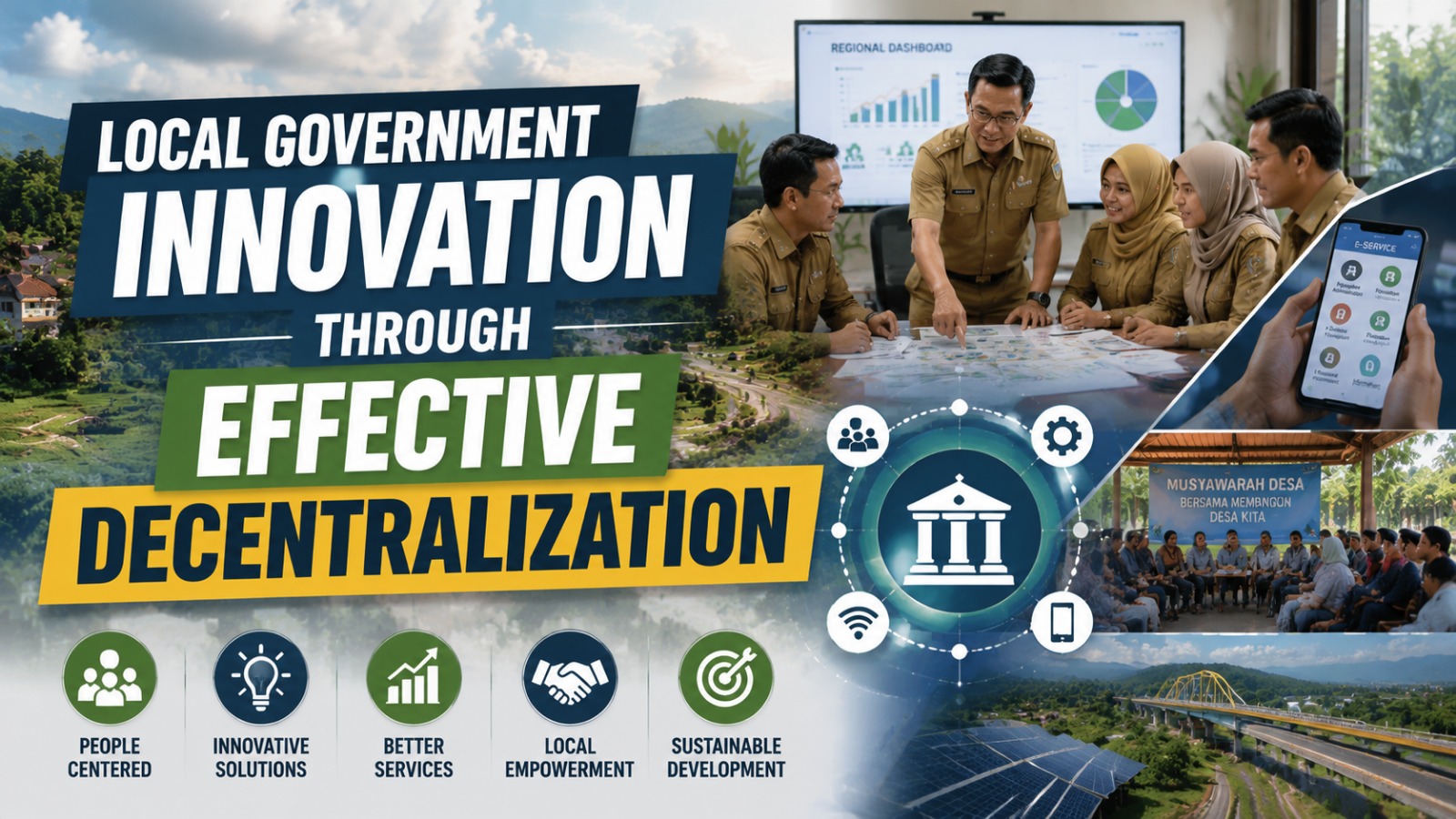
Decentralization is a governance system that gives greater authority and responsibility to local governments to manage their own regions. This approach allows local authorities to make decisions based on the specific needs, challenges, and opportunities within their communities. Through effective decentralization, local governments can develop creative solutions and improve the quality of public services. It also encourages governments to become more responsive, flexible, and closer to citizens.
Local government innovation refers to the ability of regional authorities to create new ideas, programs, and services that improve community welfare. Innovation becomes more effective when local governments have sufficient authority, resources, and support systems. By combining decentralization with innovation, regions can develop policies that are more relevant and impactful. This relationship helps create better governance and sustainable regional development.
THE ROLE OF DECENTRALIZATION IN ENCOURAGING INNOVATION
Effective decentralization provides local governments with greater opportunities to experiment with new policies and development strategies. Since local authorities understand regional conditions better, they can create solutions that match local problems. For example, a region may introduce digital public services, community-based programs, or economic development initiatives based on local potential. These innovations can improve efficiency and provide better results for citizens.
Decentralization also reduces dependence on central government decisions. Local leaders can respond more quickly to social and economic changes without waiting for lengthy approval processes. This flexibility encourages creativity and allows regions to develop unique approaches. As a result, decentralization becomes an important foundation for building innovative governance.
DIGITAL TRANSFORMATION IN LOCAL PUBLIC SERVICES
One of the most significant forms of local government innovation is the use of digital technology in public services. Many local governments have developed online platforms for administration, healthcare, education, licensing, and citizen complaints. These digital solutions make services faster, more accessible, and more transparent. They also reduce unnecessary bureaucracy and improve the overall experience of citizens.
However, successful digital transformation requires proper planning and infrastructure. Local governments need skilled employees who can manage technology effectively and protect public data. Digital innovation should also consider communities with limited access to technology. By creating inclusive digital systems, governments can ensure that technological development benefits all citizens.
SUPPORTING LOCAL ECONOMIC DEVELOPMENT
Effective decentralization allows local governments to create economic strategies based on regional strengths. Each area has different resources, industries, and opportunities that can be developed through innovative policies. For example, agricultural regions can improve farming technology, while tourism areas can create digital promotion strategies. These approaches help increase economic productivity and strengthen local competitiveness.
Local economic development can also be supported through programs that encourage entrepreneurship and small businesses. Local governments can provide training, financial support, and easier access to markets. These initiatives help communities become more economically independent. Through innovation and proper management, decentralization can create new employment opportunities and improve regional prosperity.
IMPROVING COMMUNITY PARTICIPATION THROUGH INNOVATION
Community participation is an important element in successful local government innovation. Citizens can provide valuable ideas and feedback because they directly experience local challenges. Through public discussions, digital platforms, and community programs, governments can develop solutions that better reflect people's needs. This approach creates stronger cooperation between governments and communities.
Innovation that involves citizens is usually more sustainable because people feel connected to the programs being developed. Local governments can encourage participation by creating open communication channels and transparent decision-making processes. When communities actively contribute, public programs become more effective and receive greater support. This strengthens trust between citizens and local authorities.
BUILDING EFFECTIVE AND TRANSPARENT GOVERNANCE
Innovation requires strong governance systems that support transparency and accountability. Local governments must ensure that new programs are managed responsibly and provide measurable benefits. Clear regulations, effective monitoring, and proper evaluation help maintain the quality of innovative projects. Without good governance, innovation efforts may not achieve their expected goals.
Transparent governance also increases public confidence in local institutions. Citizens are more likely to support government programs when they understand how decisions are made and how resources are used. By combining innovation with accountability, local governments can create services that are not only modern but also trustworthy. This balance is essential for long-term development.
CHALLENGES IN IMPLEMENTING LOCAL GOVERNMENT INNOVATION
Although decentralization creates opportunities for innovation, local governments still face several challenges. Differences in financial capacity, human resources, and infrastructure can affect the ability of regions to develop new solutions. Some areas may have advanced systems, while others may struggle with basic administrative challenges. These differences require continuous support and improvement.
Another challenge is maintaining innovation over time. New programs need proper evaluation, funding, and adaptation to changing conditions. Local governments must avoid creating temporary solutions that cannot be sustained. Through capacity building, collaboration, and strategic planning, innovation can become a long-term part of effective decentralization.
THE FUTURE OF INNOVATIVE DECENTRALIZED GOVERNANCE
The future of local government innovation depends on how effectively decentralization is managed. Regions that use their authority responsibly can create policies that improve public services and strengthen economic development. Innovation will continue to play an important role as communities face new challenges in the future. Local governments must continue learning and adapting to remain effective.
Collaboration between governments, communities, private sectors, and technology providers can further strengthen innovation. By sharing knowledge and resources, regions can develop better solutions and overcome limitations. Effective decentralization combined with continuous innovation can create stronger, more responsive, and citizen-focused governments.
CONCLUSION
Local government innovation through effective decentralization provides significant opportunities to improve governance and community welfare. By giving local authorities greater decision-making power, regions can create solutions that match their unique conditions. Innovation in public services, technology, economic development, and community participation can strengthen the impact of decentralization.
However, successful innovation requires strong institutions, skilled human resources, transparency, and continuous evaluation. When decentralization is supported by responsible leadership and active community involvement, local governments can create sustainable improvements. Ultimately, effective decentralization can transform local governance into a more innovative, efficient, and inclusive system.
Tentang Penulis
Gusti Ayu Tita P
Penulis — Universitas STEKOM
Penulis aktif yang berfokus pada isu-isu akademik, teknologi pendidikan, dan pengembangan sumber daya manusia di lingkungan kampus.