
MBKM As A Bridge Between Higher Education And Industry
Gusti Ayu Tita P
14 Oktober 2026
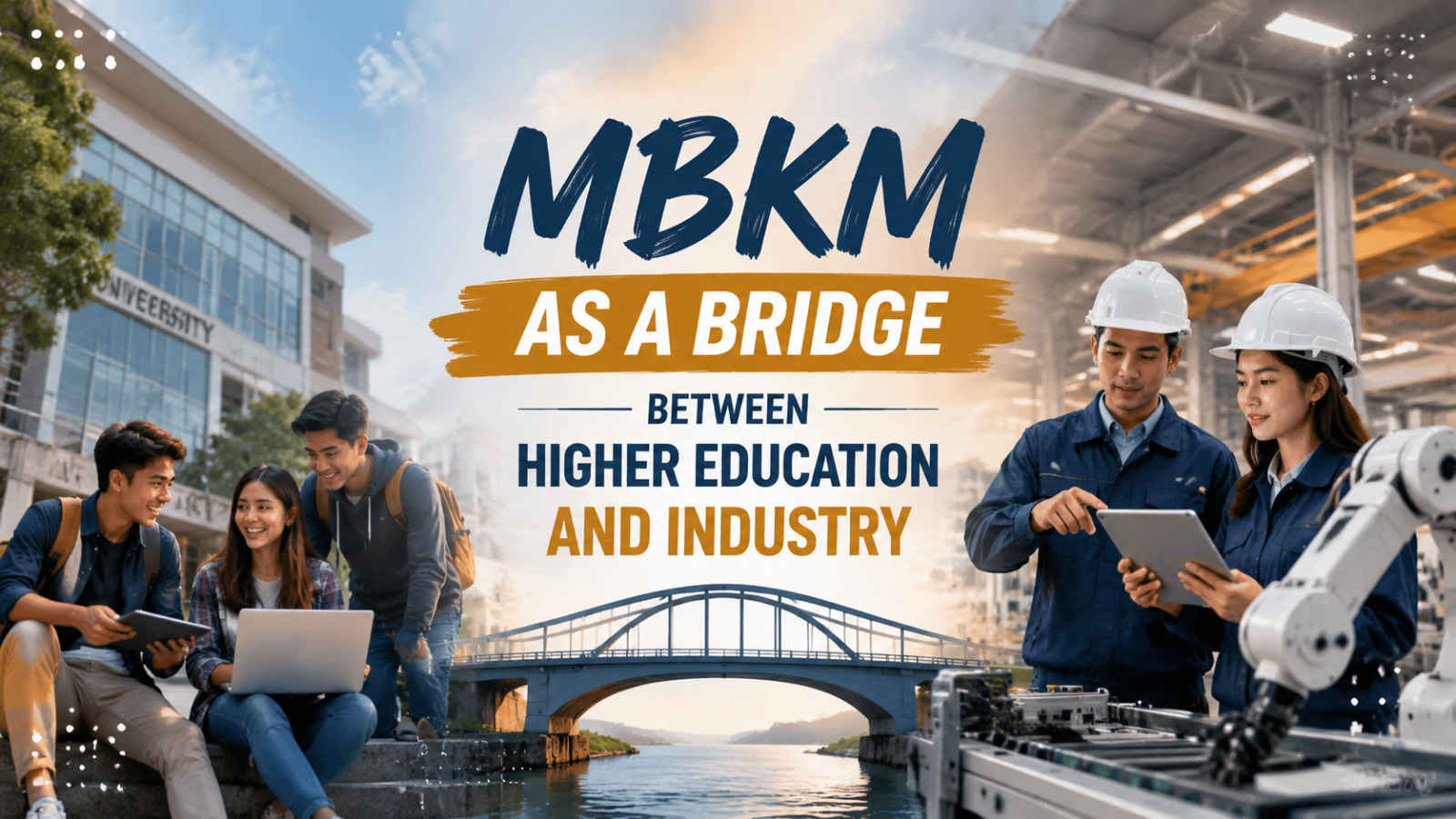
Higher education has an important role in preparing students to face the challenges of the professional world. However, academic knowledge alone is often not enough because industries require graduates with practical skills, experience, and adaptability. To answer this challenge, the Indonesian government introduced the Merdeka Belajar Kampus Merdeka (MBKM) program as an educational transformation that connects universities with the real world of work.
MBKM creates opportunities for students to learn beyond traditional classrooms through internships, research projects, entrepreneurship programs, community service, and other learning activities. Through these experiences, students can understand industry expectations while applying the knowledge they gain from their studies. This program becomes a bridge that strengthens cooperation between higher education institutions and various industry sectors.
THE ROLE OF MBKM IN BUILDING INDUSTRY CONNECTIONS
MBKM plays an important role in creating stronger relationships between universities and industries. Through collaboration programs, companies can contribute to curriculum development and provide learning experiences that match current professional demands. This partnership helps universities produce graduates who have skills that are relevant to workplace needs.
Industry involvement in MBKM also allows students to experience real working environments before graduation. Students can learn professional communication, teamwork, problem-solving, and decision-making directly from industry situations. As a result, they become more prepared and confident when entering the competitive job market.
Furthermore, MBKM encourages universities to become more open to innovation and external collaboration. The interaction between academics and industry professionals creates a learning system that is more flexible and responsive to technological and economic changes. This connection benefits both students and organizations by creating a more skilled and adaptable workforce.
PROVIDING PRACTICAL EXPERIENCE FOR STUDENTS
One of the main strengths of MBKM is its focus on practical learning experiences. Students are not only required to understand theories but are also encouraged to apply their knowledge in real situations. Programs such as internships and industry projects allow students to develop professional abilities while gaining valuable workplace experience.
Through direct involvement in industries, students can understand how organizations operate and how academic concepts are applied in professional settings. They can identify challenges, develop solutions, and improve their technical and interpersonal skills. These experiences help reduce the gap between what students learn at university and what employers expect.
In addition, practical experiences through MBKM help students build professional networks. Meeting industry experts, mentors, and colleagues can provide future career opportunities. These connections become valuable assets when students start looking for employment after completing their education.
IMPROVING GRADUATE COMPETENCIES FOR THE WORKPLACE
The modern workplace requires graduates who are not only academically capable but also possess various professional competencies. MBKM supports students in developing essential skills such as communication, leadership, creativity, collaboration, and adaptability. These abilities are increasingly important because industries continue to change due to technological developments and global competition.
By participating in MBKM activities, students can improve their readiness for professional challenges. They learn how to manage projects, work with different teams, and adapt to workplace cultures. This process helps graduates become more independent and capable of contributing effectively to organizations.
MBKM also supports the development of problem-solving skills by exposing students to real-world issues. Instead of only studying examples from textbooks, students face actual challenges that require critical thinking. This approach creates graduates who are better prepared to provide solutions in their future careers.
SUPPORTING INNOVATION THROUGH UNIVERSITY AND INDUSTRY COLLABORATION
Collaboration between higher education and industry through MBKM can encourage innovation in various fields. Universities provide academic knowledge and research capabilities, while industries contribute practical experience and market understanding. The combination of these strengths can produce new ideas, technologies, and solutions that benefit society.
MBKM encourages students to participate in innovation projects that involve real industry problems. These projects allow students to explore creativity and apply their knowledge to create useful outcomes. At the same time, industries can discover fresh perspectives from young talents who bring new ideas and approaches.
This cooperation also strengthens the role of universities as centers of knowledge development. By working closely with industries, universities can ensure that their educational programs remain relevant and aligned with future workforce needs.
CONCLUSION
MBKM AS A STRATEGIC LINK BETWEEN EDUCATION AND INDUSTRY
MBKM has become an important bridge between higher education and industry by creating meaningful learning experiences for students. Through collaboration, practical training, and real-world projects, MBKM helps reduce the gap between academic learning and professional requirements. Students gain valuable skills, industry knowledge, and confidence to enter the workforce.
The success of MBKM depends on strong cooperation between universities, industries, students, and government institutions. With continuous improvement and effective implementation, MBKM can produce graduates who are more competent, innovative, and ready to contribute to national development. Therefore, MBKM is not only an educational program but also a strategic connection that prepares future professionals for a changing world.
Tentang Penulis
Gusti Ayu Tita P
Penulis — Universitas STEKOM
Penulis aktif yang berfokus pada isu-isu akademik, teknologi pendidikan, dan pengembangan sumber daya manusia di lingkungan kampus.



