Differences in Mindset Between People Who Attend College and Those Who Do Not
Gusti Ayu Tita P
26 Januari 2026
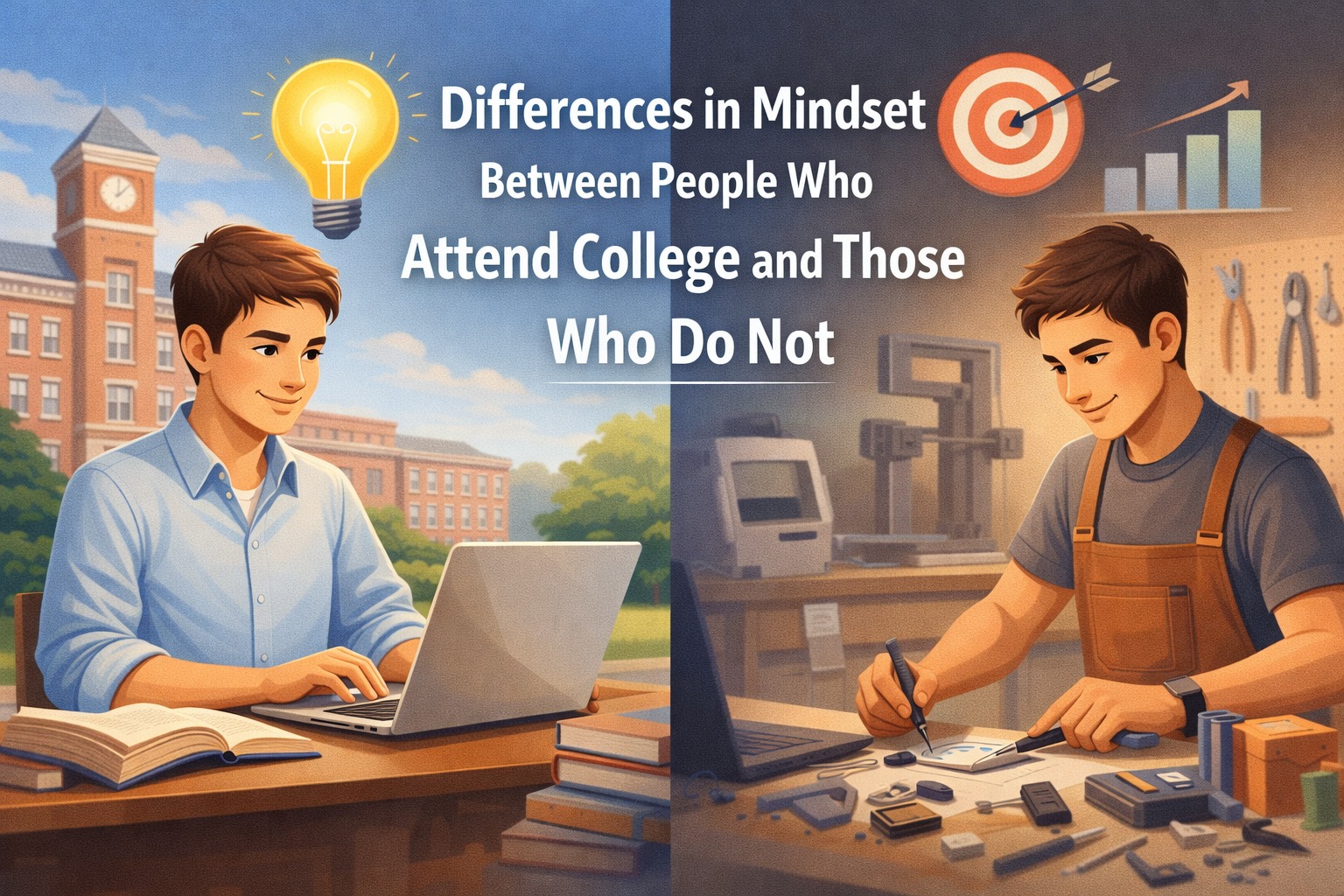
The difference in mindset between individuals who pursue higher education and those who do not is a phenomenon influenced by learning processes, environments, and differing life experiences. Mindset is an important aspect that determines how a person understands problems, makes decisions, and responds to life’s challenges. Higher education not only provides academic knowledge but also shapes a more systematic and reflective way of thinking. Meanwhile, individuals who do not attend college tend to develop their mindset based on direct experience in the workplace and social life.
THE ESSENCE OF MINDSET IN INDIVIDUAL LIFE
Mindset is the way a person views the world, processes information, and determines attitudes toward a problem. It is formed by various factors such as education, environment, culture, and life experiences. In the context of education, college provides space for individuals to develop critical, analytical thinking and openness to different perspectives. On the other hand, individuals who do not attend college build their mindset more through practical experience and real-life needs.
THE IMPACT OF COLLEGE EDUCATION ON MINDSET
The college learning process significantly shapes students' mindsets through structured academic activities. Class discussions, academic writing, and theoretical and case analysis encourage students to think logically, systematically, and based on data. Students are trained to question phenomena, seek scientific foundations, and express opinions argumentatively. This forms long-term thinking habits that are more planned and rational.
THE PRACTICAL EXPERIENCE–BASED MINDSET OF NON-COLLEGE INDIVIDUALS
Individuals who do not pursue higher education generally develop a more practical and application-oriented mindset. Decision-making is largely based on direct work experience, intuition, and learning from real failures and successes. This mindset tends to focus on quick results and immediately applicable solutions, without going through deep theoretical analysis as commonly practiced in academic environments.
DIFFERENCES IN RESPONDING TO PROBLEMS AND CHALLENGES
College-educated individuals and those without college education tend to respond differently to life’s problems and challenges. Those who attend college often analyze issues from multiple perspectives before making decisions, while those who do not attend college rely more on experience and quick responses. These differences do not indicate superiority of one group over the other, but rather reflect different thinking backgrounds.
THE INFLUENCE OF MINDSET ON DECISION-MAKING
Mindsets shaped by education and experience strongly influence how a person makes decisions. College graduates generally consider long-term aspects, risks, and consequences before acting. In contrast, individuals without college education often focus more on immediate needs and action efficiency. Both approaches have their own strengths and weaknesses depending on the context.
THE ROLE OF ENVIRONMENT IN SHAPING MINDSET
Academic and work environments both play major roles in shaping individual mindsets. Campuses provide spaces for discussion, idea exchange, and conceptual learning that enrich students' ways of thinking. Meanwhile, work environments shape a mindset that is more realistic, adaptive, and result-oriented. These environmental differences are key factors behind the differing mindsets of college and non-college individuals.
CONCLUSION
The difference in mindset between people who attend college and those who do not is the result of different educational processes and life experiences. Academic mindsets formed through higher education and practical mindsets developed through work experience both have value and contribute to life. By understanding these differences, society can better appreciate diverse ways of thinking and optimally utilize each individual’s strengths.
Tentang Penulis
Gusti Ayu Tita P
Penulis — Universitas STEKOM
Penulis aktif yang berfokus pada isu-isu akademik, teknologi pendidikan, dan pengembangan sumber daya manusia di lingkungan kampus.