Resolving Workplace Conflicts Caused by Office Politics
Gusti Ayu Tita P
19 Juni 2026
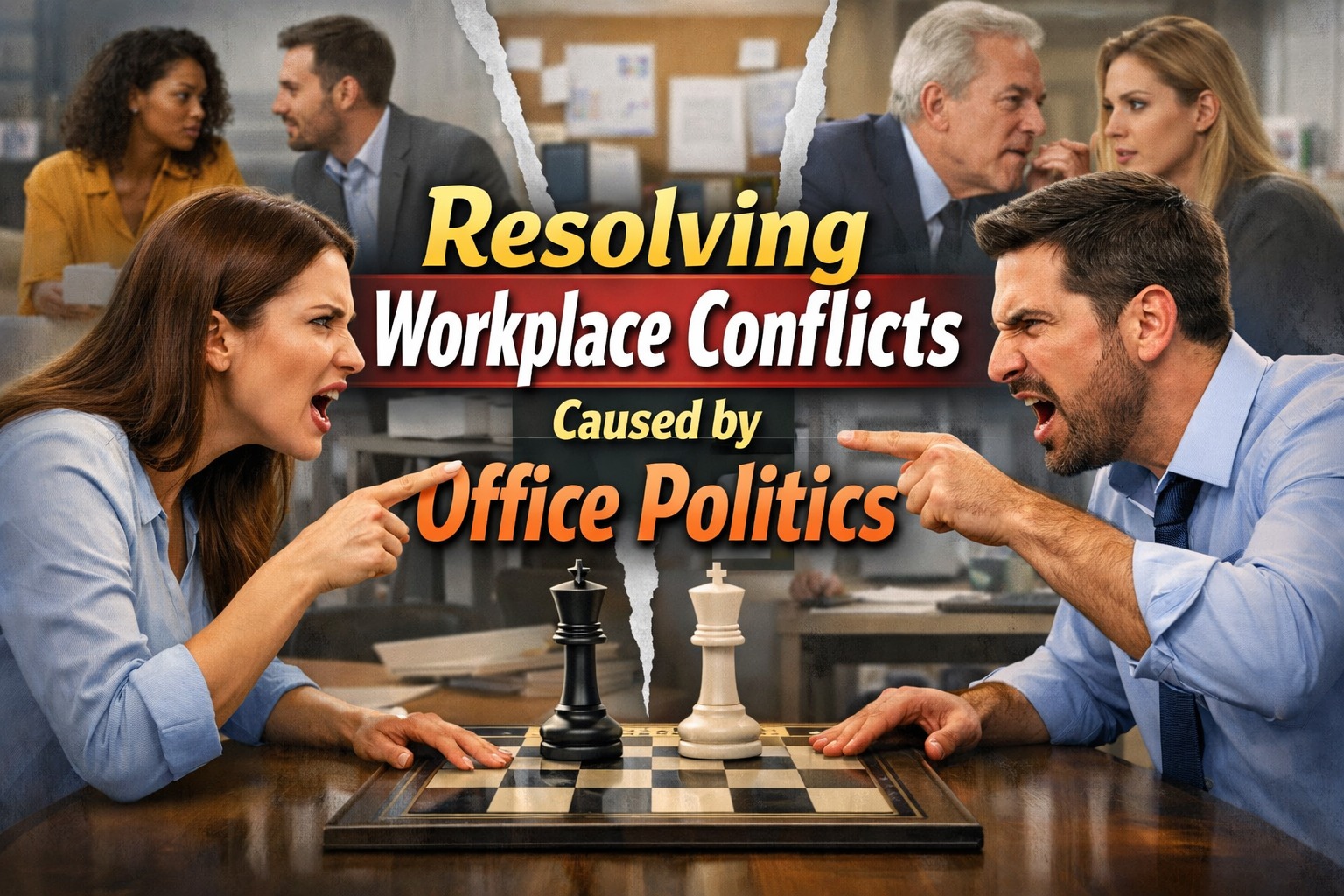
Workplace conflicts are a common challenge in many organizations, and they often become more complicated when influenced by office politics. Competition for recognition, promotions, influence, or resources can create misunderstandings and tension among employees. If not managed properly, these conflicts can reduce productivity, damage teamwork, and negatively affect workplace morale. Understanding how to resolve conflicts caused by office politics is essential for creating a healthy and professional work environment.
UNDERSTANDING THE ROOT CAUSES OF OFFICE POLITICS
Office politics usually emerge when employees compete for opportunities, authority, or recognition within an organization. While some level of workplace influence is natural, problems arise when individuals prioritize personal interests over team goals. This behavior can create mistrust, favoritism, and communication barriers among colleagues.
Conflicts often develop because of unclear responsibilities, lack of transparency, or unequal access to information. Employees may feel overlooked or unfairly treated, which can increase frustration and resentment. Identifying these underlying causes is the first step toward resolving workplace conflicts effectively and preventing them from escalating further.
RECOGNIZING EARLY SIGNS OF WORKPLACE CONFLICT
Many workplace conflicts begin with subtle warning signs that are often ignored. Employees may become less cooperative, avoid communication, or display passive-aggressive behavior. Small disagreements can gradually develop into larger disputes when concerns are not addressed promptly.
Managers and team members should pay attention to changes in workplace interactions. Frequent misunderstandings, declining collaboration, and increased workplace gossip can indicate growing tensions. Recognizing these signs early allows organizations to take corrective action before conflicts affect overall performance.
IMPROVING COMMUNICATION TO REDUCE TENSIONS
Effective communication is one of the most powerful tools for resolving conflicts caused by office politics. Open and honest discussions help employees express concerns, clarify misunderstandings, and build mutual respect. When communication channels remain transparent, rumors and assumptions are less likely to create problems.
Organizations should encourage active listening and respectful dialogue among employees. Team members should focus on facts rather than emotions when discussing disagreements. By promoting constructive communication, companies can create an environment where conflicts are addressed professionally and fairly.
ENCOURAGING FAIRNESS AND TRANSPARENCY
A workplace that values fairness and transparency is less vulnerable to political conflicts. Employees are more likely to trust management when decisions regarding promotions, rewards, and responsibilities are based on clear and objective criteria. Transparency reduces uncertainty and prevents perceptions of favoritism.
Leaders should communicate organizational decisions openly and explain the reasoning behind important actions. Consistent policies and equal treatment help build confidence among employees. When fairness becomes part of the company culture, political behavior loses much of its influence over workplace relationships.
DEVELOPING STRONG CONFLICT RESOLUTION SKILLS
Employees and managers benefit greatly from learning conflict resolution skills. These skills include negotiation, emotional intelligence, problem-solving, and the ability to remain calm during disagreements. Individuals who can manage conflicts professionally contribute to a more productive and harmonious workplace.
Training programs and workshops can help employees improve their ability to handle difficult situations. Instead of focusing on blame, participants learn to identify shared goals and practical solutions. This approach encourages cooperation and reduces the negative impact of office politics on team dynamics.
BUILDING A COLLABORATIVE WORKPLACE CULTURE
Creating a culture of collaboration and trust is one of the most effective long-term solutions to workplace conflicts. Employees who feel valued and respected are less likely to engage in harmful political behavior. Strong teamwork encourages individuals to prioritize collective success rather than personal agendas.
Organizations can strengthen collaboration by promoting shared objectives, recognizing team achievements, and encouraging cross-department cooperation. When employees work together toward common goals, relationships become stronger and conflicts become easier to resolve. A positive workplace culture ultimately supports both employee satisfaction and organizational growth.
CONCLUSION
Resolving workplace conflicts caused by office politics requires a combination of communication, fairness, transparency, and strong leadership. Organizations that address conflicts early and encourage professional behavior can minimize tension and improve teamwork. By developing conflict resolution skills and fostering a collaborative culture, businesses can create a healthier and more productive work environment. In the long run, reducing the negative effects of office politics benefits employees, managers, and the organization as a whole.
Tentang Penulis
Gusti Ayu Tita P
Penulis — Universitas STEKOM
Penulis aktif yang berfokus pada isu-isu akademik, teknologi pendidikan, dan pengembangan sumber daya manusia di lingkungan kampus.