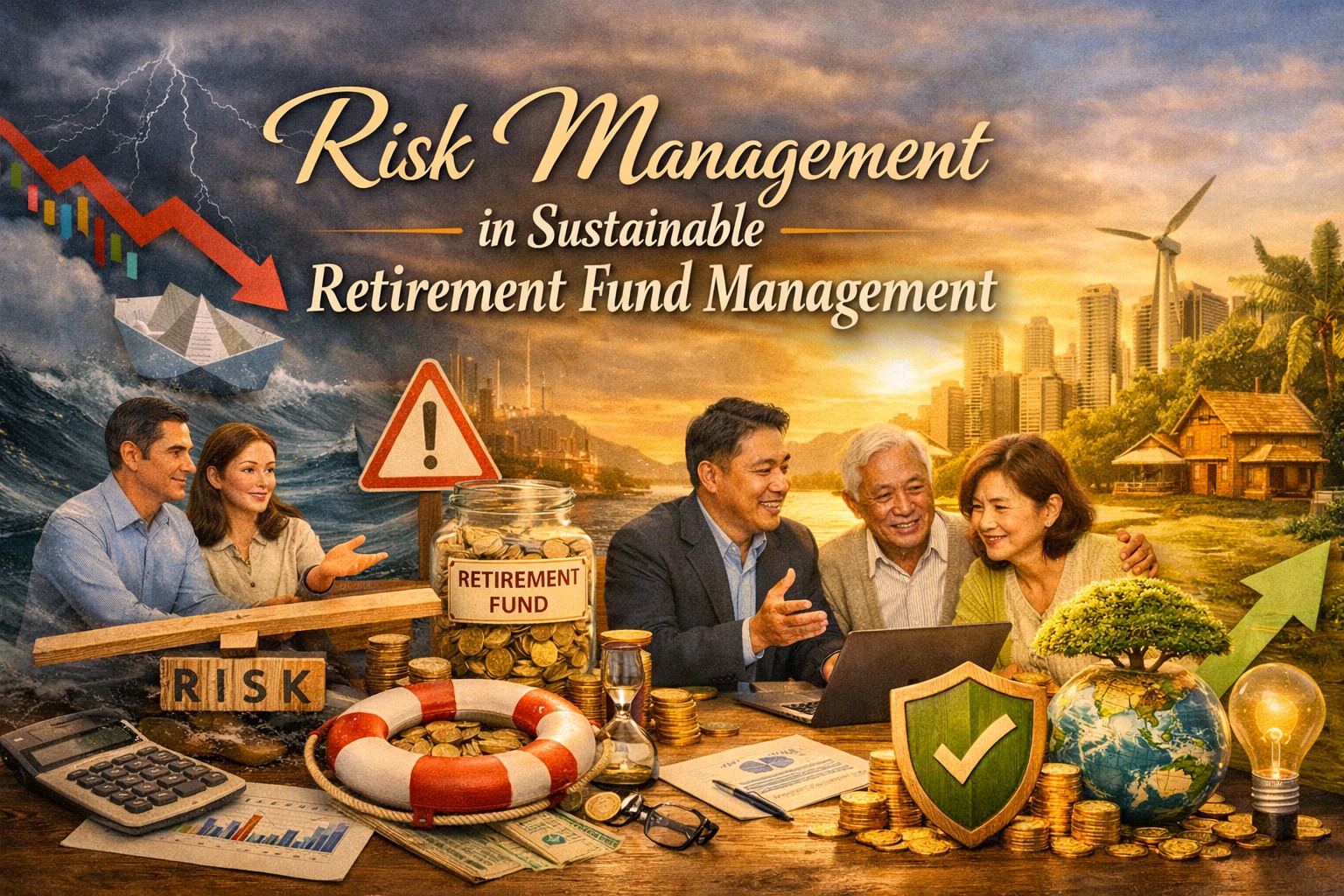
Managing retirement funds is not only about generating high returns but also about protecting assets from financial risks. Risk management plays a vital role in ensuring that retirement savings remain stable and continue growing over the long term. A sustainable retirement fund combines careful planning, diversified investments, and continuous monitoring to balance profitability with financial security. By implementing effective risk management strategies, individuals and institutions can build retirement portfolios that are resilient against economic uncertainty.
UNDERSTANDING RISK IN RETIREMENT FUND MANAGEMENT
Every investment carries a certain level of financial risk, and retirement funds are no exception. Market volatility, inflation, changing interest rates, and economic downturns can all affect the value of retirement savings. Understanding these risks allows investors to make informed decisions rather than reacting emotionally to market changes. Identifying potential threats is the first step toward protecting long-term financial goals.
Risk tolerance also differs from one individual to another depending on age, income, and retirement objectives. Younger investors often have more time to recover from market fluctuations, while those nearing retirement usually prioritize stability over aggressive growth. Evaluating personal financial conditions helps determine the most suitable investment strategy. Risk assessment should be reviewed regularly as financial circumstances evolve.
BUILDING A DIVERSIFIED INVESTMENT PORTFOLIO
One of the most effective ways to reduce investment risk is through portfolio diversification. Spreading investments across multiple asset classes such as stocks, bonds, mutual funds, and other financial instruments helps minimize losses if one sector performs poorly. Diversification creates a balanced portfolio that can withstand changing market conditions more effectively. It also provides greater opportunities for consistent long-term returns.
Investors should periodically review and rebalance their portfolios to maintain their desired asset allocation. Economic conditions and market performance may cause some investments to grow faster than others, creating an imbalance in risk exposure. Rebalancing helps restore the original investment strategy while maintaining financial discipline. A well-diversified portfolio improves both stability and long-term sustainability.
CONTROLLING RISK THROUGH LONG TERM PLANNING
Successful retirement fund management depends on long-term planning rather than short-term market speculation. Setting realistic financial goals allows investors to create structured savings and investment plans that support future retirement needs. Consistent contributions over many years help build wealth while reducing the impact of temporary market fluctuations. Patience remains one of the strongest tools for achieving retirement success.
Emergency funds also play an important role in sustainable retirement planning. Having separate savings for unexpected expenses prevents investors from withdrawing retirement assets prematurely. This approach preserves investment growth and maintains the long-term objectives of the retirement fund. Financial discipline strengthens retirement security even during uncertain economic periods.
MONITORING PERFORMANCE AND ADAPTING TO CHANGE
Retirement fund management requires continuous performance monitoring to ensure investments remain aligned with financial goals. Regular reviews help identify underperforming assets and opportunities for improvement. Investors should evaluate portfolio performance based on long-term objectives instead of reacting to short-term market movements. Consistent monitoring supports informed and rational financial decisions.
Economic conditions, inflation, and government policies may change over time, making periodic adjustments necessary. Investors who remain flexible can adapt their strategies without abandoning their long-term plans. Consulting qualified financial professionals may also improve investment decisions and risk management practices. Regular evaluation ensures retirement funds remain sustainable and prepared for future challenges.
THE IMPORTANCE OF SUSTAINABLE RETIREMENT FUND MANAGEMENT
A sustainable retirement fund focuses on maintaining financial stability for many years rather than pursuing excessive short-term profits. Responsible investment decisions, effective risk management, and disciplined saving habits contribute to stronger retirement outcomes. Sustainable management also considers long-term economic trends that may influence investment performance. Careful planning reduces uncertainty and increases financial confidence during retirement.
Individuals who consistently apply sound financial principles are better prepared to achieve financial independence. Building retirement wealth requires commitment, patience, and ongoing learning about investment strategies. Managing risks wisely helps preserve assets while supporting future financial needs. Sustainability and risk management work together to create a safer and more secure retirement.
CONCLUSION
Risk management is an essential component of sustainable retirement fund management. By understanding financial risks, diversifying investments, planning for the long term, and reviewing portfolios regularly, investors can protect their retirement savings from unexpected challenges. Sustainable retirement planning is not about eliminating risk completely but about managing it wisely. Making informed financial decisions today will help ensure a more secure, stable, and comfortable retirement in the future.
Tentang Penulis
Gusti Ayu Tita P
Penulis — Universitas STEKOM
Penulis aktif yang berfokus pada isu-isu akademik, teknologi pendidikan, dan pengembangan sumber daya manusia di lingkungan kampus.