To What Extent Can School Infrastructure Development Realize Inclusive Education?
Gusti Ayu Tita P
25 November 2025
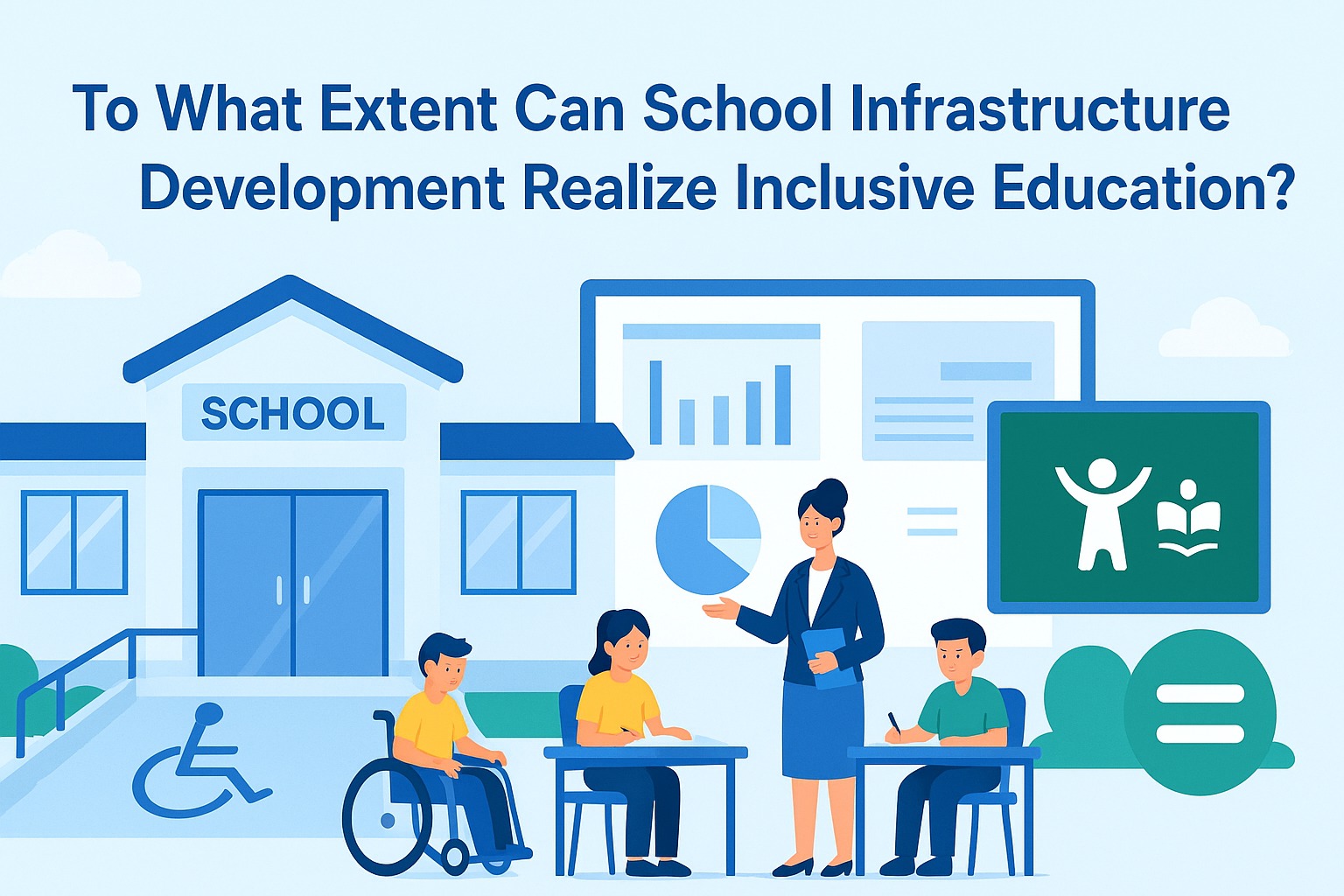
Inclusive education is an effort to ensure that every child, without exception, has equal opportunities to access education. One of the most important factors in achieving this is the development of adequate and inclusive school infrastructure. But to what extent can infrastructure development truly support an inclusive education system in Indonesia? This article explores the issue in depth.
THE ROLE OF INFRASTRUCTURE IN INCLUSIVE EDUCATION
School infrastructure is not limited to physical buildings; it also includes supporting facilities that enable all students— including those with special needs — to learn comfortably.
The Vital Role of School Infrastructure:
- Providing proper and safe learning spaces
- Ensuring accessibility for all students (including students with disabilities)
- Supporting the use of technology for modern learning
- Creating a conducive environment for teaching and learning
Without proper infrastructure, the principle of equality in education will be difficult to achieve.
SCHOOL INFRASTRUCTURE AND FAIRER ACCESS TO EDUCATION
Equal distribution of school facilities across regions helps reduce the gap between urban and rural areas.
Key Benefits:
1.Equal learning opportunities
Children in remote areas can also access proper educational facilities.
2.Improved learning quality
Laboratories, practice rooms, and technological facilities support more effective learning experiences.
3.Education access for students with disabilities
Ramps, accessible toilets, and assistive learning tools ensure all students can participate safely.
4.A safer and more comfortable school environment
Good facilities increase learning motivation and reduce dropout rates.
A supportive environment is essential for realizing inclusive education.
CHALLENGES IN SCHOOL INFRASTRUCTURE DEVELOPMENT
Despite its importance, school infrastructure development in Indonesia still faces several obstacles, such as:
- Unequal budget allocation between regions
- Limited facilities for students with special needs
- Damaged school buildings in remote areas
- Uneven internet access
These issues show that equal infrastructure distribution still requires serious attention.
STRATEGIES TO ACHIEVE INCLUSIVE SCHOOL INFRASTRUCTURE
To achieve the goals of inclusive education, several strategies can serve as solutions:
Recommended Steps:
- Ensuring equal development and renovation of schools across regions
- Providing accessibility facilities for students with disabilities
- Utilizing digital technology as a universal learning medium
- Strengthening collaboration between government, private sector, and communities in funding
- Continuous monitoring of infrastructure quality
Collaboration among various stakeholders is crucial to ensure that all students are truly supported.
CONCLUSION
So, to what extent can school infrastructure development support inclusive education?
The answer: to a very great extent. Equal, modern, and accessible infrastructure is a fundamental foundation for creating fair education for all children.
With stronger commitment and equitable development, inclusive education becomes not just a concept but a reality that can be experienced by every student, without exception.
Tentang Penulis
Gusti Ayu Tita P
Penulis — Universitas STEKOM
Penulis aktif yang berfokus pada isu-isu akademik, teknologi pendidikan, dan pengembangan sumber daya manusia di lingkungan kampus.