
Smart Ways To Answer Examiner Questions During A Proposal Seminar
Gusti Ayu Tita P
23 September 2026
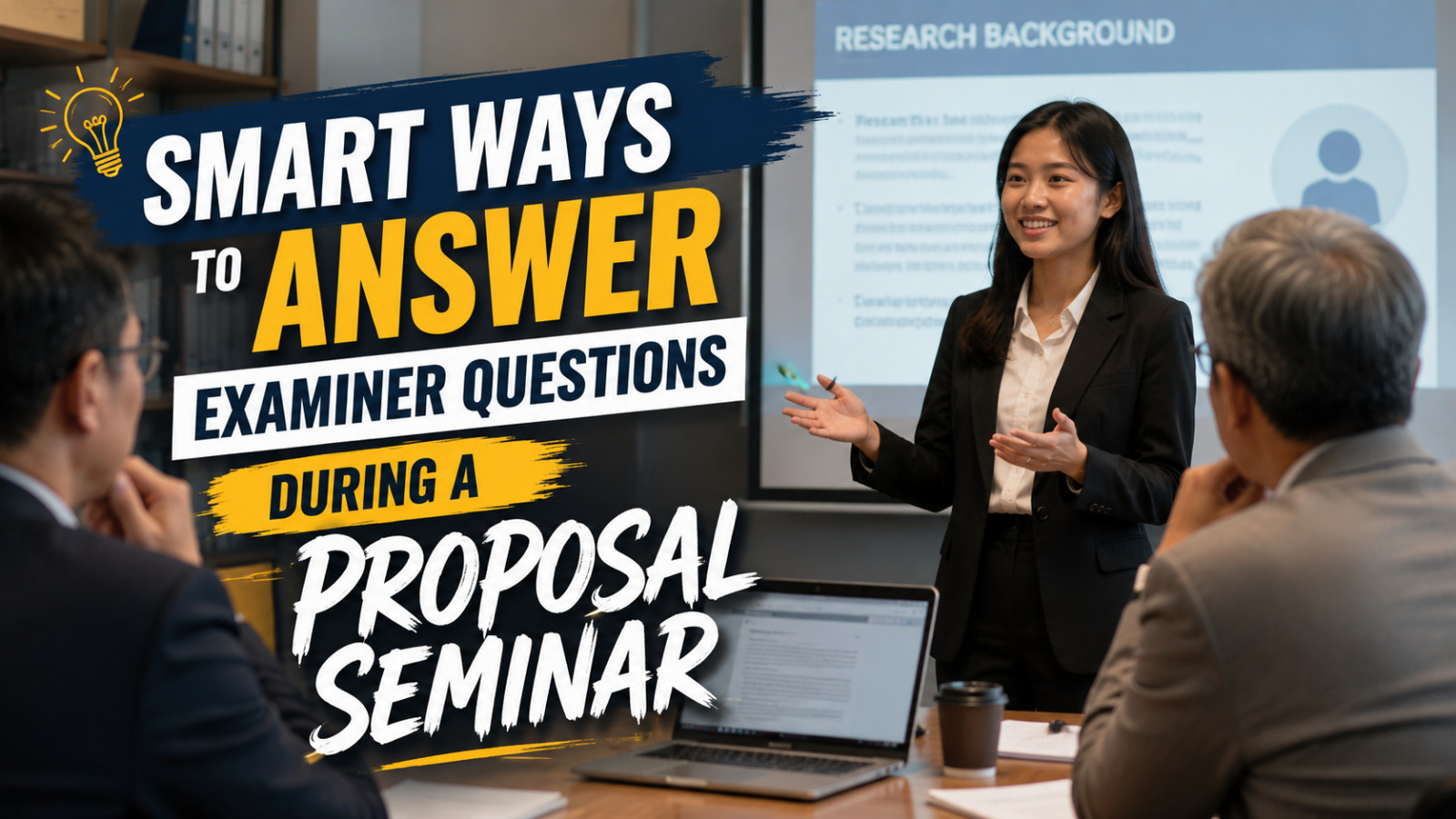
A proposal seminar is one of the most important stages in the academic journey before conducting research. During this session, students are expected to explain their research plan clearly and respond confidently to questions from the examiners. The ability to answer questions effectively demonstrates not only knowledge of the research topic but also critical thinking and academic readiness.
Many students feel nervous because they worry about receiving difficult or unexpected questions. However, with proper preparation and the right communication strategies, every question can become an opportunity to show competence. This article shares practical techniques to help students answer examiner questions professionally and successfully.
UNDERSTAND YOUR RESEARCH THOROUGHLY
The most effective way to answer examiner questions is to fully understand every section of your research proposal. Do not rely on memorization because examiners often ask questions that require logical explanations rather than repeated sentences from the document. Make sure you understand your research background, objectives, research questions, literature review, methodology, and expected outcomes.
Before the seminar, review your proposal several times and identify areas that may raise questions. Prepare explanations supported by reliable academic references. A strong understanding of your Research Proposal will increase your Academic Confidence and help you answer naturally.
LISTEN CAREFULLY BEFORE ANSWERING
Many students make the mistake of answering before completely understanding the examiner's question. Listen carefully to every word and allow the examiner to finish speaking before responding. This habit prevents misunderstandings and helps you provide more accurate answers.
If a question seems unclear, politely ask for clarification instead of guessing. Taking a few seconds to think before answering is completely acceptable and often results in a more organized response. Good listening skills are an essential part of handling Examiner Questions professionally.
ANSWER CLEARLY, BRIEFLY, AND LOGICALLY
Your answers should be clear, concise, and directly related to the question being asked. Avoid giving overly long explanations that may create additional questions or confuse the discussion. Focus on the key points while supporting your answer with logical reasoning.
Whenever possible, connect your explanation to your research objectives or theoretical framework. This approach demonstrates consistency throughout your proposal. Effective communication also reflects strong Presentation Skills, which are highly valued during a Proposal Seminar.
STAY CALM WHEN FACING DIFFICULT QUESTIONS
Not every question will be easy, and that is perfectly normal during an academic examination. If you receive a challenging question, remain calm, take a deep breath, and organize your thoughts before answering. Confidence often leaves a stronger impression than rushing to respond.
If you genuinely do not know the complete answer, be honest while showing your willingness to learn. You can explain your current understanding and mention that you will explore the topic further during your research. This attitude demonstrates maturity, professionalism, and continuous learning.
SUPPORT YOUR ANSWERS WITH ACADEMIC REFERENCES
Strong answers are usually supported by credible sources rather than personal opinions. Mention theories, previous studies, or scientific evidence that support your explanation whenever appropriate. This shows that your research is built upon reliable academic foundations.
Reading recent journals and books before your seminar will strengthen your arguments significantly. Good preparation makes it easier to defend your ideas and respond confidently during your Research Defense.
ACCEPT FEEDBACK POSITIVELY
Examiners often provide suggestions intended to improve your research rather than criticize your work. Listen respectfully, take notes, and avoid becoming defensive when receiving corrections. A positive attitude reflects professionalism and academic maturity.
Thank the examiners for their valuable input and show appreciation for their recommendations. Applying their feedback will improve the quality of your research and increase the chances of completing your thesis successfully.
PRACTICE WITH MOCK QUESTION SESSIONS
One of the best preparation methods is participating in mock seminars with friends, classmates, or supervisors. Ask them to create questions similar to those commonly asked during proposal seminars. Repeated practice helps you become familiar with different question styles and improves your ability to respond confidently.
Mock sessions also help you identify weaknesses in your explanations before the actual seminar. The more you practice answering Examiner Questions, the more natural and convincing your responses will become during the real presentation.
CONCLUSION
Successfully answering questions during a proposal seminar requires thorough preparation, deep understanding of the research, effective communication, and professional confidence. By mastering your proposal, listening carefully, answering logically, supporting arguments with academic references, and accepting feedback positively, you can perform much better during the examination. Consistent practice and proper Seminar Preparation will not only help you answer Examiner Questions effectively but also increase your chances of achieving a successful Proposal Seminar and completing your thesis with confidence.
Tentang Penulis
Gusti Ayu Tita P
Penulis — Universitas STEKOM
Penulis aktif yang berfokus pada isu-isu akademik, teknologi pendidikan, dan pengembangan sumber daya manusia di lingkungan kampus.



