Strategies to Optimize Decentralization for Transparent Governance
Gusti Ayu Tita P
4 Oktober 2026
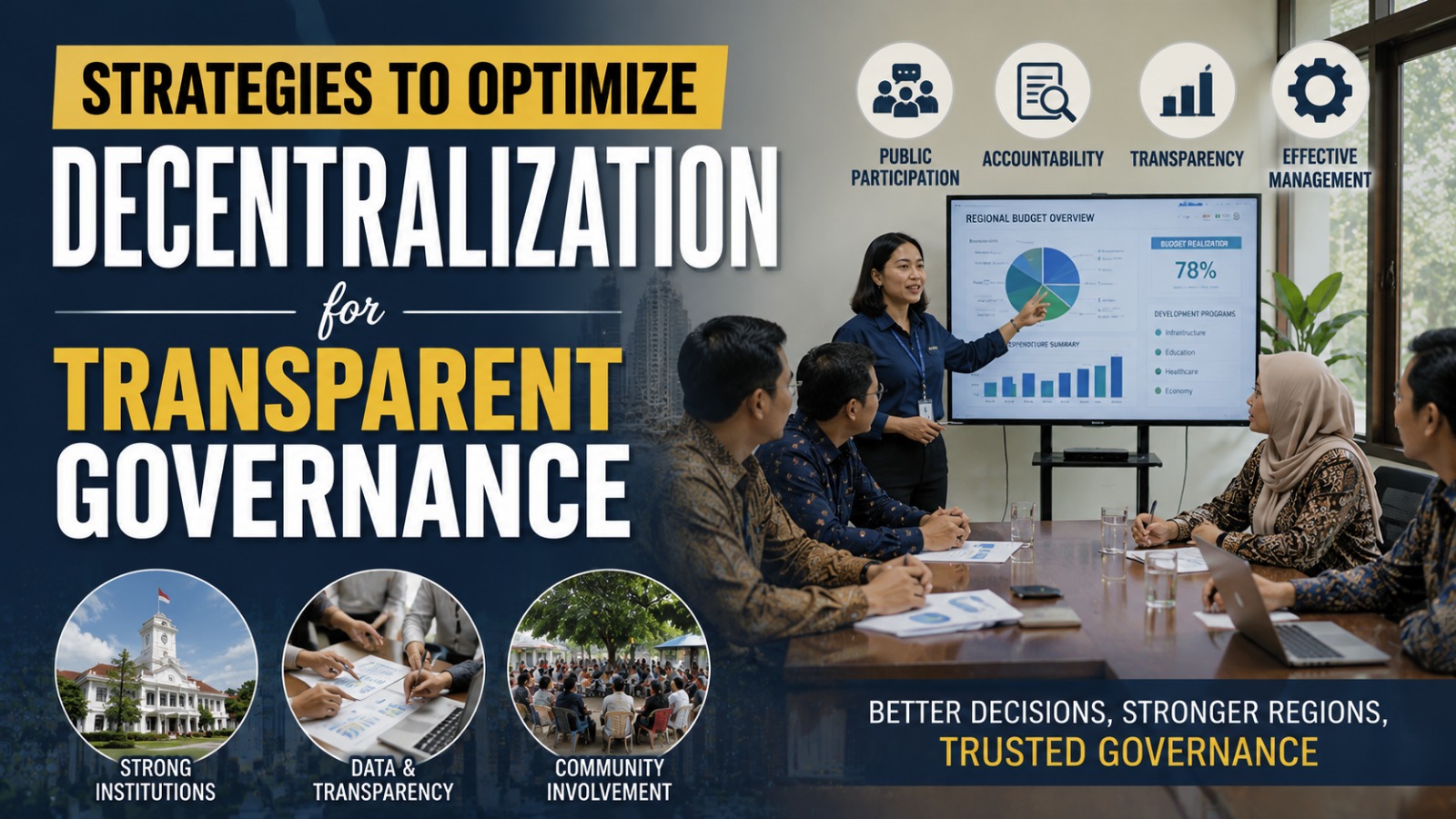
Decentralization is a governance approach that transfers certain powers, responsibilities, and resources from the central government to regional or local authorities. This system allows local governments to make decisions that are more closely aligned with the needs of their communities. When properly implemented, decentralization can improve public services, encourage local participation, and make government decisions more responsive. However, greater local authority must be supported by transparency, accountability, and effective supervision.
Transparent governance means that government institutions provide clear and accessible information about policies, budgets, programs, and decision-making processes. Transparency helps citizens understand how public resources are managed and how government decisions affect their lives. Therefore, optimizing decentralization requires a strong governance framework that balances local autonomy with public accountability.
STRENGTHENING LOCAL GOVERNMENT CAPACITY
The first strategy for optimizing decentralization is to strengthen the capacity of local governments. Regional authorities need competent employees who understand public administration, financial management, policy development, and digital technology. Regular training and professional development can improve the quality of decision-making and service delivery. Strong institutional capacity also helps local governments manage their responsibilities more effectively.
Local governments should also develop clear procedures and measurable performance standards. These standards make it easier to evaluate whether public programs achieve their intended goals. By improving human resources and institutional systems, regions can reduce administrative weaknesses and provide more reliable public services. Strong local capacity is an important foundation for transparent and accountable governance.
IMPROVING PUBLIC FINANCIAL TRANSPARENCY
Effective management of public funds is essential for successful decentralization. Local governments should publish clear information about budgets, expenditures, development programs, and financial outcomes. Public access to this information allows citizens to understand how government resources are allocated and used. It also creates opportunities for the public to identify potential irregularities.
Financial transparency should be supported by strong auditing and reporting systems. Independent audits and regular evaluations can help ensure that public funds are managed according to regulations. Local governments should also use simple language when presenting financial information so that ordinary citizens can understand it. These practices can strengthen public trust and reduce the risk of financial misuse.
PROMOTING COMMUNITY PARTICIPATION
Community participation is another important strategy for improving decentralized governance. Citizens should have opportunities to express their needs, provide feedback, and participate in discussions about local development programs. Public consultations, community meetings, and digital feedback platforms can help governments understand local priorities. Meaningful participation ensures that government policies are not developed without considering the people they are intended to serve.
Local governments should create inclusive participation mechanisms that involve different groups within society. Young people, community organizations, small businesses, and other stakeholders can provide valuable perspectives on regional challenges. When citizens are actively involved, they can contribute to better policy decisions and monitor government performance. This approach strengthens the relationship between government institutions and the communities they serve.
USING DIGITAL TECHNOLOGY FOR OPEN GOVERNMENT
The use of digital technology can significantly improve transparency in decentralized governance. Local governments can provide online platforms for public information, administrative services, budget data, and development updates. Digital systems can make government information easier to access while reducing unnecessary administrative processes. They can also help citizens monitor public programs without needing to visit government offices.
However, digital transformation must be implemented carefully. Local governments need adequate infrastructure, cybersecurity measures, and trained employees to operate digital systems effectively. They should also consider citizens who have limited internet access or digital skills. By combining technology with inclusive service delivery, governments can promote open government without leaving vulnerable communities behind.
STRENGTHENING ACCOUNTABILITY AND OVERSIGHT
Accountability ensures that local officials are responsible for the decisions they make and the resources they manage. Decentralization should therefore be accompanied by effective monitoring mechanisms. Internal controls, independent audits, legislative oversight, and public reporting can help prevent abuse of authority. These mechanisms encourage officials to perform their duties responsibly.
Oversight should not only focus on identifying mistakes but also on improving government performance. Local governments can use evaluation results to identify weaknesses and develop better policies. Strong accountability systems create a culture in which public officials are encouraged to act professionally and ethically. This helps ensure that local autonomy is used to serve the public interest.
DEVELOPING CLEAR REGULATIONS AND COORDINATION
Clear regulations are necessary to define the responsibilities of central and local governments. Without clear authority, decentralization may create overlapping responsibilities, policy conflicts, or inefficient use of resources. Governments should establish rules that clearly explain who is responsible for specific programs and services. This clarity can improve coordination and reduce administrative confusion.
Coordination between central and local governments is equally important. Although local authorities need sufficient autonomy, they still require national standards and strategic guidance in certain areas. Regular communication and data sharing can help different levels of government work toward common goals. A balanced relationship between autonomy and coordination can make decentralization more effective.
BUILDING A CULTURE OF INTEGRITY
Transparent governance cannot be achieved through regulations and technology alone. It also requires a strong culture of integrity among public officials. Government employees should understand the importance of ethical behavior, honesty, and responsibility when carrying out their duties. Leaders must demonstrate these values through their actions and decisions.
Anti-corruption measures should be supported by clear rules and effective enforcement. Conflicts of interest should be managed carefully, while reporting mechanisms should allow citizens and employees to raise concerns safely. When integrity becomes part of the institutional culture, decentralization can function more effectively and public confidence can increase.
CONCLUSION
Optimizing decentralization for transparent governance requires more than simply transferring authority from central to local governments. It requires strong institutions, financial transparency, community participation, digital innovation, accountability, and integrity. Each element supports the others and contributes to a more responsive and responsible government system.
By strengthening local government capacity and improving public oversight, decentralization can provide greater benefits for communities. Local governments that communicate openly, manage resources responsibly, and involve citizens in decision-making are more likely to gain public trust. Ultimately, effective decentralization can create transparent governance that supports better public services, stronger accountability, and sustainable regional development.
Tentang Penulis
Gusti Ayu Tita P
Penulis — Universitas STEKOM
Penulis aktif yang berfokus pada isu-isu akademik, teknologi pendidikan, dan pengembangan sumber daya manusia di lingkungan kampus.