Student Symbolic Capital from the Perspective of Educational Sociology
Gusti Ayu Tita P
2 Maret 2026
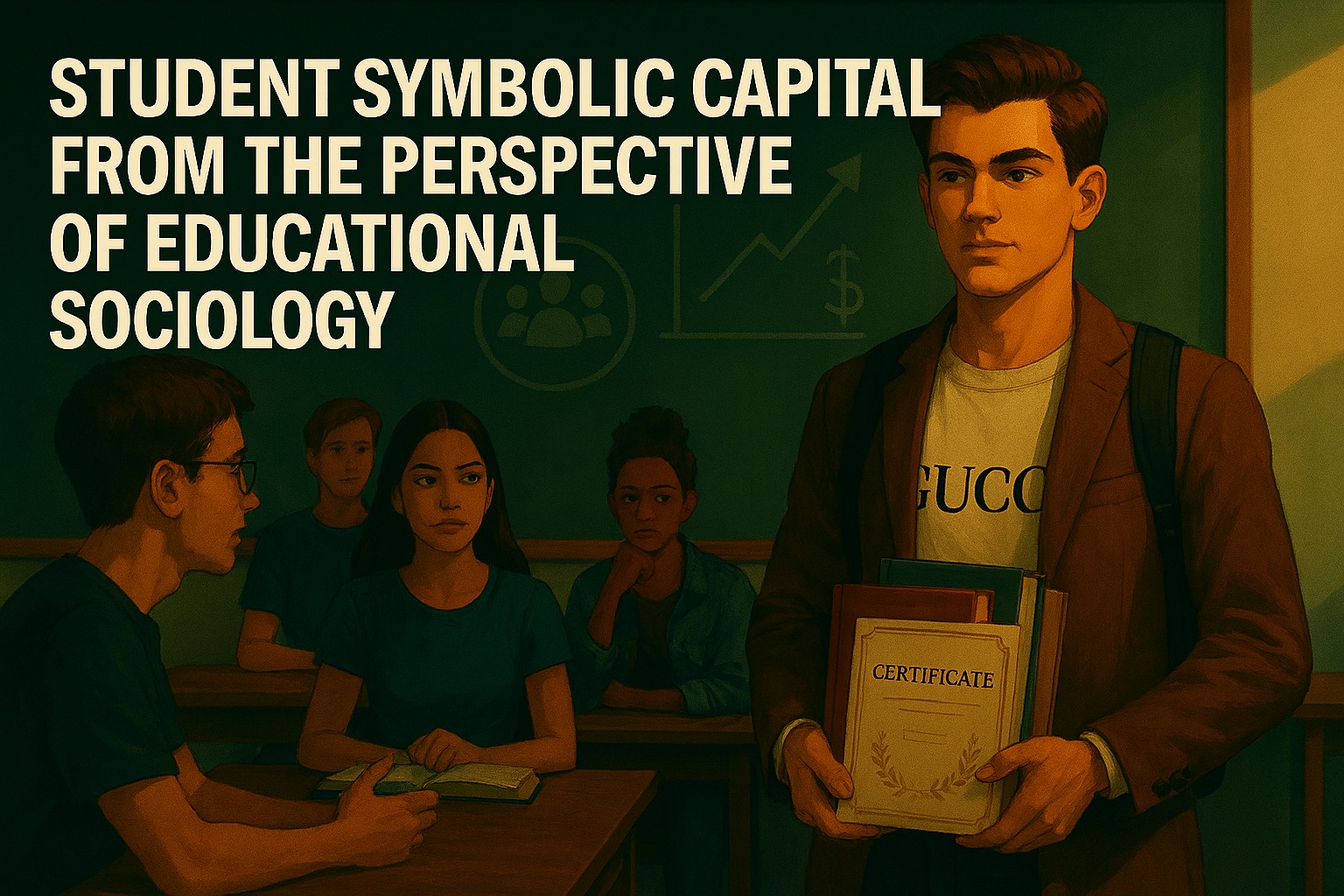
Education is not only a process of gaining knowledge and academic qualifications. From the perspective of educational sociology, schools and universities are also social environments where students develop identities, relationships, and social positions. In these environments, some students may receive recognition because of their achievements, communication skills, cultural knowledge, or social connections. These resources can be understood through the concept of symbolic capital, which explains how certain qualities and forms of recognition can provide social advantages. Understanding symbolic capital helps us see that student success can be influenced by both academic ability and the social environment surrounding education.
UNDERSTANDING SYMBOLIC CAPITAL IN EDUCATION
The concept of symbolic capital is closely associated with French sociologist Pierre Bourdieu. Symbolic capital refers to forms of recognition, prestige, honor, or social value that individuals can possess and use within a particular social environment. In education, it may appear through academic achievements, reputation, respected family backgrounds, cultural knowledge, leadership experience, or other qualities that receive social recognition. Unlike financial wealth, symbolic capital depends heavily on how something is valued by a particular community. Recognition from others is therefore an important part of symbolic capital.
Symbolic capital does not always look the same in every educational environment. A student who is highly respected for academic performance may have strong symbolic capital in one setting, while leadership or artistic ability may be more valued in another. The meaning of a particular achievement depends on the social norms and values of the institution or group. This shows that student status is shaped not only by individual characteristics but also by the environment. Educational sociology helps explain these relationships between individual resources and social structures.
SOCIAL CONNECTIONS AND STUDENT REPUTATION
Students can also build symbolic capital through their relationships with others. Being trusted by classmates, respected by lecturers, or recognized within student organizations can strengthen a person's social reputation. Participation in organizations, community projects, competitions, and professional activities can help students develop valuable connections. These relationships may create access to information, opportunities, and recommendations. Social recognition and networks can therefore become important resources during academic and professional development.
However, networking should not be understood simply as collecting contacts. Meaningful relationships are generally built through trust, cooperation, and mutual respect. A student who consistently contributes to group activities may develop a strong reputation over time. Reputation is built through repeated social interactions, not simply through popularity. This demonstrates how everyday student behavior can contribute to symbolic capital.
LANGUAGE AND COMMUNICATION AS SOCIAL RESOURCES
Communication style can influence how students are perceived in educational environments. Students who can express ideas clearly, participate in discussions, and communicate confidently may receive greater recognition from others. Language can also reflect familiarity with academic or professional environments. Communication skills can therefore become a valuable social resource. However, differences in language style should not automatically be interpreted as differences in intelligence.
Educational institutions should recognize that students come from diverse linguistic and cultural backgrounds. A student who is less confident speaking in formal settings may still possess strong knowledge and abilities. Providing opportunities to practice communication can help students develop confidence without forcing them to abandon their personal identity. Inclusive communication allows more students to participate and gain recognition based on their actual contributions.
SYMBOLIC CAPITAL AND SOCIAL INEQUALITY
The concept of symbolic capital also helps explain why educational experiences can differ between students. Some students may enter school or university with greater access to cultural knowledge, social networks, or resources that are already valued by the institution. As a result, they may find it easier to gain recognition and opportunities. Educational inequality can therefore involve more than differences in financial resources. Social recognition and cultural familiarity can also influence student experiences.
This does not mean that social advantages determine a student's future completely. Students can develop new skills, relationships, and achievements throughout their education. Teachers and institutions can also create opportunities that allow students from different backgrounds to demonstrate their abilities. Fair educational practices can help reduce the influence of unequal starting conditions. Understanding symbolic capital is useful because it encourages educators to look beyond visible academic outcomes.
THE ROLE OF SCHOOLS AND UNIVERSITIES
Educational institutions play an important role in determining which qualities receive recognition. When schools reward only certain types of achievement, other valuable abilities may receive less attention. For example, creativity, teamwork, empathy, community service, and practical skills may be overlooked if success is measured mainly through grades. A broader approach to recognition can provide more students with opportunities to demonstrate their strengths. Inclusive recognition can create a healthier educational environment.
Teachers and lecturers can contribute by recognizing different forms of student contribution. Group projects, presentations, research, leadership activities, and community programs can provide diverse opportunities for students. Institutions can also provide mentoring and development programs for students who have fewer opportunities to build social and cultural resources. Equal opportunity does not mean identical treatment in every situation. It means creating fair conditions for students to develop and demonstrate their abilities.
BUILDING POSITIVE SYMBOLIC CAPITAL
Students can build positive symbolic capital through genuine achievements and meaningful contributions. Academic performance is valuable, but students can also develop leadership, communication, creativity, teamwork, and community involvement. Consistency and integrity are important because reputation is difficult to build through short-term actions alone. Students should focus on becoming reliable contributors rather than simply seeking recognition. Over time, positive behavior can create trust and respect among others.
Students should also avoid treating symbolic capital as a competition for superiority. Recognition becomes more meaningful when it reflects real contribution and personal development. Helping classmates, sharing knowledge, and participating in useful activities can strengthen a student's reputation while benefiting the wider community. Positive recognition should support growth rather than create exclusion. This approach allows symbolic capital to become a constructive part of student development.
CONCLUSION
From the perspective of educational sociology, student symbolic capital helps explain how recognition, reputation, cultural knowledge, achievements, and social relationships can influence educational experiences. Academic awards, communication skills, leadership, cultural resources, and social connections can all become valuable forms of recognition depending on the environment. At the same time, unequal access to these resources can contribute to differences in educational opportunities. Understanding these dynamics encourages schools and universities to create more inclusive systems of recognition. Ultimately, education should not only reward students who already possess valued resources but also provide opportunities for every student to develop their abilities and build meaningful forms of social recognition.
Tentang Penulis
Gusti Ayu Tita P
Penulis — Universitas STEKOM
Penulis aktif yang berfokus pada isu-isu akademik, teknologi pendidikan, dan pengembangan sumber daya manusia di lingkungan kampus.