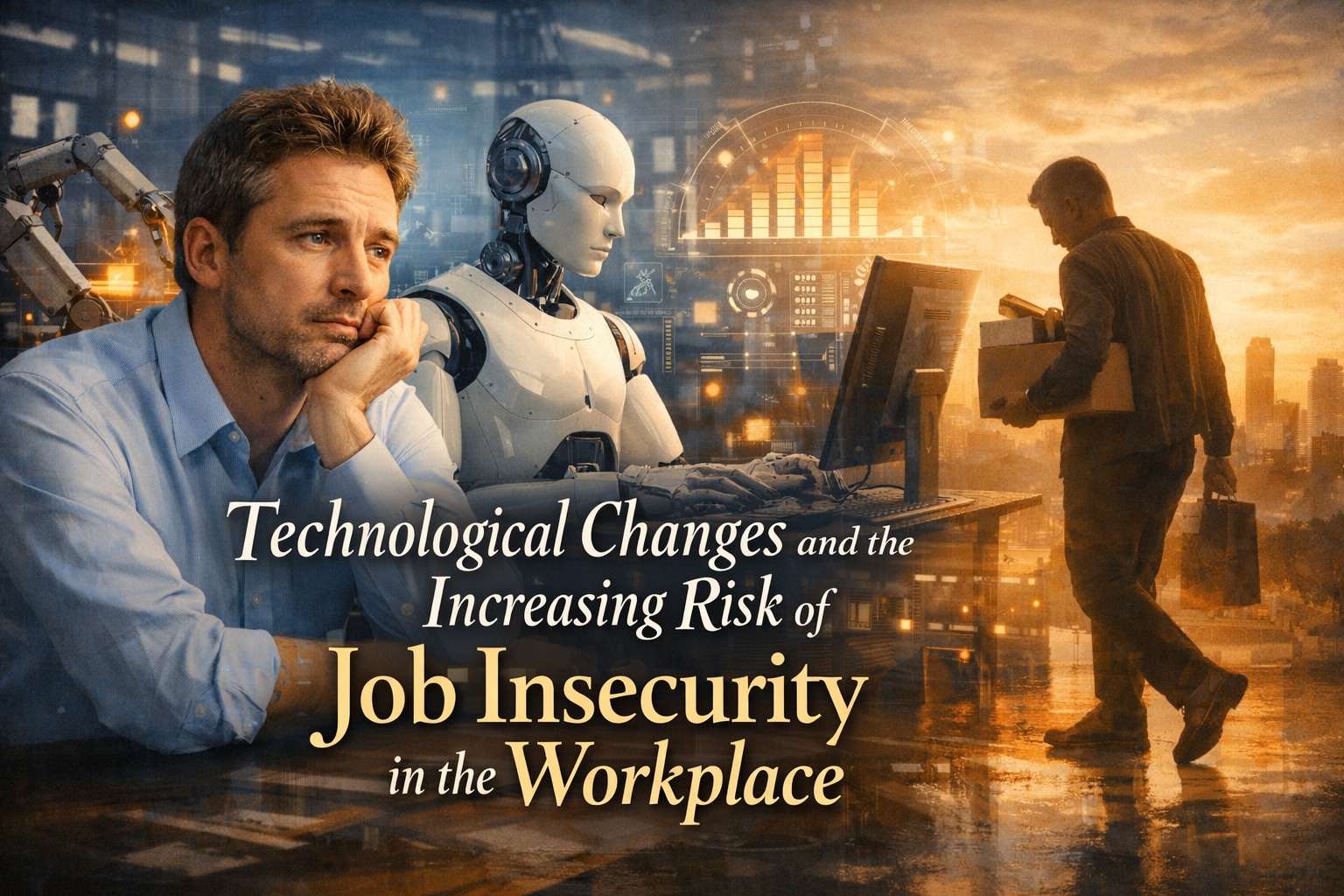
Technological Changes and the Increasing Risk of Job Insecurity in the Workplace
Gusti Ayu Tita P
18 Oktober 2026
INTRODUCTION
Technological changes have transformed the modern workplace faster than ever before. Innovations such as artificial intelligence, automation, robotics, cloud computing, and digital platforms have improved productivity and business efficiency across many industries. While these advancements create new opportunities, they also increase concerns about job insecurity among employees. Many workers worry that their skills may become outdated or that their positions could be replaced by advanced technology.
For organizations, technological transformation presents both opportunities and challenges. Companies must remain competitive by adopting new technologies while ensuring that employees can adapt to changing job demands. Human resource management plays a crucial role in balancing business innovation with employee well-being. By supporting workforce development, organizations can reduce fear and maintain long-term organizational stability.
UNDERSTANDING JOB INSECURITY IN THE DIGITAL ERA
Job insecurity refers to an employee's perception that their job or career prospects may be threatened in the future. In today's digital economy, this concern is becoming increasingly common because technology continuously changes how businesses operate. Employees may fear losing their positions due to automation, digital transformation, or organizational restructuring. Even without actual layoffs, uncertainty can negatively affect employee confidence and motivation.
Job insecurity can be divided into two categories. Quantitative job insecurity involves concerns about losing employment completely, while qualitative job insecurity refers to fears of losing valuable aspects of a job, including career opportunities, responsibilities, income growth, or professional development. Both forms significantly influence employee attitudes and workplace behavior.
HOW TECHNOLOGICAL CHANGES INCREASE JOB INSECURITY?
Rapid technological changes are one of the leading causes of job insecurity in modern organizations. Automation systems now perform many repetitive tasks that were previously completed by employees. Artificial intelligence also assists with data analysis, customer service, administrative work, and decision-making processes. These developments cause many employees to question whether their roles will remain necessary in the future.
Digital transformation also requires employees to continuously learn new technologies and adapt to changing work environments. Workers who lack digital skills may struggle to meet evolving job requirements. As companies increasingly invest in advanced technology, employees without adequate training often experience greater uncertainty regarding their career stability. This highlights the importance of continuous learning and professional development.
THE IMPACT ON EMPLOYEE WELL BEING
The growing risk of job insecurity has significant effects on employee well-being. Employees who constantly worry about their future employment often experience work-related stress, anxiety, and emotional exhaustion. These psychological challenges reduce concentration, confidence, and overall job satisfaction. Long-term uncertainty may also contribute to burnout and lower workplace morale.
Job insecurity affects employees both professionally and personally. Increased stress can reduce work-life balance and negatively influence physical and mental health. Employees may become less motivated to participate in organizational activities or collaborate with colleagues. As emotional well-being declines, overall organizational performance is also affected.
CONSEQUENCES FOR ORGANIZATIONAL PERFORMANCE
Organizations experiencing widespread employee uncertainty often face declining performance. Employees who fear job loss tend to become less engaged and less willing to contribute innovative ideas. Instead of focusing on organizational goals, they prioritize protecting their own positions. This shift reduces collaboration and limits creativity within teams.
High levels of job insecurity also increase employee turnover and absenteeism. Skilled professionals may leave the organization in search of greater career stability elsewhere. As a result, companies face higher recruitment costs, longer onboarding periods, and the loss of valuable organizational knowledge. Maintaining employee trust is therefore essential for sustainable business success.
THE ROLE OF HUMAN RESOURCE MANAGEMENT
Human resource management is essential in helping employees adapt to technological change. HR professionals should provide clear communication regarding digital transformation strategies and explain how technological changes will affect different roles. Transparent communication reduces uncertainty and strengthens employee trust in organizational leadership.
HR departments should also prioritize reskilling, upskilling, and continuous learning programs. Employees who regularly improve their technical and professional skills become more adaptable to workplace changes. Career development opportunities, mentoring, and digital training programs help employees remain competitive while reducing fear of job displacement.
STRATEGIES TO REDUCE JOB INSECURITY DURING TECHNOLOGICAL CHANGE
Organizations can minimize the negative effects of technological transformation by implementing employee-centered strategies. Providing continuous training, career planning, and internal promotion opportunities helps employees feel more secure about their future. Leaders should encourage innovation while ensuring that employees receive the support needed to develop new competencies.
Building a culture of lifelong learning is equally important. Employees should be encouraged to embrace technological change as an opportunity for professional growth rather than a threat. Organizations that invest in employee development create a more resilient workforce capable of adapting to future challenges. This approach strengthens both employee confidence and organizational competitiveness.
CONCLUSION
Technological changes have significantly increased the risk of job insecurity in today's workplace. While innovation improves efficiency and business performance, it also creates uncertainty for employees who fear losing their jobs or becoming less relevant. Organizations can successfully manage these challenges through transparent communication, continuous learning, effective human resource management, and employee development initiatives. By supporting workforce adaptability, companies can achieve sustainable growth while maintaining employee trust, loyalty, and long-term organizational success.
Tentang Penulis
Gusti Ayu Tita P
Penulis — Universitas STEKOM
Penulis aktif yang berfokus pada isu-isu akademik, teknologi pendidikan, dan pengembangan sumber daya manusia di lingkungan kampus.