The Future of Decentralization in Supporting Adaptive Governance
Gusti Ayu Tita P
4 Oktober 2026
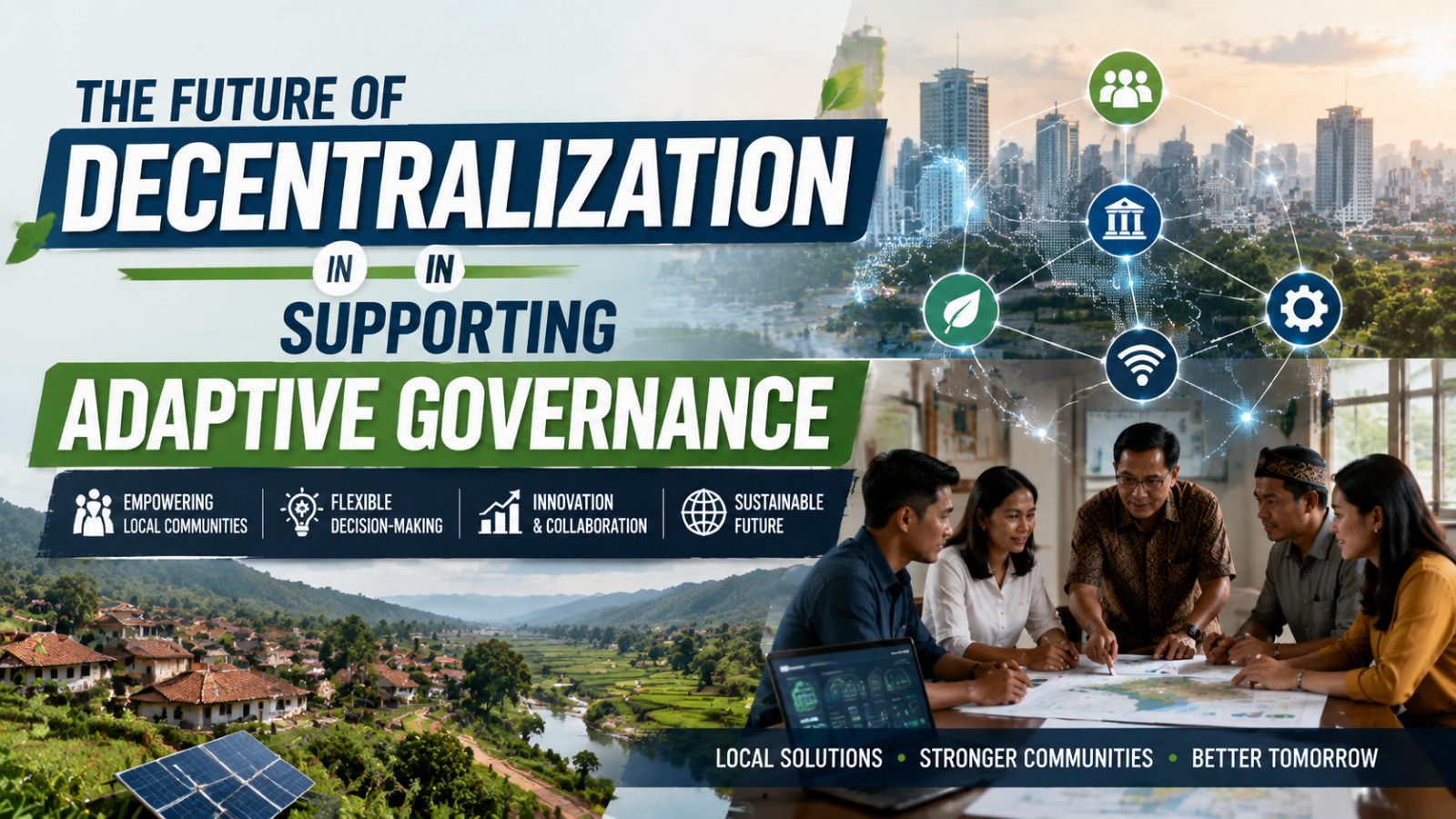
The development of modern society requires governments to become more flexible, responsive, and capable of handling rapid changes. Decentralization has become an important approach that allows local governments to manage regional affairs based on community needs and conditions. In the future, decentralization is expected to play a greater role in supporting adaptive governance, a governance model that focuses on flexibility, innovation, and the ability to respond to challenges effectively.
Adaptive governance requires governments to continuously learn, adjust policies, and collaborate with different stakeholders. Through decentralization, local governments can gain more opportunities to create solutions that match local realities. However, successful implementation depends on strong institutions, digital transformation, human resources, and effective coordination between government levels.
UNDERSTANDING DECENTRALIZATION AND ADAPTIVE GOVERNANCE
Decentralization is a system that transfers certain authorities, responsibilities, and resources from central governments to local governments. This approach allows regional authorities to make decisions closer to the communities they serve. By understanding local conditions better, decentralized governments can create policies that are more relevant and effective.
Meanwhile, adaptive governance is a governance approach that emphasizes flexibility, collaboration, and continuous improvement. It enables governments to adjust strategies based on social, economic, environmental, and technological changes. The relationship between decentralization and adaptive governance is important because local governments often become the first institutions responding to community challenges.
THE ROLE OF DECENTRALIZATION IN BUILDING FLEXIBLE GOVERNMENT
One of the main benefits of decentralization is its ability to create a more flexible government system. Local authorities can respond faster to regional problems without depending entirely on decisions from central institutions. This flexibility allows governments to develop programs that are suitable for different regional characteristics.
In the future, flexibility will become increasingly important because communities face complex challenges such as climate change, digital transformation, economic uncertainty, and social changes. A decentralized system can help governments experiment with new solutions and adjust policies based on real conditions. This makes public administration more dynamic and responsive.
DIGITAL TRANSFORMATION AND THE FUTURE OF DECENTRALIZATION
The growth of digital technology will significantly influence the future of decentralization. Digital platforms can improve communication between central and local governments, increase transparency, and support faster decision-making. Through digital systems, local governments can collect data, analyze public needs, and provide better services.
However, digital transformation also requires adequate infrastructure, cybersecurity, and skilled human resources. Regions with limited technological capacity may experience difficulties in adopting digital governance systems. Therefore, future decentralization strategies must include equal access to technology and continuous digital development.
STRENGTHENING LOCAL INNOVATION AND COMMUNITY PARTICIPATION
Decentralization creates opportunities for local governments to develop local innovation based on their unique resources and challenges. Each region can create different solutions in areas such as education, healthcare, economic development, and environmental management. These innovations can improve public services and support sustainable development.
In addition, decentralization can strengthen community participation by involving citizens in decision-making processes. When people have opportunities to share ideas and provide feedback, government policies become more inclusive. Adaptive governance depends on cooperation between governments, communities, businesses, and other stakeholders.
IMPROVING COLLABORATION BETWEEN GOVERNMENT LEVELS
Although decentralization gives more authority to local governments, cooperation with central governments remains essential. Future governance requires a balanced relationship between national direction and regional independence. Central governments can provide standards, resources, and support, while local governments can implement solutions based on regional conditions.
Effective collaboration can prevent problems such as policy conflicts, unequal development, and inefficient resource management. Integrated planning and information sharing will become important elements in strengthening decentralized governance. Through cooperation, governments can create a more coordinated and adaptive system.
CHALLENGES IN IMPLEMENTING FUTURE DECENTRALIZATION
Despite its potential benefits, future decentralization still faces several challenges. Differences in financial resources, institutional capacity, and technological readiness between regions can affect the success of decentralization programs. Some local governments may require additional support to manage greater responsibilities effectively.
Another challenge is maintaining accountability and preventing misuse of authority. Greater local power must be balanced with transparency, supervision, and clear regulations. Without proper control mechanisms, decentralization may create governance problems instead of improving public administration.
THE IMPORTANCE OF HUMAN RESOURCE DEVELOPMENT
The success of future decentralization depends heavily on the quality of human resources. Local government officials need strong skills in leadership, technology management, policy analysis, and public service delivery. Without capable personnel, increased authority may not produce effective results.
Continuous training and professional development are necessary to prepare local governments for future challenges. Skilled human resources can help regions create innovative policies and manage resources responsibly. Therefore, investment in human capital is a key factor in developing adaptive governance.
CONCLUSION
The future of decentralization has great potential to support adaptive governance by creating governments that are more flexible, innovative, and responsive. Through stronger local authority, communities can receive better services and participate more actively in development processes. Decentralization allows governments to understand local challenges and develop suitable solutions.
However, successful decentralization requires more than transferring authority. It needs digital transformation, strong institutions, skilled human resources, collaboration, and effective accountability systems. When these elements are combined, decentralization can become an important foundation for creating modern governance that is prepared to face future challenges.
Tentang Penulis
Gusti Ayu Tita P
Penulis — Universitas STEKOM
Penulis aktif yang berfokus pada isu-isu akademik, teknologi pendidikan, dan pengembangan sumber daya manusia di lingkungan kampus.